Thursday, October 26, 2006

Blueberries


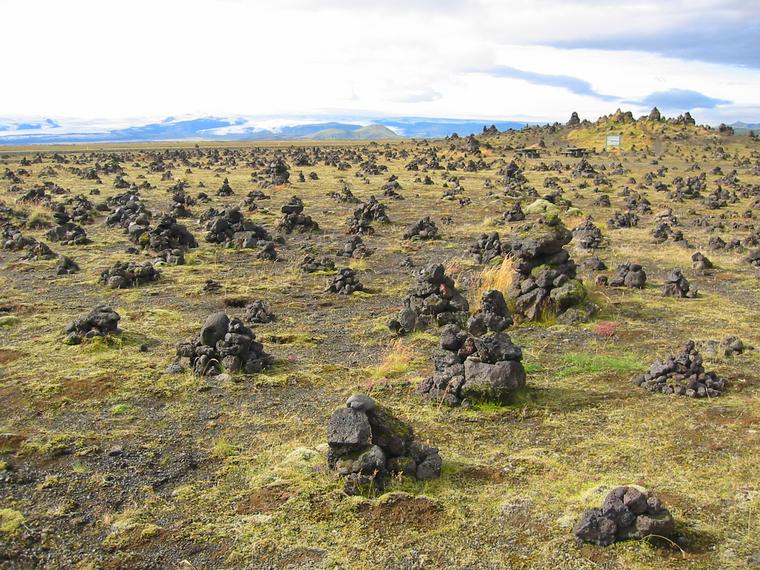
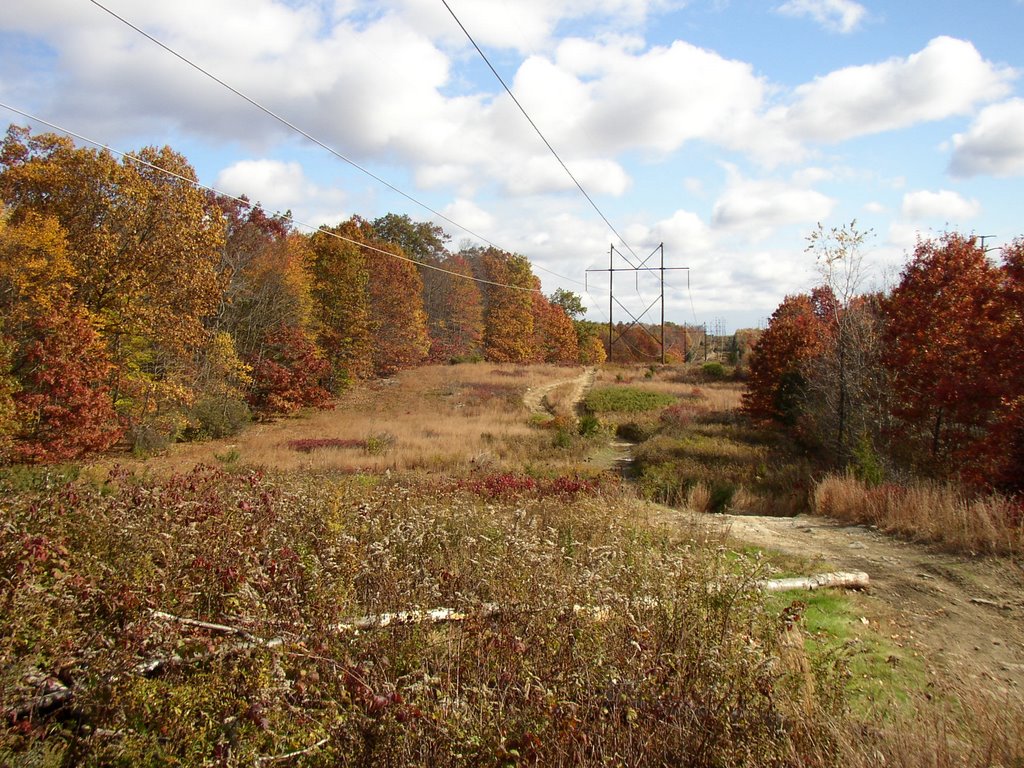
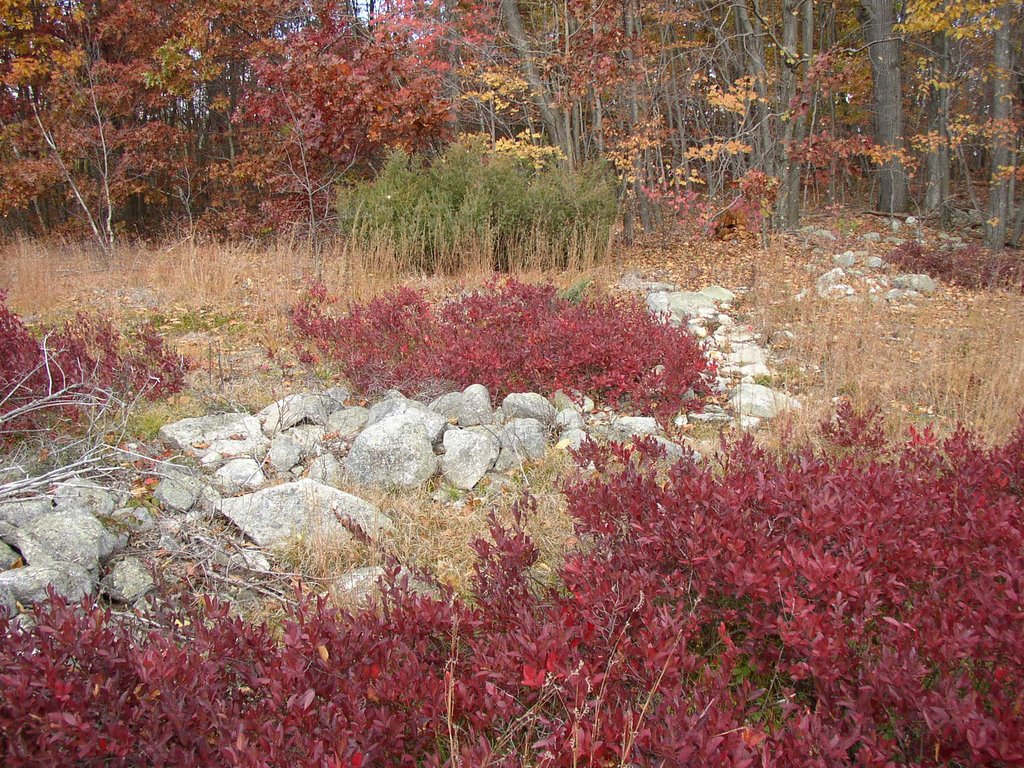
I was just looking at the photos from the other day and, thinking back, I recall not only how many stone rows have dissappered, but also how the blueberry population has declined, up under those power lines.


Because I once worked in the Blueberrie Barrens of Washington County in Maine one summer many years ago, I knew the Indian custom of burning over fields on a four year cycle still continues up there (or Down East as they say).

Maintainance of the power lines and the access roads in recent years involves chains saws and herbicides that kill the bluberries that grow in the sandy soil and need a nematode that lives in its roots (see links for more detail).
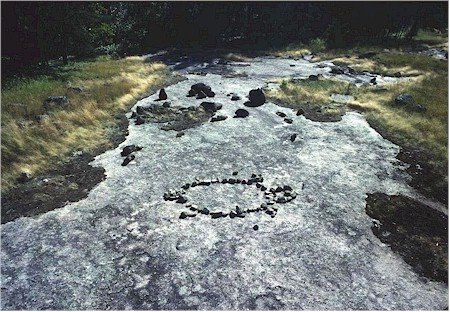
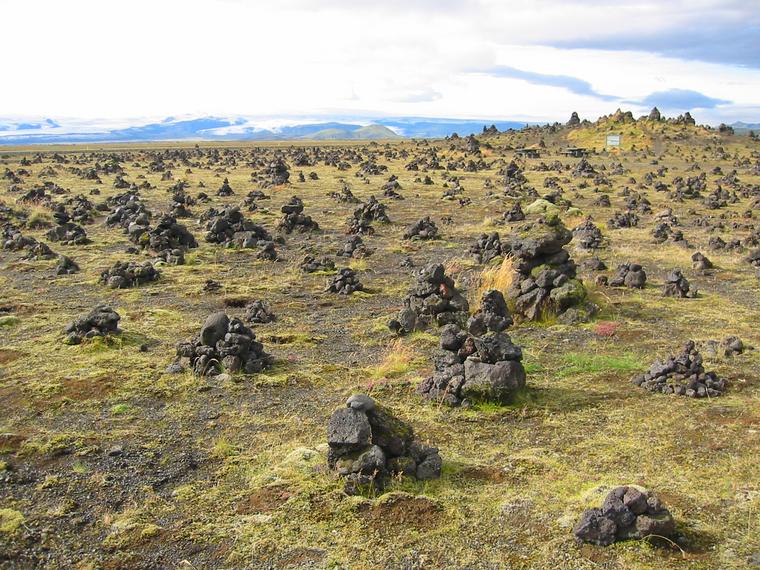
In my imagination, in the years before 1700, going back who knows how far, maybe this was an area of low bush blueberries, maintained by burning over sections every four years, those sections selected and controlled by those zigzag rows of stone...
"Low bush species are fire-tolerant and blueberry production often increases following a forest fire as the plants regenerate rapidly and benefit from removal of competing vegetation. (from: http://en.wikipedia.org/wiki/Blueberry )

The row leads into what is now forest...


Blueberry Links:
http://www.wildblueberries.net/bluehistory.html
http://wildblueberries.maine.edu/TableofContents.htm
http://www.nsac.ns.ca/wildblue/facts/pruning.htm (most often "fire pruning")
http://www.downeastsoilwater.org/blueberry.htm

Wednesday, October 25, 2006

In the Mound Swamp


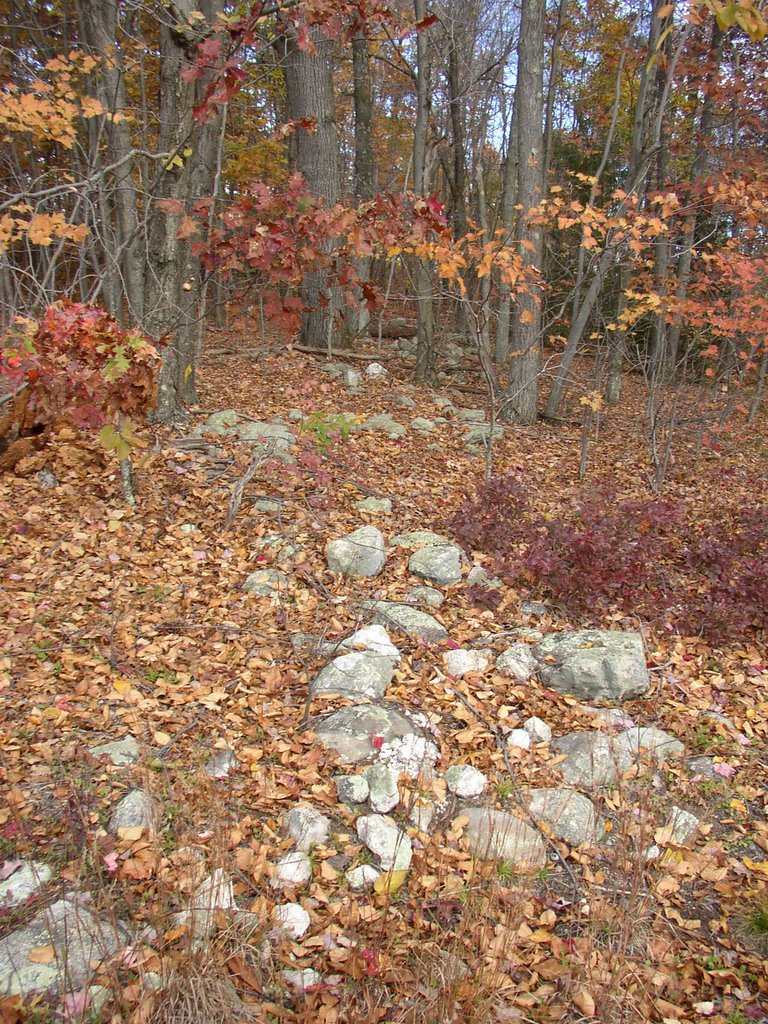
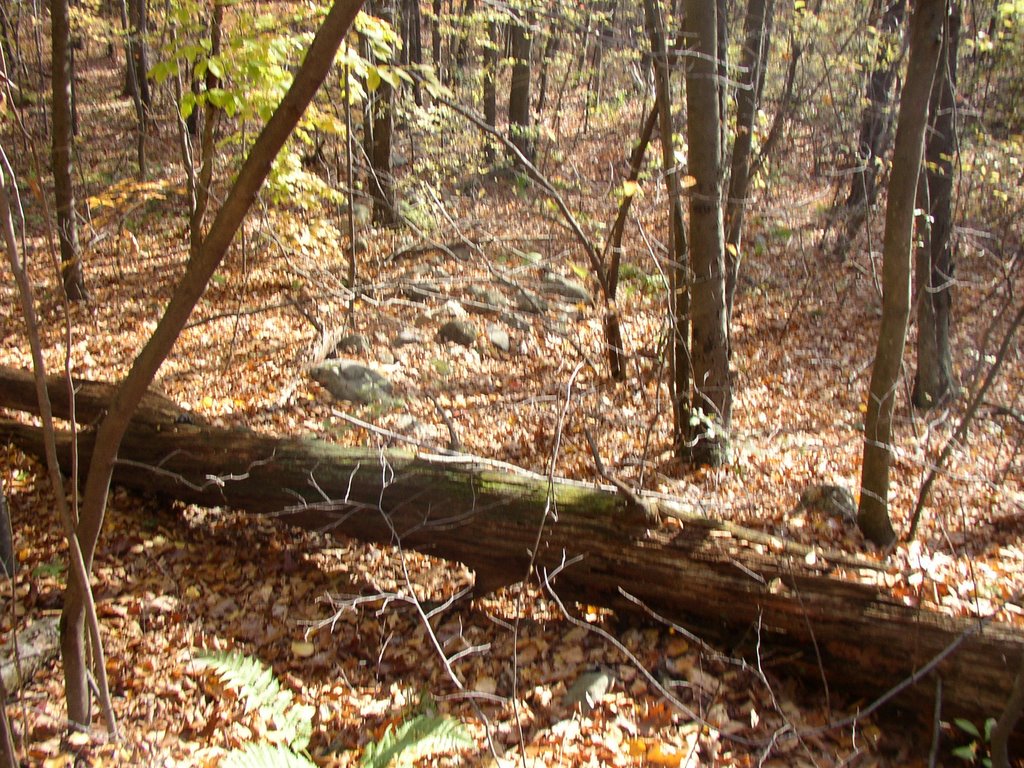
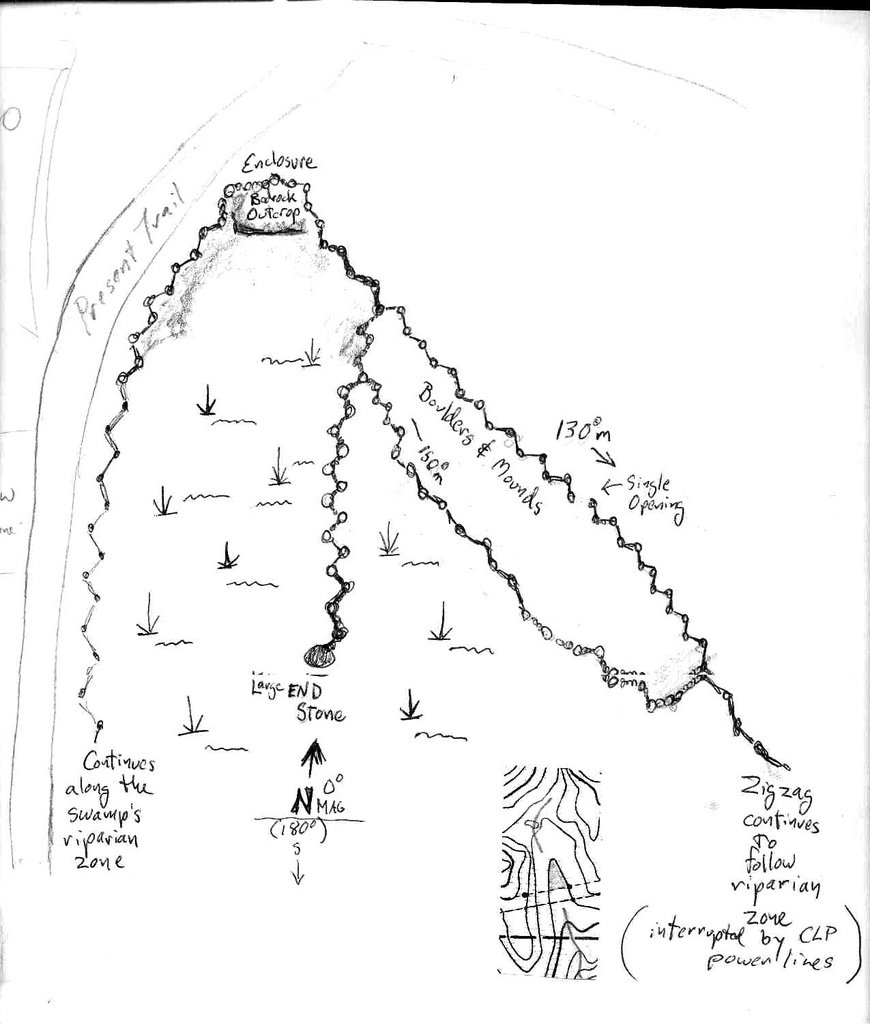
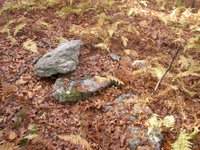
Headed south, I'm up on more exposed bedrock that's covered in leaves right now...It's marked "boulder" in one drawing and "bedrock outcrop in the other...This is a blurry picture of the stone row labelled "130 degrees magnetic" in the drawing, between the outcrop and where the three rows meet.

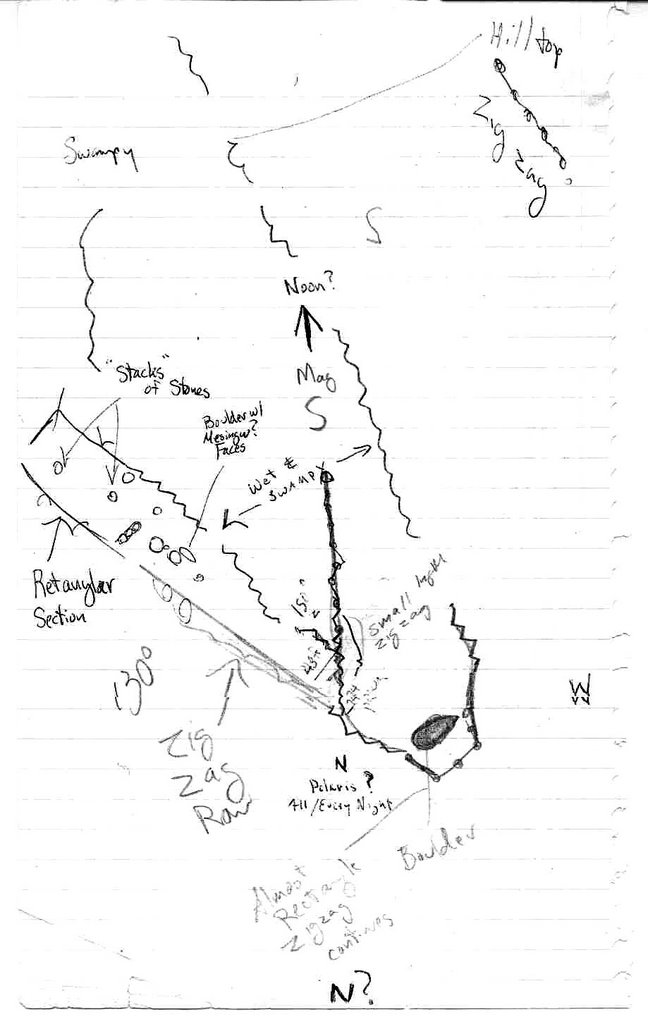
Here's the notebook scan and a drawing:

Facing south (180mag), this row ends with a single large stone:

Here's the "End Stone."

Mounds:


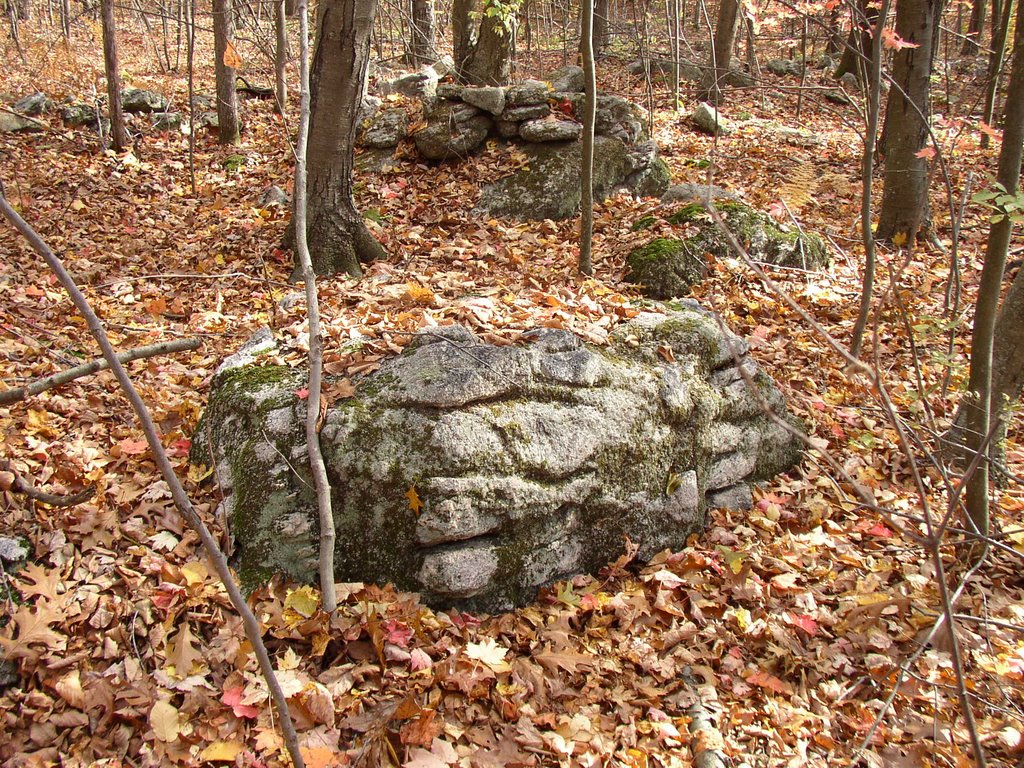
Boulder with possible "Mesingwe Face"

The "130" stone row in the distance, a stone pile on a boulder, and the Hunter Spirit Face Boulder in the foreground...

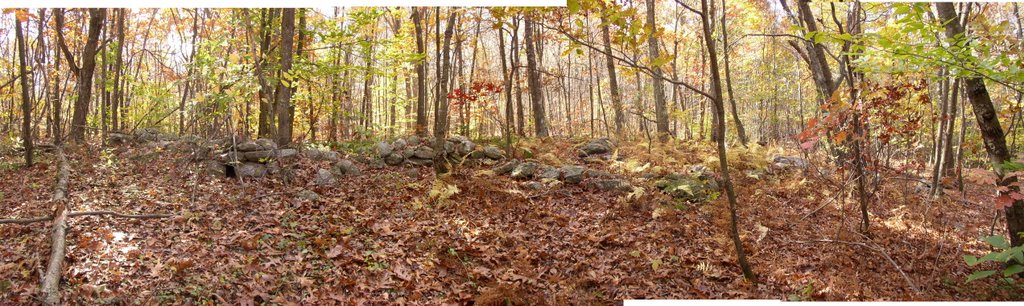
Panorama


The Panorama I couldn't post...

Mound Swamp Part One

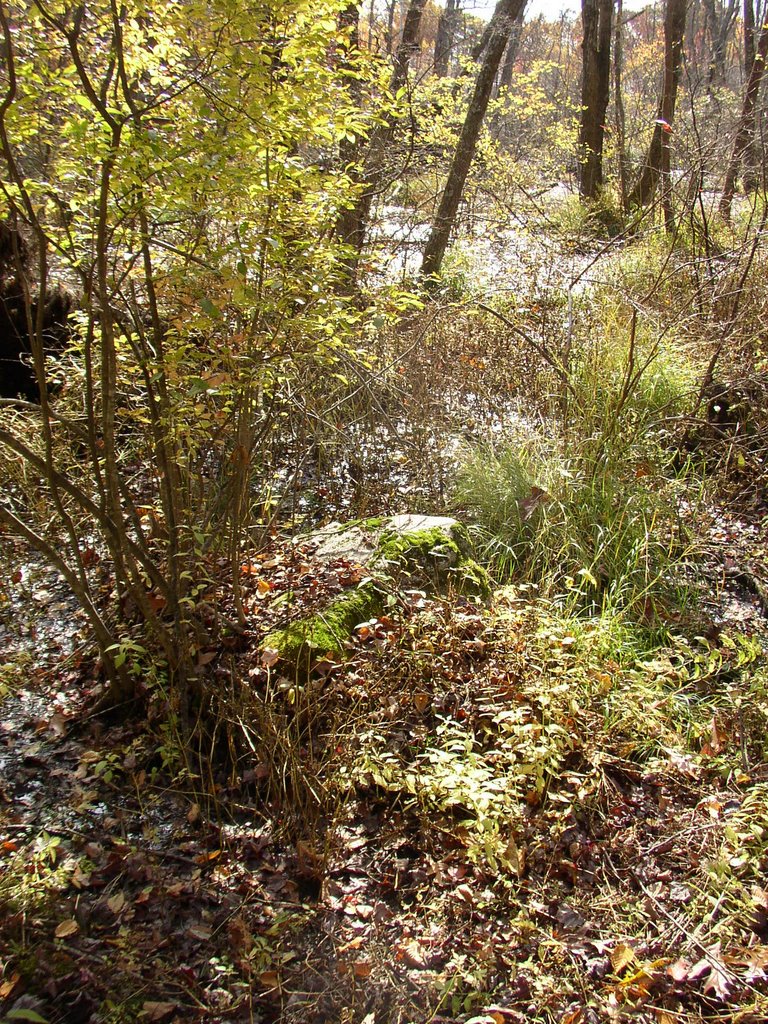
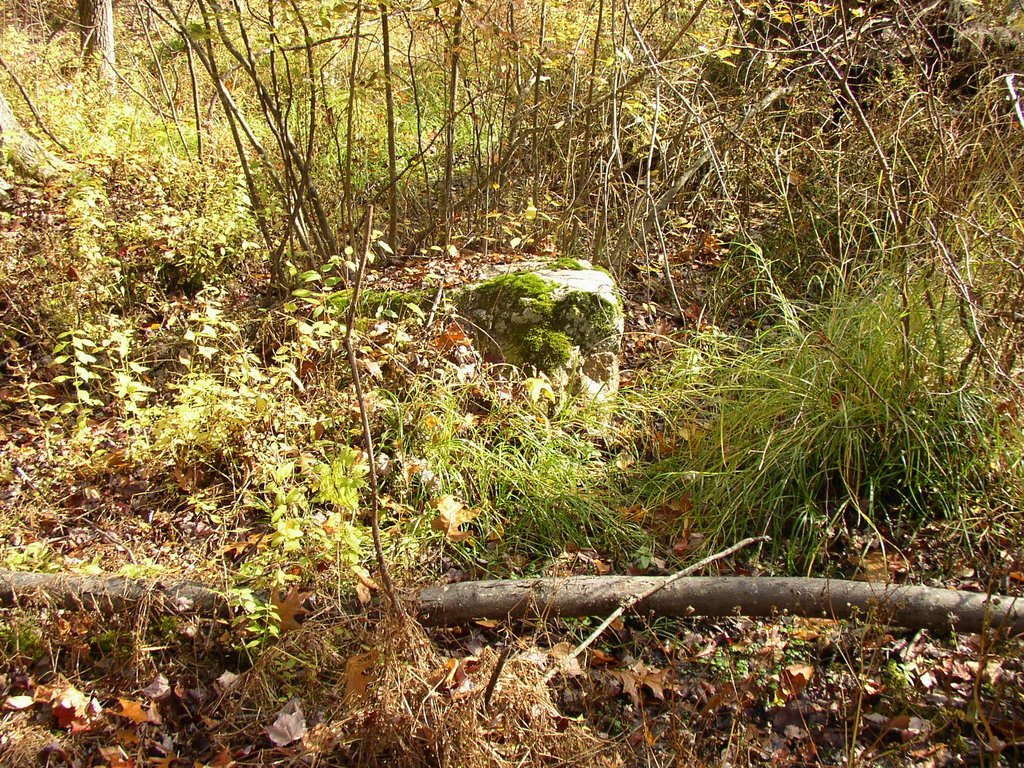
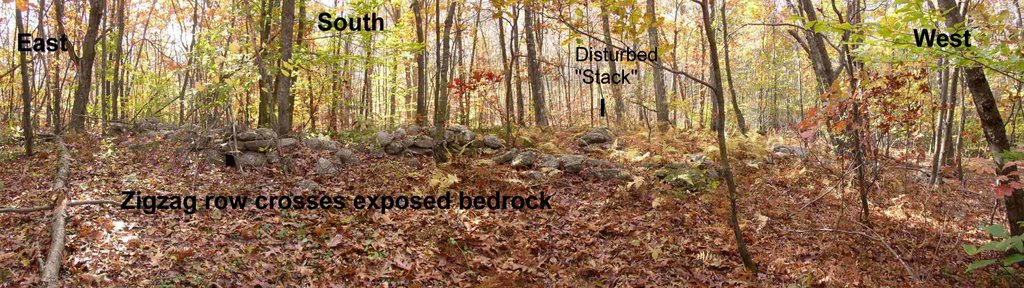
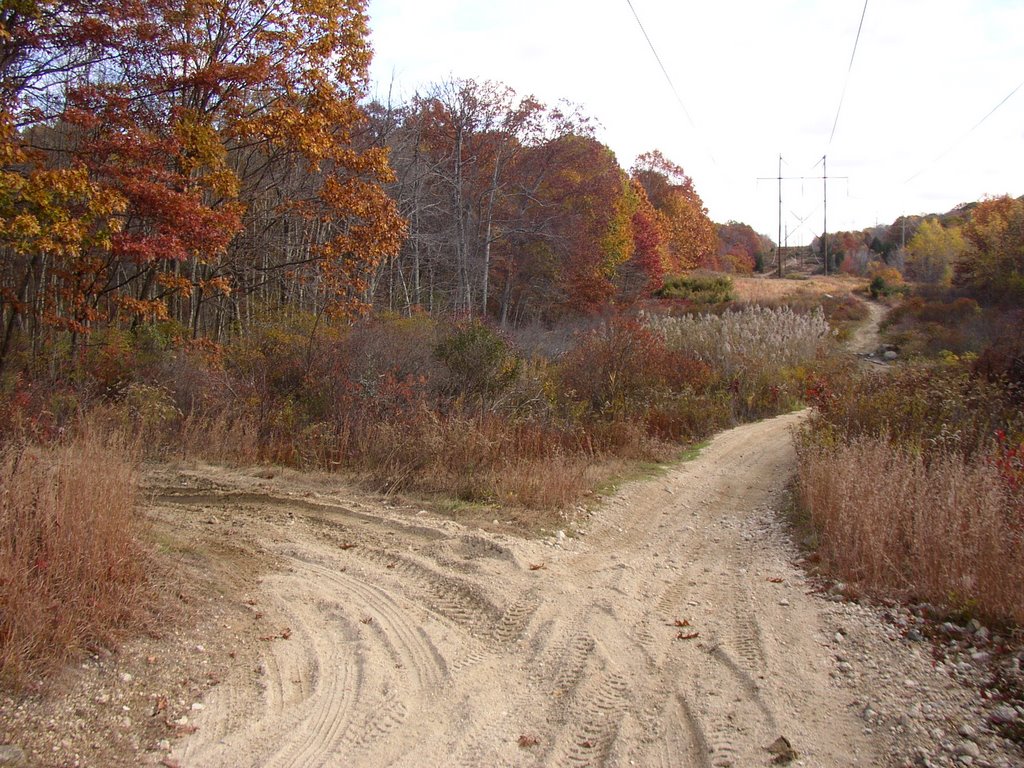
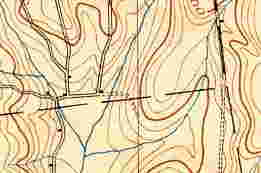
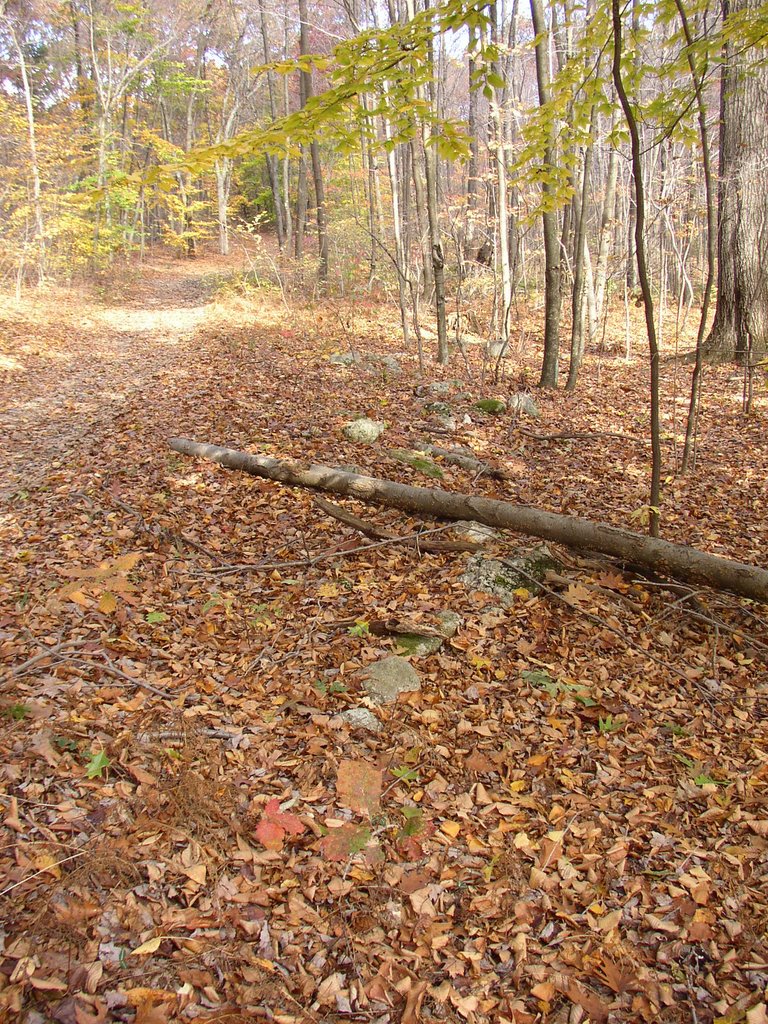
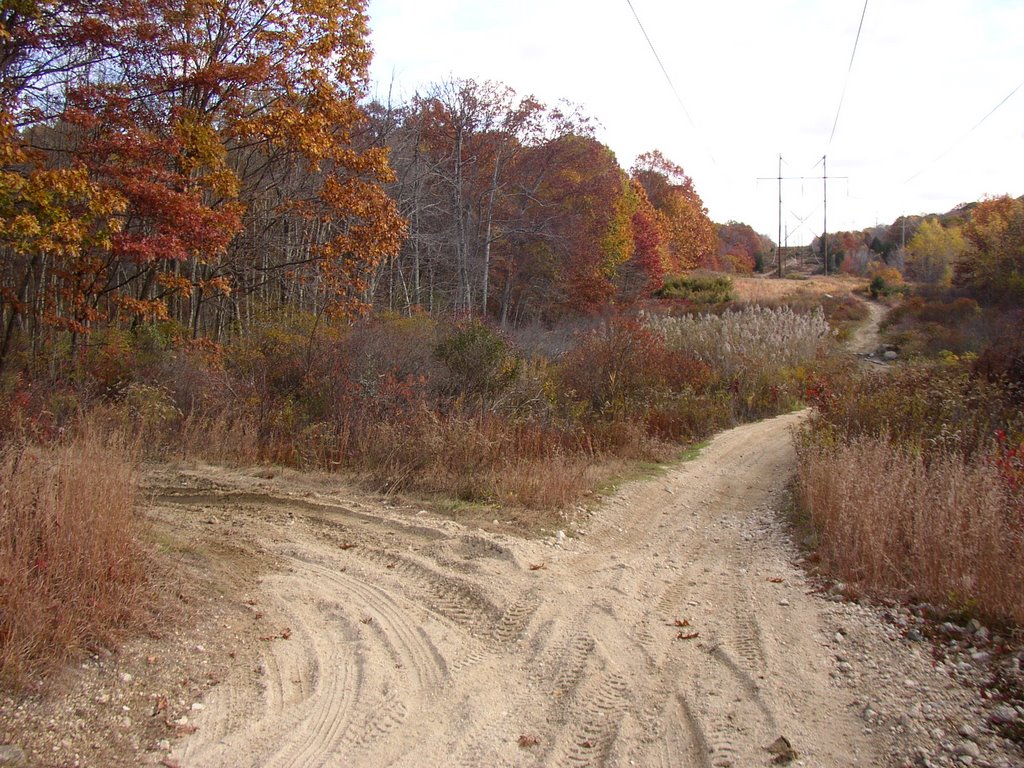
Where was I? I was at the entrance to the "mound swamp," right at the big red dot on the map here. Or was I? Was it a swamp a long time ago? Did it become a swamp only when those big black dots that are power lines appeared in the 1930's? I can answer that question without hesitation: I don't know... I do know that yesterday I was standing where the big red dot is, looking easterly, when I took the photo above... This detail of the oldest map (1892, I think) is no help at all; it doesn't really look like the same place at all... No map shows the swamp as a swamp, so it's up to me I guess. This sort of V-shaped swamp is outlined by zigzag stone rows. It is swampy now because of the dirt road that is marked by pencil lines. The zigzag rows are disturbed by the road but they continue to the south, concealed by brush. And if I did follow them in the past, I don't remember well enough to tell you where they lead. I turned left (north) on the present day trail... Zigzag rows along the western border... ...that meet up with that black c-shaped line I've so skillfully added to the black and white copies of the topo-map. Disturbed by the trail, I think they intersected. Wouldn't you? It's an approximation; here's the row that leads to what is now an exposed piece of bedrock (covered in leaves, right now). (I'm "off the trail" now, like Gary Snyder says...) See the biggest tree in the photo? Below it is a disturbed mound along the side of the row, a small red dot on the map copy/drawing. The big stone in the foreground is a point stone of the zigzag that thought at the time was a turtle but editing this in November 2021, I can tell you it's a snake's head... The disturbed pile or stack or something... Everybody loves a panorama...except Blogger perhaps; I've tried to upload it 4x now...maybe a separate post will work?????

Tuesday, October 24, 2006

Digital Mound Swamp (Soon Come)


Back in March 2006, I posted some "Mound Swamp" stuff at http://rockpiles.blogspot.com/ that had scanned photos that weren't really great photos. So Iwent back this morning with my beat up old digital camera...


People come from miles around to tear up the landscape, already scarred by the power lines sometime in the 1930's. Where there once was an old tractor path, now there's what looks like a race track...

Many of the old stone rows are missing now. Here's a zigzag remnant that shows nicely, wild low bush blueberries wearing their autumn colors...

My new hat for perspective by some of the stonework. More to follow...

Wednesday, October 11, 2006

More Gary Snyder "Control Burn"


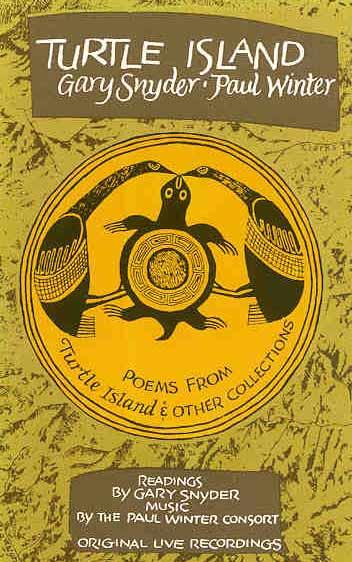
From "Turtle Island"
by Gary Snyder
(1969)


CONTROL BURN

What the Indians
here
used to do, was,
to burn out the brush every year.
in the woods, up the gorges
keeping the oak and pine stands
tall and clear
and kitkitdizzie under them,
never enough fuel there
that a fire could crown
Now, manzanita,
(a fine bush in its right)
crowds up under the new trees
mixed up with the logging slash
and a fire can wipe out all.

Fire is the old story.
I would like,
with a sense of helpful order,
with respect for laws
of nature
to help my land
with a burn, a hot clean
burn
(manzanita seeds will only open
after a fire passes over
or once passed through a bear)

And then it would bemore
like,
when it belonged to the Indians

Before.

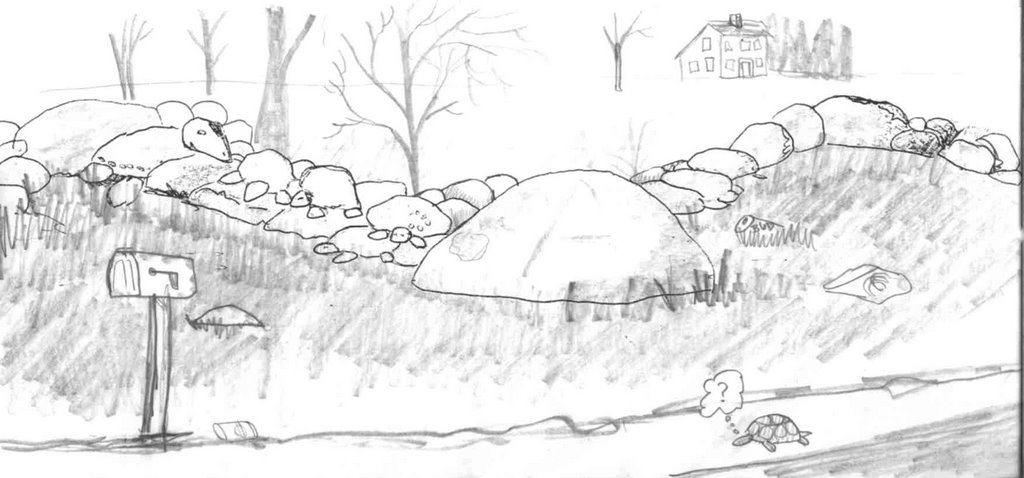
You may have seen these before, a few original drawings. How difficult it is to capture the whole network of stone rows that remain, untended for 300 years now, right around where I live - and where you may live too, for that matter - without walking "off the path" in some places, right along it in others...


http://forestry.about.com/od/prescribedfire/ss/pres_fire.htm
http://www.ser.org/iprn/tek.asp
http://publications.theforesttrust.org/download/pdf/DT12.pdf#search=%22controlled%20burn%20%2B%20%22dennis%20martinez%22%22

Friday, October 06, 2006

3 Items by Gary Snyder

For All:
 "Ah to be alive on a mid-September morn fording a stream barefoot, pants rolled up, holding boots, pack on, sunshine, ice in the shallows, northern rockies. Rustle and shimmer of icy creek waters stones turn underfoot, small and hard as toes cold nose dripping singing inside creek music, heart music, smell of sun on gravel. I pledge allegiance I pledge allegiance to the soil of Turtle Island, and to the beings who thereon dwell one ecosystem in diversity under the sun With joyful interpenetration for all."
  from:http://www.rooknet.com/beatpage/writers/snyder.html


A path is something that can be followed, it takes you somewhere. "Linear." What would a path stand against? "No path." Off the path, off the trail. So what's off the path? In a sense everything else is off the path. The relentless complexity of the world is off to the side of the trail. For hunters and herders trails weren't always so useful. For a forager, the path is not where you walk for long. Wild herbs, camas bulbs, quail, dye plants, are away from the path. The whole range of items that fulfill our needs is out there. We must wander through it to learn and memorize the field
--rolling, crinkled, eroded, gullied, ridged (wrinkled like the brain) -- holding the map in mind. This is the economic-visualization-meditation exercise of the Inupiaq and Athapaskans of Alaska of this very day. http://www.albany.edu/~litmag/archives/vol213/map.html 


 "Find your place on the planet, dig in and, take responsibility from there."
Gary Snyder

Friday, September 22, 2006

The Huron

Here's a few bits I've been meaning to post for a while now, taken from:

The Huron; Farmers of the North
(1969)
by
Bruce R. Trigger

"The Huron called themselves the Wendat, a term generally believed to mean "Islanders" or "Dwellers in a Peninsula." This term has been interpreted as referring to the large bodies of water that surround the Huron country on three sides, but it may also reflect the Huron belief that the world was an island supported on the back of a turtle. The term Huron is derived from a French word hure, meaning, literally, a boar, but more generally a ruffian or savage (page 6)."

"Various attempts have been made to determine the meaning of the names of the four Huron tribes ...Aherendarrhonon means "The People of the Rocks"; possibly a toponym since this tribe lived nearer...the Canadian shield (page 14)."

"Charms were highly valued and inherited from one generation to the next...If a hunter found an animal difficult to kill and later found in its entrails something unusual, such as a stone or a snake, he would keep what he found in the hope it would bring him good fortune. Likewise, stones with a curious shape were kept since it was believed that these stones belonged to a spirit that lived in the woods and had lost them there (33)."


"sobriquets" - or nicknames for people of high status include "Ondakhienhai (big stones, elders, and stay at homes)... applied to chiefs in the historic period (38)."

"Certain large rocks were believed to be the homes of spirits. Some were located along the trade routes.. as travelers passed by these rocks they made offerings of tobacco to them.this was done by throwing tobacco into the campfire or the river or else leaving them in clefts in the rock...(91)."

The bold lettering is my emphasis; the writing style and choice of words is Trigger's...

Wednesday, September 20, 2006

Mesingwe, the Hunter Spirit

I can't let a second reference to BigFoot in "Rock Piles" go by without posting an old piece I wrote about ten years ago called
"Mesingw and Bigfoot."

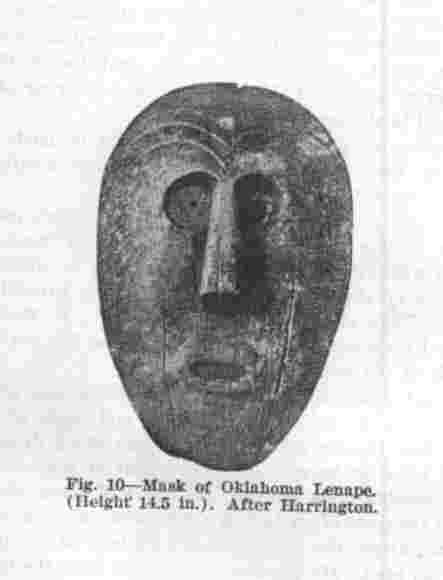
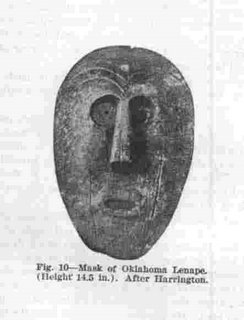
Left: Lenni Lenape ceremonial Mesingw mask.

The Lenni Lenape Homeland is what is now known as New Jersey and Eastern Pennsylvania, from the Delaware River to the Hudson River. Their "brothers" are said to be the Nanticoke, Mahican, Munsee and Iroquois. Their "Grand-Children" are said to be the Shawnee, Potawami, Sauk and Fox, Ioway, Tonkawa, Sioux, Ottawa, Kickapoo, Miami, Peoria, Chippewa, Menomoni, and Winnebego.These People refer to them as Delawares, Wabanaki, Lenape, and "Grandfathers." Descendants of the "Original People" migrated westward away from European settlements and exist as Lenni Lenape in Okalahoma, Wisconsin, and Canada.

"Ku-les-ta! Listen! One time long ago there were three boys about your age who weren't treated very well; in fact their parents did not seem to care whether they lived or died. They were out in the forest one day thinking about their troubles when they saw a strange-looking hairy person with a big face half red and half black. This person said: "I am Mee-sing haw lee kun; I have taken pity on you and I will give you strength so that nothing can ever hurt you again. Come with me and I will show you my country!"
"He took one boy up in the air to the place where he came from; it was a great range of mountains up in the sky reaching from north to south. While he was showing the boy his country, he promised he should become stout and strong and should gain the power to get anything he wished. Then he brought the boy back to earth again.
"Afterwards when the boy grew up and went hunting he used to see Mee-sing-haw-lee-kun riding on a buck, herding the deer together and giving his peculiar call 'Ho-ho-ho.'
Harrington in Dikon Among the Lenape (Indians of New Jersey)
Mee sing, Mesingw, Mee-sing-haw-lee-kun, Misinghalikun, and Wsinkhoalican are all various recorded forms of the Lenni Lenape word translated as meaning "The Mask Being" or "Living Solid Face." This Manitou or Spirit Being, also called "The Game Keeper," lived in the woods, guardian of the deer and all game animals. This concept also appears among the Montagnais-Naskapi of Labrador in the form of Caribou-Man , who in turn is very similar to the antlered Celtic Spirit Cerranos.
The word can also mean Mesingw's human impersonator. In a well researched fictional work called The Indians of New Jersey: Dikon Among the Lenape: Dr. M.R. Harrington (as the captive English boy who narrates the story) writes:
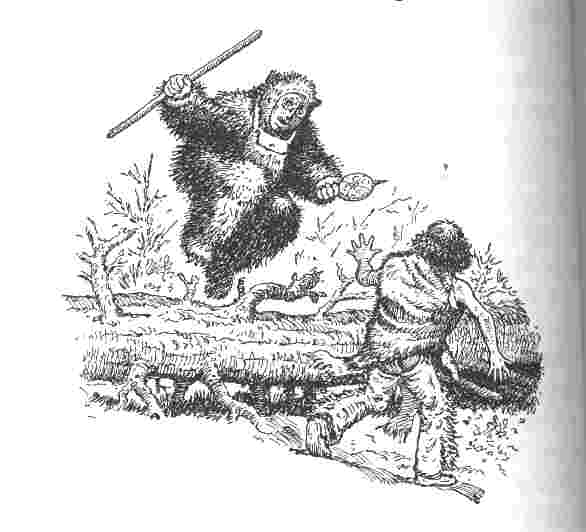
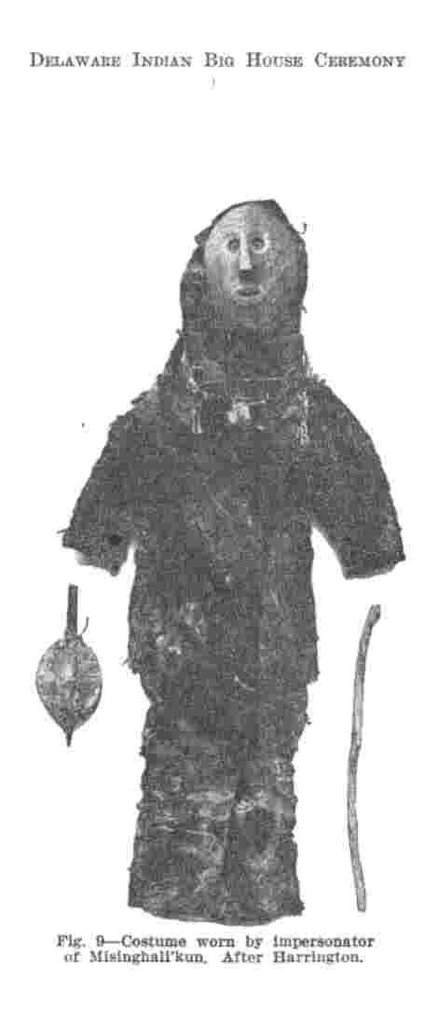
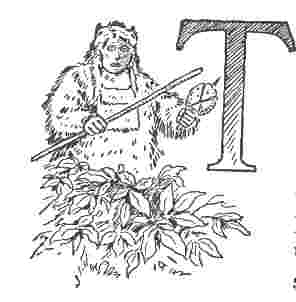
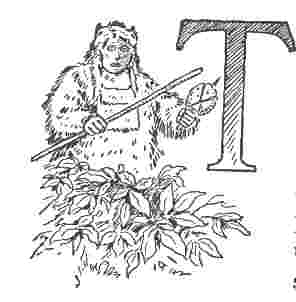
"...I was really enjoying the fun, when I heard a queer noise behind me, a sort of rattling and a sound like a horse neighing. I looked and nearly died from fright. There stood a creature as big as a man, but covered with hair; it had a great moonlike face, half red and half black, and it carried a staff and something that made a rattling noise. It saw me looking and jumped straight up in the air; then it made a dive for me.
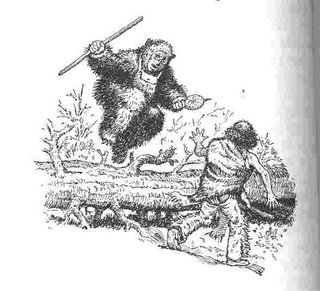

"That terrible creature chased me all over the village, making great leaps and bounds and jumping over everything that came in the way. I escaped only by pushing out into the river in a canoe. Even then I thought for a moment it would follow me there, but it finally turned back toward the Big House, whinnying and rattling. Not until next spring did I learn that it was a man wearing a mask and a bearskin suit. He always appears at the Gamwing, representing a spirit called Mee-sing-haw-lee-kun, supposed to be the guardian of the deer and all other game animals..."
Dr. Harrington began his career as an amateur who amazed the staff of the Museum of Natural History by finding a great number Native artifacts on the outskirts of New York City. He eventually became curator of the Southwest Museum in Los Angeles.
I don't really know if in fact Mesingw and Bigfoot are one and the same, and certainly don't mean to offend anyone. I'm just noting some similarities that occur to me. My recent interest in Bigfoot was sparked when my new neighbor told me that a 'Mumohne' (Monster in Italian?) lives in the woods near the Sacred Waterfall by my house in Connecticut. At the time I was photographing some pecked and polished (possible) "Respectful Hunter's Tobacco-offering Stones Shaped Like Bears and Deer " and knew something of the Lenape Big House and Mesingw, but not much about Sasquatch. Later I typed that S-word into a search engine and soon found that there were various Native names for Bigfoot-like creatures of legend such as "Spirit of the Woods," "Stick Indian,"" Wood Man," and "Wild Man of the Woods" that made me think of Mesingw.
I learned that in some places he even wears a bearskin robe, like Mesingw.
Just the name "Owl Woman Monster" also reminds me of the description of Mesingw's call of "Ho-ho-ho," very much like a Great Horned Owl's call. Other legends from other places also describe an owl-like call. At one point in the Gamwing (also Cantiko, Xingwikaon) or Big House (or in this part of CT, Long Wigwam) Ceremony, deer are hunted for a ritual meal as part of the renewal rites. It's considered good luck to hear (what may or not be) the Great-Horned Owl's call.
Perhaps it's Mesingw herding deer together for respectful hunters.
Dr. Frank G. Speck in The Delaware Big House Ceremony is told by his Okalahoma Delaware informant Witaponxwe (Walks With Daylight):
"And it is said that our grandfather (Mesingw) is believed to walk around early each morning. Now here he goes frightening unruly children. When the "one who is our grandfather begs," the child is taught that he shall pay a plug of tobacco so that he will not scare them.
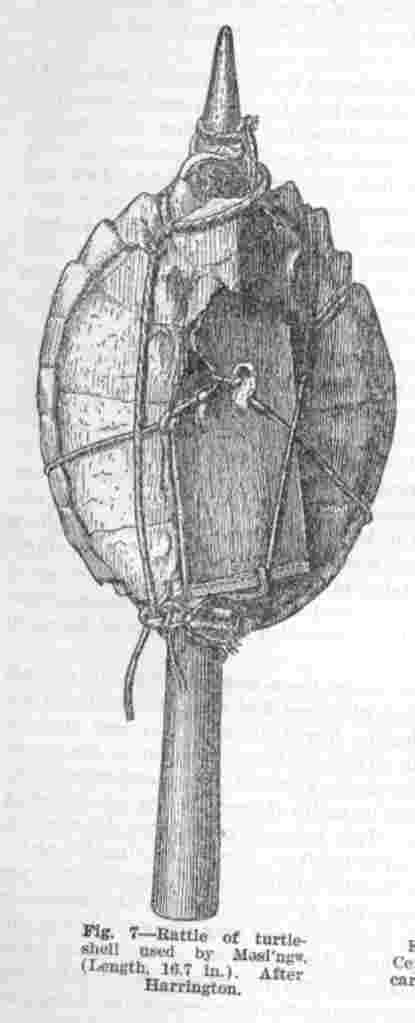
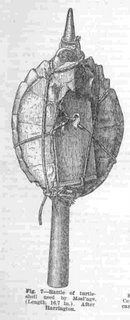
"If the person who assumes the mask is able to see clearly for a long distance it is said that he is a man of power. He carries a (snapping) turtle rattle and a staff of twisted wood ( an 'ala-houn' or walking staff similar to that carried by the Great Spirit). When he makes his utterance it resembles a horse whinnying, and when he makes signals using his turtle-rattle, they give him tobacco. Customarily he kicks at persons. Here in a pouch he carries that tobacco. Every child customarily is taught that he gathers snakes and throws them into that pouch in order that no one may steal our grandfather's tobacco. And it is said that our grandfather keeps guard over all so that none may be overcome by disease. That is also the teaching in reference to the spiritual doctrine of the Mask-Image."
Children were told to behave or they could end up in that snake-filled pouch (or basket), reminiscent of certain Bigfoot legends.
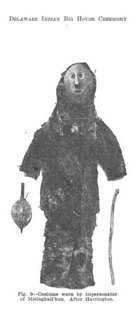
Mesingw briefly appears at the Gamwing as a dancer. The songs that accompanied the dance were not completely known by Witappanoxwe in 1928, although he thought that they mention the fact that he rides on the back of a deer. Sometimes no one volunteers for the part of Mesingw , and the Mask-Spirit dance or 'Mesingkentcke' is omitted.
The prayer to the Mesingw, however, was recorded in Speck's Big House:
"Here now my kindred, we have come to the fourth day since we began, in this place to perform the ceremony. And each and everyone of us knows the ruling of this our form of Prayer-Worship. Now we are using the tobacco our grandfather, while we are pleading earnestly with the Manitou (Great Spirit /Great Mystery). And the Mask-spirit also, when we are giving thanks to him our grandfather fire. This is how it is done by the Bringer-in, "I thank all the Manitouwak (Mysterious Forces) on top of the Earth and all the Manitouwak above. Wherefore we earnestly plead with grandfather when we give to you to eat this red man's tobacco. Have pity on us your grandchildren. They are begging you, oh Mask-Spirit, that we may have success. Give us the wild animals since you control them, all the wild animals because we need that we may be blessed with this meat. And that one our mother the corn, because all of the food given us I thank you Spirit Forces that we are given the blessing of your spirit-power. Now give us all we ask of you Manitou that you are and, our Creator, think of your children."
The Hunters then leave to bring in deer, supplied with tobacco that they continue to offer in the fire.
In Dikon, Mee-sing, as the People of Turtle Town call him, joins the people who stay behind at a meal after the hunters leave. The adopted English hero of the story feeds him sapan, cracked corn meal mush, through the mask.
There is a story of a man named Ben Horse who was overcome by the power of the Mask, "performing the antics of the Mask dancer to the point of dementia," according to Speck, as did an unnamed woman. Both required a Healer to free them from the Mask-Spirit. The Ojibwa Windigo is recorded to have possessed people in the same way.
I've seen photographs and drawings of what I guess is a Healer or Shaman's rattle (according to Harrington who, incidentally, purchased and excavated many a Spirit-mask that became part of many a Museum collection) that is topped with Mesingw's face.
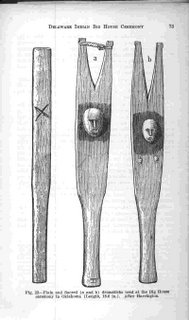


Special forked drumsticks, used only after the ninth night of the ceremony, and the posts of the Big House, a symbol of the Universe, are among other places that the Spirit's face appears. The drumsticks are held so that the drummers or 'cranes' face the carvings which are both grandmothers and grandfathers. The posts support the sky, while the central post represents the walking staff of the Creator which reaches to heaven.
Hunters also made or traded for a small carved wooden Mesingw-face either carried in a medicine bag or worn around the neck for good luck.
During Gamwing, all the Mesingw faces are repainted red and black .It seems that the colors have several meanings: good and evil, joy and sorrow, male and female, and possibly more. Charcoal is used for the black; crushed Bloodroot for the red. It's interesting to note that that Lenape and many other Native Peoples used bloodroot mixed with bear grease as a sunscreen and insect repellent, from which some say the term "Red-Skin" comes.
Perhaps the ritual painting is reminiscent of an ancient friendly gesture toward the Bigfoot-like Mesingw, comparable to lending your Cutter's or Skin-So-Soft to a friend who has none and just snakes, unruly children, and tobacco in his wallet...
References cited
1938 Harrington, M.R. The Indians of New Jersey; Dikon among the Lenape ISBN: 0-835-0425-2 (Illustrations by Clarence Ellsworth)
1931 Speck, Frank G. The Delaware Indian Big House Ceremony PA Historic Commission?
(Scans stolen from the above.)


1991-1996 Personal Communications: the late MoonFace Bear, Paugeesukg Nation, in reference to the local "Long Wigwam Ceremony"; in our last conversation, told me that the Naskapi language is very close to the language that appears in the form of Native place names here in Western CT along the Housatonic and Naugatuck Rivers.
11/11/96 Personal Communication with Barb at the corner store: " You never heard that Big Foot story before? That story's been going around for thirty years or more. Ask some of the old timers."
Tim MacSweeney
Tuesday, September 12, 2006

Indian Place Names

An old file I found on a floppy disc has some material from
Indian Place Names of New England by John C. Huden
Publisher: Natl Museum of the Amer Indian (June 1962)
ISBN: 093449018X

There’s a large gap in what I started compiling, but it looks like I started copying anything related to rocks and stone, eels and weirs, sweat lodges and other stuff.
Some of these names survive on maps, especially the old historic ones, and could be useful clues to an “Indians did use stones” sort of person...

A
Abrigada : (Holy Land in Wtby, CT) “hiding place or shelter” (possibly natural caves called ”the catacombs:” part of the “replicated” Holy Land)
ahquanahaganoc: sweatbath (Abnaki)
Aquassik: large boulder (Quassik Falls, Woodbury CT: one big stone creates the falls)
Asawacomuck: plantation or enclosure between two streams
Asnacancomic: (- comet) at the long stone house Nip.
Asnebumsket Hill: “rocks upon rocks,” “ boulder cliff” Nip.
Asnaconick Pond: “at the field enclosed in stones” {stone house} Nip.
Assameekq: “a cave” or “stone roof” Narra.
Assowompsett: “at place of large rock” or “stone plain place” “trading/barter place” Wamp.
Assinek,Assunoc (hussunek): “Stone place” cave overhang ledges Nip.
Assonet: is Dighton rock, “at the rock” Narra.
autoposit autopscot walled in well or cistern water drawing place / place of wet rocks? Wamp.
B
Babaquamshk: “split rock” Nip.
Bungay “boundary” Quinn. (also in Nip. -gee; Abnaki -y) Photo of Bungbay Rock in Seymour Ct.
C
Canaggogum: “ the fence or boundary” also “highland” Nip..
canapitsit -umet -pache (channel)place of the long fish weir Wamp.
Cassacubque: high rocks
Catacoonamaug: great long fishing place; eels (long fish?)
Chabunnuck kakowak: boundary/agreement place nip.
Chaubongum: boundary Nip
Cheapschaddock: big rocks at boundary Nip

Cheesechankamuck: [branch of Farm. R.] “great enclosed place for fishing” or “big fish weir pool” Tunxis
Chickamug: fish weir ,principal fishing place E Nia.
Chickons: burned so as to be planted, Nip.
Chickons Cattones Akees ; Cottinyakies,Cottinackeesh,Kittikanakish: “small plantation” Natick
Commquessakumkanit: at the rock which stands erect Wamp.
Cuppan augunit: ancient place of refuge n. of Stonington “enclosed hollow place” glacial kettle?

W:
Wabbaquassik(-uk):“place of white stones”?
or rush mats for covering a lodge Nip.
Wabash “white things (stones?)” Nip. “winds” Narra.
Wabbassick At the little white place/ small place eastward Wangunk

Wachocastinook (Creek): “at the place where the walnut trees grow on the hill” “land at stony hill” Mahican
Wakalosen Fort Knox, Waldo Co. Me. “rocks in a circle” enclosure or fort?
Wakoquet “house place” Wamp.
Waktiompsk “rock house” “dwelling among the rocks” “rock cave dwelling” Wangunk
Wallamanumpscook {Worchester Co. MA} “at the rock standing in the red paint place” Nipmuck
Wallempteweekek {S.Twin Lake Piscataquis Co ME} Pl. of deep rnd lake
or, from Natives “coves surrounded by burned land”
Walloomsac “beautiful or paint rocks” Mahican
Wauwonoquassick: “witness rocks boundary place” Mahican/Siwanoy?

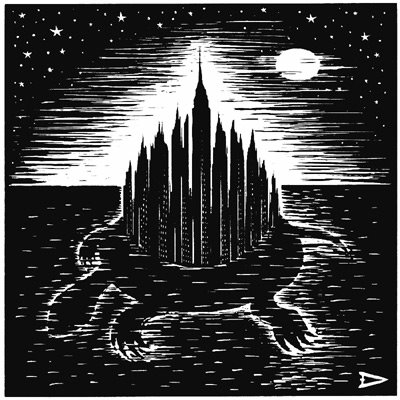
Turtle Island Graphic


From:
http://www.drooker.com/


Yesterday's clear blue skies - and everything else connected to the date-had me thinking about the Island...


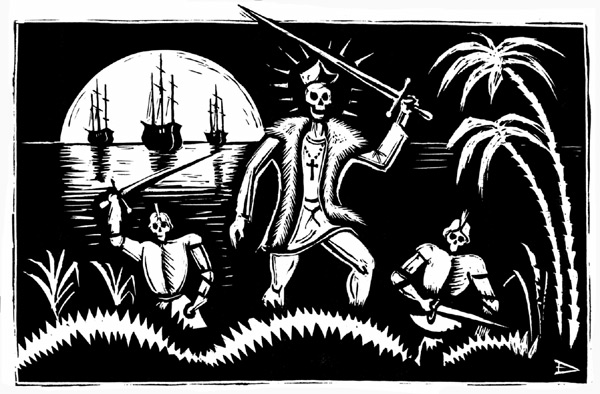
Here's another one, also connected:


And one more:


Drucker also created the logo for
Free Speech radio News:
http://fsrn.org/