Friday, January 20, 2012
Gungywump TurtleVision
Gungywamp
I’ve occasionally taken a look at various photos and information (and mis-information) about the Gungywump site. I’ve had many people ask me what I knew about it or thought about it, and having never visited the place, I never had much to say. Well, I came upon this just this morning, something I hadn’t seen before, a fine bit of Historical Era Archeology/Anthropology, which states:
“Much of the colonial and Early American structures in the Gungywamp indicate that the area was used for sheep farming. Ms. Susan Sutherland wrote an article about another sheep farm about five miles away from the Gungywamp complex which has similar stone structures as are found in the Gungywamp. Ms. Sutherland's article is entitled Colonial History: The Sheep Farm, Early Edgecomb Family and Fort Hill Brook Industrial Sites.”
If you comb through the article, you will find many references to the Indian Fort, Indian Corn barns,” zigzag stone rows, a “sumac mill,” and “heaps of stones.” It also mentioned that “Given the extensive stone walls and gravel mounds on Fort Hill Brook, it would not be surprising if slave labor had been used to build these and to do other tasks.”
I’ll say this: Ignoring the fact that just before the Historic Period, there was a great number of Native People living in the area, close to the sea, actively making use of resources maintained by the use of fire, just might have used stone rows to contain and control those fires, might not be “good science.”
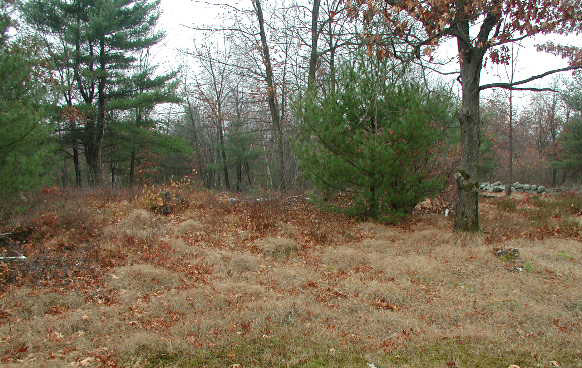
This photo below made me think of a stone row near my house, (detailed in the post http://wakinguponturtleisland.blogspot.com/2011/03/out-crop-with-zigzag.html):
In Camp Whiting, off of the Litchfield Turnpike in Woodbridge CT is another I was also reminded of:
As the tour guest walks the loop trail, "the main highway," and crosses through the gap in this very old rock wall, the tour guest will notice on the right that the rock wall continues up a steep incline. The construction of this rock wall was clearly built with stability in mind. Instead of placing the rocks to slope with the steep incline, which would make the rock wall unstable, the rock wall builders dug into the steep incline so that the rocks could be placed horizontally, thereby causing the rock wall to form a sort of "stair step" design up the steep incline…”
Gungywamp: A Virtual Tour - Now a Dead Link in 2022 when I am updating this post:
Thursday, January 12, 2012
CONNECTICUT & THE SEA
Broadcast Premiere: May 2000, CPTV
PROGRAM TRANSCRIPT (excerpt): NATIVE AMERICANS & THE SEA
CRONKITE: Native people in Connecticut from the earliest days looked to the sea for sustenance, transportation and culture.
MELISSA FAWCETT (Dir., Mohegan Tribal Museum Authority): In the beginning, we believe that the earth came out of the sea upon the back of grandfather turtle, Guganous Tuapas, great sea turtle. Since that time we’ve looked upon the turtle and the sea as the birth and origin of our beginnings and the grandfather turtle as the most sacred of all beings.
www.simonpure.com/sea.htm
images from:
http://connecticutwatertrails.com/CWTA%20-%20Resources%20-%20History%20Of%20Connecticut's%20Water%20Trails%20-%20Connecticut%20and%20The%20Sea%20-%20Connecticut%20Native%20Americans%20&%20The%20Sea.htm
Tuesday, January 10, 2012
the crow brought them corn
Monday, January 09, 2012
Governmnet Managed Shrines: Protection of Native American Sacred Site Worship
Saturday, January 07, 2012
Hobbomock from "A discourse on the religion of the Indian tribes of North America"
In Winslow's " Good News from New-England; or a relation of things remarkable in that plantation," anno 1622, occur Ihe following remarks on the subject of the Indian Religion:
" A few things I thought meete to adde here unto, which I have observed amongst the Indians, both touching their religion, and sundry other customes amongst them. And first, whereas myselfe and others, in former letters, (which came to the presse against my wille and knowledge,) wrote that the Indians about us are a people without any religion or knowledge of any God therein I erred, though wee could then gather no better; for as they conceive of many divine powers, so of one whom they call Kiehtan, to be the principal maker of all the rest, and to be made by none : Hee, (they say,) created the Heavens, Earth, Sea, and all creatures contained therein. Also, that hee made one man and one woman, of whom they say wee, and all mankind, came : but how they became so farre dispersed that know they not. At first, they say, there was no Sachem or King, but Kiehtan who dwelleth above the Heavens, whither all good men goe when they die to see their friends, and have their fill of all things : This, his habitation, lyeth westward in the Heavens they say; thither the bad men goe also, and knocke at His doore, but he bids them Quachel, that is to say Walke abroad, for there is no place for such ; so that they wander in restlesse want and penury. Never man saw this Kiehtan; onely old men tell them of him, and bid them tell their children; yea, to charge them to teach their posterities the same, and lay the like charge upon them. This power they acknowledge to be good, and when they obtain any great matter, meet together and cry unto him, and so likewise for plenty, victory, &etc, sing, dance, feast, give thankes, and hang up garlands, and other things in memory of the same.
" Another power they worship whom they call Hobbamock, and to the northward of us Hobbamoqui; this as farre as wee can conceive is the devil), him they call upon to cure their wounds and diseases. When they are curable, hee perswades them hee sends the same for some conceited anger against them, hut upon their calling upon him, can and doth help them; but when they are mortall, and not curable in nature, then he perswades them Kiehtan is angry and sends them, whom none can cure ; insomuch, as in that respect onely they somewhat doubt whether hee bee simply good, and therefore in sicknesse never call upon him. This Hobbomock appears in sundry formes unto them, as in the shape of a man, a deare, a fawne, an eagle, tyc., but most ordinarily as a snake.-" fyc. Purchas's Pilgrim, lib. x. chap. v. vol. 4. p. 18ii7
This Hobbomock, or Hobbamoqui, who " appears in sundry forms," is evidently the Oku or Tutelary Deity, which each Indian worships; and Mr. Winslow's narrative affords a solution of the pretended worship of the devil, which the first settlers imagined they had discovered, and which has since been so frequently mentioned on their authority, without examination. The natives, it was found, worshipped another being, beside the Great Spirit, which every one called his Hobbomock, or Guardian Oke. This, the English thought, could be no other than the Devil, and accordingly they asserted, without further ceremony, what they believed to be a fact. Hence, in a " Tractate, written at Henrico in Virginia, by Master Alexander Whitaker, Minister to the Colony there," (anno 1613,) we find the following ap count of the worship of the Kevms, or Tutelary Deity of the Virginian Indians :
"They acknowledge that there is a Great Good God, but know him not, having the eyes of their understanding as yet blinded : wherefore they serve the devill for feare, after a most base manner, sacrificing sometimes, (as I have here heard,) their owne children to him.* / hare sent one image of their God to the counsell in England, which is painted upon one side of a toadstoole, much like unto a deformed monster. Their priests, (whom they call Quiokosoughs,) are no other but such as our English witches are," he. Purchas, lib. ix. vol. 4. p 1771.
http://books.google.com/books?id=6BwwAAAAYAAJ&dq=Hobbomock&pg=PA1#v=onepage&q=Hobbomock&f=false
Hobbamocke is spelled many ways (Hobamock, Hobbomok, Hobbomock, etc.), and is also known by different names, like Abbomocho, Chepian, Chepi, and Cheepi. His multiple names reflect his slippery nature - he's elusive and hard to pin down.
Hobbomok appears in dreams in many forms, including a deer, a man, or an eagle, but his favorite forms are the eel and the snake. Terrifyingly, Hobbomok also sometimes appears as a European, as John Josselyn recorded in 1674:"Another time, two Indians and an Indess, came running into our house crying out they should all dye, Cheepie (Hobbomok) was gone over the field gliding in the air with a long rope hanging from one of his legs: we askt them what he was like, they said all wone Englishman, clothed with hat and coat, shooes and stockings."http://newenglandfolklore.blogspot.com/2010/05/hobbomok-and-shamanic-power.html
The Devil (who was no other than the Indian Devil—Hobbomock)
Salem Village was indeed to be destroyed—that is, converted to Satan—as the whole people [Christians] in due time were to be, or else to be cut off by diabolical Witchcrafts and torments. The object of Satan in 1692 appears to have been either to convert the Christians to his own faith and into subjects of his Kingdom, or else destroy them out of the land by his arts and Witchcrafts, and thus re-establish his ancient Kingdom, then fearfully endangered by the spread of the Puritan Church, and the decrease of his own Priests and subjects—the Indian Wizards, and fast-fading Red Men. The White Witches and Wizards of 1692 were aiding this Devil—this Hobbomock in this desperate scheme of re-conquering the land. It was, in effect, Satan fighting in rage and despair for the possession of New England, aye, even the whole western world.”
Footnote to text:
“There can be no reasonable doubt that the Devil of 1692 was the Indian Devil, Hobbomock. Cotton Mather in his trial of George Boroughs (Wonders of Invisible World) says, that the Witches called the Devil a Black* man, " and they generally say he resembles an Indian." Hutchinson (on Witchcraft) informs us (p. 77) that Cotton Mather attributed the Witchcraft of 1692 to the Indian Powaws (or Wizards), as sending their spirits or demons among the Whites. Now as Hobbomock was the God of these Powaws, and their patron and instigator, we see that Hobbomock was at the bottom of the plot and for the reasons we have endeavored to give in the text.
Those therefore of the Whites, who were engaged in the Witchcraft of 1692, were doubtless considered as having been seduced into the Plot of this Indian Devil and his native Priests to destroy the hated Church of Christ in New England, and to aid him and them in setting up his expected Kingdom — his Kingdom, moreover, as referred to in the Apocalypse.
The Satan of 1692 was evidently believed to be the old biblical Satan; but who in America took upon himself the disguise of an Indian, and in order to be the Indian Deity —he being able to assume any and all shapes and disguises to suit his own purposes. Thus our Fathers, while combatting Hobbomock,were only (in their own imaginations) dealing with the same Devil who had seduced Eve, tormented Job, tempted the Saviour, and assumed the shapes of various Saints and Apostles; and who would appear (if need be) even as an Angel of Light to deceive the very eleot. He was, too, the Satan of the Apocalypse.” ~ George Cheever in Historical collections of the Essex Institute, Volume 3
http://books.google.com/books?id=PG8MAAAAYAAJ&dq=Hobbomock&pg=PA70#v=onepage&q=Hobbomock&f=false
Thursday, January 05, 2012
PREHISTORIC AMERICA VOLUME II.
This book is the result of personal explorations which have continued at intervals for several years…It was the experience of the author that a single visit was not sufficient, for each successive visit would be sure to bring out some new point, either new mounds were discovered or new relations of the mounds to the topography were recognized, or new ideas were gained as to the use of the mounds or new significance seen in their shapes.As to the points which the author has sought to bring out in his explorations and descriptions the following is a summary:
First: the shape of the effigies. Great care has been taken to make the shape conform to the measurements, and yet the effigies have been studied by the eye so as to bring out the actual figures.
Second: The grouping of the effigies. The relative position of the various figures in the groups and the relative position of the groups in each series and of the series to each locality have all been studied. The practical use of the effigies could not be ascertained without thus studying the system.
Third: The relation of the effigies to the topography has been closely scrutinized for this often reveals the real object. The elevation as well as the location has been studied. The view from the mounds has also always been noticed. It is an outside observation which often suggests the intent and purpose of the effigy as well as the measurement of the figure itself.
Fourth: The contents of the mounds have been studied with more or less care. Excavation has not been the chief object. Relic hunting is not a specialty with the writer.
Fifth: The totem system and clan life have been carefully investigated. The location of the effigies with the geographical surrounding will reveal much of the real history and character of the builders. The shape of the effigies will often show the name or emblem of the clan. This inner history of the people has been our chief object of study.
The destruction of the monuments has been a great hindrance to the full understanding of them. The writer considers himself fortunate in having entered upon this field before the destruction was carried on further than it is. In a few years the data would have been lost and it would have been impossible to give the explanation of groups. Even the destruction of a single mound will at times destroy the clue which is essential to understand the groups.
The mythologic significance and the intent of the effigies as picture writing cannot be deciphered when any of the figures have disappeared. It is to be hoped that the effigies will be preserved and that this book will be an inducement for the continuance of the .study and will increase the interest in them us the monuments of a people which has passed away."
(I was looking this part of the book: "Serpent circle near Utley's...head and tail making a gateway or opening to the circle," but couldn't search for the phrase. I posted this because it so sounds so familiar even tho' it's 100 plus years later. Could be Peter saying it rather than Peet, so to speak.)
Wednesday, January 04, 2012
Indian Myths And Effigy Mounds (1889)
…The totems of other tribes were painted upon the tents or were carved into posts and placed near the doors of the houses or the graves of the dead, but here were built as great earth-heaps, They indicated the name and ancestry of the people. The effigies did the same thing, but in addition they served a practical purpose. They were used as screens for hunters, as defensive walls for villages, as foundations for houses, as mounds for the burial of the dead, and at the same time were representations of the mythologic ideas of the people.
This point we think is clear: whatever the tribe was who built the effigies, that tribe evidently placed its totems or clan emblems on the soil.”
http://books.google.com/books?id=hJMLAAAAIAAJ&dq=serpent+at+summit&pg=PA40#v=onepage&q=turtle&f=false
Tuesday, January 03, 2012
Detail in "A Wall of No Great Importance"
I maintained that the stone (perched on top of the “point” of this section of zigzag above) was a turtle stone back then when I was trying to get the archeological community to take a closer look at the row. I wish I had noticed this particular stone back then and had the concept of a Humanly Worked Single Stone Turtle in my “glossary.” It has since become a familiar shape, even in places I haven't been: http://wakinguponturtleisland.blogspot.com/2010/10/leominster-familiar-shape.html
It doesn’t look like much at first, a stone broken and eroded where it points outward from the row:
But seen just right, it resembles many other Single Stone Turtles, the testudinate carapace shape of the stone, with some chipping done at the wider end, to create the head of a turtle and the suggestion of the opening in the shell as well:
Above looking NW, below looking SE. The darker colored shaggy barked tree is very close to the stone; in the distance is the former Indian Field of the "Wigwams," the stone Fishweir aproximately in the center of the photo.
Monday, January 02, 2012
The "Abandoned Stone Wall" Image Search
reads the caption under this image found at
http://rockpiles.blogspot.com/2006/08/rock-piles-built-into-walls.html
Sunday, January 01, 2012
Heckewelder "enclosed it with a fence"
In the year 1777, says the Rev. Mr. Heckewelder, in his interesting account of the Indian Nations, some travelling Indians having put their horses over night in my little meadow at Gnadenhutten on the Muskingum, I called on them in the morning to know why they had done it. I endeavoured to make them sensible of the injury they had done me, especially as I intended to mow the meadow in a day or two. Having finished iny complaint, one of them replied—' My friend, it seems you lay claim to the grass my horses have eaten, because you have enclosed it with a fence; now tell me who caused the grass to grow? Can you make the grass grow? I think not, and nobody can, except the great Mannitto. He it is who causes it to grow both for my horses and for yours! See friend! the grass which grows out of the earth, is common to all. Say—did you ever eat venison and bear's meat ?'—' Yes, very often !'— 'Well, and did you ever hear me or any other Indian complain about that?' 'No.'—' Then be not disturbed at my horses eating only once, of what you call your grass, though the grass my horses eat, in like manner as the meat you did eat, was given to the Indians by the Great Spirit. Besides, if you will but consider, you will find that my horses did not eat all your grass. For friendship's sake, however, I shall not put my horses in your meadow again.'
Gimme That Old Time Photography
Saturday, December 31, 2011
"That Stone Sweat Lodge Would Make a Nice Pig Pen"
My take on this is that John Eliot was encouraging Indians to turn existing stone rows into the legal fences defined by the early colonists that justified and signified ownership of land, improved the land in the eyes of English Law. The multi-purpose stone rows that were created by Indians were not only practical devices for land management of resource zones but also contained elements of Ceremonialism, a sacredness and spirituality shown by the careful and artistic placement of the stones, the shapes of the rows themselves, Great Serpent Effigies, sort of as if the whole Ethnographic Cultural Landscape was a big piece of religious architecture, protected by the spirit beings.
The tooles were the metal axes and wedges used to split rails, I'm guessing, the skills the ability to make "cross and rail" fences and the heart similar to a response to the suggestion that your combination open air stonework cathedral and fire tended rock gardens would make a good enclosures for livestock...
“Hassanamesit Woods is now a tract of land set aside for
hiking trails and outdoor education; however it was once part of a large 10,000
acre area of land inhabited by the Hassanamisco band of Nipmuc. In 1654,
“Hassanamesit” or “land of the small stones” (Dough ton 1997) became the third
of several praying towns founded by John Eliot to propagate the gospel…
These families were expected to embrace English styles of land ownership in severalty, and “improve” their parcels in such a way that was satisfactory to the Trustees by clearing, fencing, or altering the natural landscape…
map?
Also in 1729, John Hazelton of Sutton agreed to lease 2
meadows that belonged to Sarah and Peter. He paid the Trustees, “for the use of
the said Peter and his Squaw Twenty Shillings per Annum for four years” (Earle
Papers: Octavo Vol. 1) under the terms that the Trustees would make allowances
should Peter care to “improve any part of the grass for his own use” (Earle
Papers: Octavo Vol. 1). This agreement, like many others made at the same time
with other Native proprietors at Hassanamesit, included the installation of a
“good four rail fence” which, at the end of the four-year term, would be left
in good condition for the future use of the owner. Interestingly, the same John
Hazelton proposed a similar deal with Christian Misco for the use of her meadow
and orchard yard. He proposed to fence the area, care for the apple trees, and
yield to Misco’s right to any apples, “as she shall have occasion to use for
her own eating” (Earle Papers: Octavo Vol. 1)…
http://www.fiskecenter.umb.edu/Hassamenesit%20Web/Site%20History%20for%20Webpage.pdf
Friday, December 30, 2011
Smith in NE 1615/There never was a Nipmuc tribe as such
“That part wee call New England…but that parte this discourse speaketh of, stretcheth but from Pennobscot to Cape Cod…Southward along the Coast and the Riuers we found Mecadacut, Segocket, Pemmaquid, Nusconcus, Kenebeck, Sagadakock, and Aumonghcawgen; And to those Countries belong the people of Segotago, Paghhuntanuck, Pocopasmm, Taughtanakagnet, Warbigganus, Nassaque, Mashcrosqueck, Wawrigweck, Moshoquen, Wakeogo, Pasharanack, 8tc. To these are allied the Countries of Aucocisco, Accominticus, Passataquack, Aggmoom, and Naemkeck: all these, I could perceiue, differ little in language, fashion, or gouernment: though most be Lords of themselues, yet they hold the Bashabes of Pennobscot, the chiefe and greatest amongst them.
The next I can remember by name are Mattahunts; two pleasant lles of groues, gardens and corne fields a league in the Sea from the Mayne. Then Totant, Massachuset, Pocapawmet, Quonahassit, Sagoquas, Nahapassumkeck, Topeent, Seccasaw, Tothtet, JSasnocomacak,. Accomack, Chawum; Then Cape Cod by which is Pawmet and the He Nawset of the language, and alliance of them of Chawum: The others are called Massachusets; of another language, humor and condition: For their trade and marchandize; to each of their habitations they haue diuerse Townes and people belonging; and by their relations and descriptions, more then 20 seuerall Habitations and Riuers that stretch themselues farre vp into the Countrey, euen to the borders of diuerse great Lakes, where they kill and take most of their Bevers and Otters. From Pennobscot to Sagadahock this Coast is all Mountainous and lles of huge Rocks, but ouergrowen with all sorts of excellent good woodes for building houses, boats, barks or shippes; with an incredible abundance of most sorts of fish, much fowle, and sundry sorts of good fruites for mans vse…Betwixt Sagadahock and Sowocatuck there is but The milium or two or three sandy Bayes, but betwixt that and wyieCape Cod very many: especialy the Coast of the Massachusets is so indifferently mixed with high clayie or sandy cliffes in one place, and then tracts of large long ledges of diuers sorts, and quarries of stones in other places so strangely diuided with trincturetl veines of diuers colours: aSj Free stone for building. Slate for tiling, smooth stone to make Fornaces and Forges for glasse or iron, and iron ore sufficient, conueniently to melt in them: but the most part so resembleth the Coast of Deuonshire, I thinke most of the cliffes would make such limestone: If they be not of these qualities, they are so like, the)' may deceiue a better iudgement then mine; all which are so neere adioyning to those other aduanlages I obserued in these parts, that if the Ore proiie as good iron and steele in those parts, as-1 know it is within the bounds of the Countrey, I dare engage my head (hauing but men skilfull to worke the simples there growing) to haue all things belonging to the building the rigging of ship pes of any proportion, and good marchandize for the fraught, within a square of 10 or 14 leagues: and were it for a good'rewar.de, I would not feare to procure it in a lesse limitation.
And surely by reason of those sandy cliffes and cliffs of rocks, both which we saw so planted with Gardens and Corne fields, and so well inhabited with a goodly, strong and well proportioned people, besides the greatnesse of the Timber growing on them, the greatnesse of the fish and moderate temper of the ayre…”
http://books.google.com/books?id=n8A8AAAAIAAJ&dq=%22so%20planted%20with%20Gardens%20and%20Corne%20fields%22&pg=PA422#v=onepage&q=%22so%20planted%20with%20Gardens%20and%20Corne%20fields%22&f=false
[Note: This is a single part of what will be, by my classification, about 240 compact tribal histories (contact to 1900). It is limited to the lower 48 states of the U.S. but also includes those First Nations from Canada and Mexico that had important roles (Huron, Micmac, Assiniboine, etc.).
Feel free to comment or suggest corrections via e-mail. Working together we can end some of the historical misinformation about Native Americans. You will find the ego at this end to be of standard size. Thanks for stopping by. I look forward to your comments...Lee Sultzman]
There never was a Nipmuc tribe as such. Nipmuc is a geographical classification given to the native peoples who lived in central Massachusetts and the adjoining parts of southern New England. They lived in independent bands and villages, some of which at different times were allied with, or subject to, the powerful native confederacies which surrounded them. Massomuck, Monashackotoog, and Quinnebaug were Nipmuck, but they were subject to the Pequot before 1637. In like manner, the Nashaway at one time belonged to the Sokoni and Pennacook, while Squawkeag was originally part of the Pocumtuc.
Villages: Accomemeck (Acoomemeck), Assabet, Attawaugan, Boggistowe, Chabanakonkomun, Cochhituate, Cocatoonemaug, Coweset (see Narragansett), Escoheag (Eascoheage, Easterig), Hadley Indians, Manchaug (Monuhchogok) (see Pequot), Mashapaug (see Massachuset), Massomuck (Wabaquasset, Wappaquasset, Wabiquisset) (see Pequot) (subject to Mohegan after 1637), Medfield, Menemesseg, Metewemesick, Missogkonnog, Monashackotoog (Monoshantuxet) (see Pequot), Musketaquid, Nashua (Nashaway) (see Sokoni and Pennacook), Naukeag, Nichewaug, Nipnet, Pascoag (Paskhoage), Pegan (Piegan), Poniken (Ponnakin), Quaddick, Quahmsit, Quinebaug (Quinnebaug, Quinapeake) (see Pequot), Quinsigamond, Segreganset, Segunesit, Squawkeag (Squaeg) (see Pocumtook), Tatumasket, Totapoag, Wenimesset, Woruntuck, Wunnashowatuckoog (see Pequot), and Wusquowhanaukit.
Praying Indian Villages 1674:Chachaubunkkakowok (Chaubunagungamaug), Hassanamesit, Magunkaquog (Makunkokoag, Magunkook), Manchaug (Monuhchogok), Manexit (Maanexit, Mayanexit, Fabyan), Massomuck (Wabaquasset, Wappaquasset, Wabiquisset) (also Pequot), Nashoba (Nashobah), Okommakamesit (Ockoogameset), Pakachoog (Packachaug), Quabaug (Quaboag), Quantisset (Quinetusset), Wacuntug (Wacuntuc, Wacumtaug), and Washacum.
Praying Indian Villages 1680: Chachaubunkkakowok (Chaubunagungamaug), Hassanamisco, Magunkaquog (Makunkokoag, Magunkook), Manchaug, Manexit (Maanexit, Mayanexit, Fabyan), Massomuck (Wabaquasset, Wabiquisset), Nashobah, Nashaway (Weshacum), Okommakamesit (Ockoogameset), Pakachoog (Packachaug), Quabaug (Quaboag), Quantisset (Quinetusset), Wacuntug (Wacuntuc, Wacumtaug), and Wamesit. There was also small reservation at Hassanamesit.
http://www.dickshovel.com/nipmuc.html
Thursday, December 29, 2011
Native American Turtle Mythology
Wednesday, December 28, 2011
Ceremonial Landscape
When archaeologists can’t quite understand something they (or somebody else) has found, it becomes “Ceremonial,” regardless of whether or not that “Ceremony” might be known. The only result I got looking for a definition of Ceremonial Landscape this morning is:
Ceremonial Stone Landscape from Wikipedia, the free encyclopedia:
"Ceremonial Stone Landscapes is the term used by USET, United Southern and Eastern Tribes, Inc.[1], a non-profit, inter-tribal organization of American Indians, for certain stone work sites in eastern North America. Elements often found at these sites include dry stone walls, rock piles (sometimes referred to as cairns), stone chambers, unusually-shaped boulders, split boulders with stones inserted in the split, and boulders propped up off the ground with smaller rocks. While neither the age of these sites nor the idea of their creation by indigenous peoples has been accepted generally, interest in the sites is increasing. This interest is generated in part by USET's Resolution #2007:037 [2], entitled Sacred Ceremonial Stone Landscapes Found in the Ancestral Territories of United Southern and Eastern Tribes, Inc. Member Tribes.”
http://dictionary.sensagent.com/ceremonial+stone+landscape/en-en/
Easier to find is the definition of Cultural Landscapes:
“Cultural Landscapes have been defined by the World Heritage Committee as distinct geographical areas or properties uniquely "..represent[ing] the combined work of nature and of man..".[2]
The World Heritage Committee has identified and adopted three categories of cultural landscape, ranging from (i) those landscapes most deliberately 'shaped' by people, through (ii) full range of 'combined' works, to (iii) those least evidently 'shaped' by people (yet highly valued). The three categories extracted from the Committee's Operational Guidelines, are as follows[3]:
(i) "a landscape designed and created intentionally by man"; (like Central Park in NYC or your local Walmart)
(ii) an "organically evolved landscape" which may be a "relict (or fossil) landscape" or a "continuing landscape";
(iii) an "associative cultural landscape" which may be valued because of the "religious, artistic or cultural associations of the natural element"
http://en.wikipedia.org/wiki/Cultural_landscape
So I guess what I really spent a lot of time looking at and wondering about is an “associative cultural landscape” or at least the remains of one type of Associated Cultural Landscape called an Ethnographic Landscape (a landscape containing a variety of natural and cultural resources that associated people define as heritage resources. Examples are contemporary settlements, religious sacred sites and massive geological structures. Small plant communities, animals, subsistence and ceremonial grounds are often components.) sticking out of the layers of successive cultural landscapes that sort of surround it or have made use of it in some instances, as in the case of “stone walls.”
So here is what the World Heritage Committee has to say:
"The Associative Cultural Landscape is a type that is linked to cultural traditions. The inclusion of such landscapes on the World Heritage List is justifiable by virtue of the powerful religious, artistic or cultural associations of the natural element rather than material cultural evidence, which may be insignificant or even absent. The associative cultural landscape is the physical place where intangible aspects of cultural heritage are embodied.
Examples of each type of cultural landscape are inscribed on the World Heritage List. Since 1992, with the acceptance of these definitions and the ability to inscribe cultural landscapes, there have been 60 cultural landscapes of outstanding universal value to all of humanity inscribed as a shared global heritage. Cultural landscapes are places of heritage value. Geologically diverse cultural landscapes are a rich array of local, regional and global heritage resources. For example:
• Sacred groves in Ghana that foster traditional medicine and preserve biodiversity date to early peoples
• Seashore villages that express the interdependence of the sea and the community in ways of life, craft, work, settlement pattern, land uses and scale example—Norway? Nova Scotia
• Egyptian and Chinese tomb site planning, layout , earth forms and structures are ancient designed landscape
• Modern gardens of globally important landscape architect Roberto Burle Marx date to the twentieth century
• The sacred mountain of the New Zealand Maori peoples is associated with spiritual beliefs"
http://www.iflaclc.org/definitions.html
Detailed Documentation of a Cultural Landscape
A single landscape architect may begin with a specific historic landscape for a preservation project or in response to a threat. The completion of a detailed inventory form may follow the international form prepared by the ICOMOS IFLA International Scientific Committee on Cultural Landscapes (see right). There are also inventory forms from several countries that may be of use for inventory planning (see right). The location, name and history of the landscape are gathered along with details of the existing conditions, ownership, access and legal protection.
The historic character of the landscape, and the degree to which that character is evident today, guides the research and documentation of the inventory, and contributes to assessment and planning for the future. In developing an inventory we seek to perceive and document the full range of resources that comprise the landscape. A useful approach is to follow a comprehensive landscape character-defining features check list as a guide.
This list directs attention to each aspect of the physical landscape:
• Land Uses, Patterns, Clusters
• Natural Systems
• Spatial Organization
• Visual Relationships
• Topography, Surface Drainage
• Vegetation
• Circulation Systems
• Water Features, Natural and Constructed
• Non-Habitable Landscape Structures and Buildings
• Spatial Character of Habitable Structures
• Vocabulary of Site Furnishings and Objects
The tangible, character-defining features of the landscape, noted in this listing, should be explored in the archival research, historic period narratives, fieldwork addressing existing conditions, and exploration and selection of preservation interventions. Rediscovering, in detail, the historic character of the landscape guides the consideration of the future.
The intangible values and meanings of a cultural landscape should also be documented and understood. These values may include:
• Location for festivals
• Setting for traditional music, dance, performance
• Route of pilgrimage
• Setting for worship
• Place of memory of past events
• Place of traditional practices
• Gathering place for native plants
• Gathering place for craft materials
• Traditional place for experience at a special time of year
http://www.iflaclc.org/inventory/documentation.html
In the USA, here is a link to “the” guidelines, prefaced by this little bit:
Cultural landscapes are composed of a collection of features which are organized in space. They include small-scale features such as individual fountains or statuary, as well as patterns of fields and forest which define the spatial character of the landscape.
Individual features in the landscape should never be viewed in isolation, but in relationship to the landscape as a whole. Each situation may vary, and some features may often be more important than others. For example, circulation (roads, parkways, drives, trails, walks, paths, parking areas, and canals) may be an important historic element in one landscape, while in another it may have little if any significance.
Overall, it is the arrangement and the interrelationship of these character-defining features as they existed during the period of significance that is most critical to consider prior to treatment. As such, landscape features should always be assessed as they relate to the property as a whole. Thus, spatial organization and land patterns are always listed first in each section of the Guidelines.
Organizational Elements of the Landscape
Spatial Organization and Land Patterns refers to the three-dimensional organization and patterns of spaces in a landscape, like the arrangement of rooms in a house. Spatial organization is created by the landscape’s cultural and natural features. Some form visual links or barriers (such as fences and hedgerows); others create spaces and visual connections in the landscape (such as topography and open water). The organization of such features defines and creates spaces in the landscape and often is closely related to land use. Both the functional and visual relationship between spaces is integral to the historic character of a property. In addition, it is important to recognize that spatial relationships may change over time due to a variety of factors, including: environmental impacts (e.g. drought, flood), plant growth and succession, and changes in land use or technology.
Character-Defining Features of the Landscape
There are many character-defining features that collectively contribute to the historic character of a cultural landscape. These are as follows:
Topography, the shape of the ground plane and its height or depth, is a character-defining feature of the landscape. Topography may occur naturally or as a result of human manipulation. For example, topographic features may contribute to the creation of outdoor spaces, serve a functional purpose, or provide visual interest.
Vegetation features may be individual plants, as in the case of a specimen tree, or groups of plants such as a hedge, allee, agricultural field, planting bed, or a naturally-occurring plant community or habitat. Vegetation includes evergreen or deciduous trees, shrubs, and ground covers, and both woody and herbaceous plants. Vegetation may derive its significance from historical associations, horticultural or genetic value, or aesthetic or functional qualities. It is a primary dynamic component of the landscape’s character; therefore, the treatment of cultural landscapes must recognize the continual process of germination, growth, seasonal change, aging, decay, and death of plants. The character of individual plants is derived from habit, form, color, texture, bloom, fruit, fragrance, scale and context.
Circulation features may include, roads, parkways, drives, trails, walks, paths, parking areas, and canals. Such features may occur individually or be linked to form networks or systems. The character of circulation features is defined by factors such as alignment, width, surface and edge treatment, grade, materials, and infrastructure.
Water features may be aesthetic as well as functional components of the landscape. They may be linked to the natural hydrologic system or may be fed artificially; their associated water supply, drainage, and mechanical systems are important components. Water features include fountains, pools, cascades, irrigation systems, ponds, lakes, streams, and aqueducts. The characteristics of water features and reflective qualities; and associated plant and animal life, as well as water quality. Special consideration may be required due to the seasonal changes in water such as variations in water table, precipitation, and freezing.
Structures, site furnishings, and objects may contribute to a landscape’s significance and historic character. Structures are non-habitable, constructed features, unlike buildings which have walls and roofs and are generally habitable. Structures may be significant individually or they may simply contribute to the historic character of the landscape. They may include walls, terraces, arbors, gazebos, follies, tennis courts, playground equipment, greenhouses, cold frames, steps, bridges, and dams. The placement and arrangement of buildings and structures are important to the character of the landscape; these guidelines emphasize the relationship between buildings, structures, and other features which comprise the historic landscape. For additional and specific guidance related to the treatment of historic buildings, please consult the Guidelines for Preserving, Rehabilitating, Restoring and Reconstructing Historic Buildings.
Site furnishings and objects generally are small-scale elements in the landscape that may be functional, decorative, or both. They can include benches, lights, signs, drinking fountains, trash receptacles, fences, tree grates, clocks, flagpoles, sculpture, monuments, memorials, planters, and urns. They may be movable, used seasonally, or permanently installed. Site furnishings and objects occur as singular items, in groups of similar or identical features, or as part of a system (e.g. signage). They may be designed or built for a specific site, available though a catalog, or created as vernacular pieces associated with a particular region or cultural group. They may be significant in their own right, for example, as works of art or as the work of an important designer.
http://www.nps.gov/tps/standards/four-treatments/landscape-guidelines/organization.htm