Tuesday, January 30, 2007


Peter left a comment about the last post so I had to look at those two photos again.


I want to identify this one as a box turtle on a big stone sticking out of the ground.

See the high dome of the plastron and the ridges on either side of where the turtles head should be?


It looks like this "grandfather" that I think is beyond a doubt a box turtle, with what other people call "the sunbursts" and I refer to as beaver prints. The Estabrook Turtle is more antomically correct, the "serrated marginal scutes" look just like photos of actual box turtles...


Dan's photo shows a "closer to the ground stone" below and a smoother shaped "low dome" stone carapace that makes me think "terrapin" or "snapper."


Or a "slider," which by coincidence is my nickname at this pizza joint my band plays at because I play slide guitar.


Some stone work might be considered crude, but often there is high degree of detail in lots of it. I'm thinking of those photos of mounds where I think I see long necks and legs that make me think "snapping turtle."


I know of a couple of stone turtles that have definate spots all over them, cyrstals of quartz and even garnet. I wonder what kind of turtle those could be...


Getting Turtle Specific, I googled “turtle identification” this morning, got a bunch of results, and include them here, with the thought in mind that stone effigies of turtles would most likely have similar characteristics.
What Kind of Turtle Do I Have?
Copyright by Valerie Haecky (who writes:) "This document may be freely distributed for non-profit use, provided this notice is included."
...www.turtlecare.net/what.htm
"People often ask, what species of turtle they have, or even, whetherthey have a water or box turtle. The following guide is a quick way fordetermining some common types of turtles. It is essential for you tofind out what kind of turtle you have, since each type of turtle hasdifferent requirements. The following are two books that I use myself: "The Audubon Society Field Guide to North American Reptiles and Amphibians" by Bebler and King. ISBN 0-394-50824-6 "Turtles of the World" by C. H. Ernst and R. W. Barbour. ISBN 1-56098-212-8...


5. If your land turtle has a high, domed shell, it is probably a box turtle.

6. If your turtle has a flat, unkeeled carapace with yellow, black, and possibly orange or red markings, it is a Chrysemys species. This includes cooters, sliders, and painted turtles.

7. If your turtle is yellow/black with red or orange markings on its cheeks, it is a red-eared slider turtle. If there are red crescents on the marginal scutes, and red and yellow stripes on the legs, it is a painted turtle.

8. If your turtle has a brown or black carapace with 3 ridges, and the skin is olive or black, you might have a Reeves turtle.

9. If your turtle has lots of yellow spots on the carapace, it is a spotted turtle...

11. If your turtle has the following properties, it is one of several types of snapping turtle:

* Clawed front feet/webbed back feet

* Small plastron, it looks like the turtle is wearing a shell that is too little for it when looked at from below

* Large head, long tail, and long neck for the size of the shell

* Usually dark/black carapace

* Hooked jaws..."


At http://www.torontozoo.com/adoptapond/Turtles.asp I added a few new words to my turtle vocabulary:
1. Scutes
2. Longitudinal keel
3. Serrated marginal scute
(as marked on the above image I'm pasting in from their website).

And here’s a long list of names with links to all sorts of stuff from CNAH – the Center for North American Hereptology: http://www.naherpetology.org/nameslist.asp?id=7

Thursday, January 25, 2007

Nice To Be Mentioned

It's nice to be mentioned in Rock Piles now and again.


Like in the recent "Group Walk in Estabrook Woods:"


"... when I first explored Estabrook woods, I photo'd a large propped rock on a support boulder which looked like a turtle's carapace. Tim MacSweeney had some fun with that photo. "


I did have fun with that photo, afflicted as I am with Turtle Vision, possibly a form of mental illness - or perhaps not.


Here's what that was all about, the stone and the fun...


And Dan Boudillion had a photo of a very similar looking stone that at first glance I thought was the same stone!


These photos (and more rantings and ravings) were originally published at the NEARA website, under the title "Turtle Vision," as a "guest perspective."


"What you see is an illusion of what you see, until you learn to see what you're seeing."

There is a difference between a hallucination and an illusion...

Thursday, January 18, 2007

A Wall of No Great Importance


I guess these road realignment plans aren't going to happen, but I'll post this up anyway.


I don't think their preservation had much to do with me trying to get them recognised as to what they could possibly be - "rows that functioned as firebreaks for controlled burning, were perhaps hunting devices, and had a spiritual purpose as well..."

"A letter from the CT State Historic Preservation Office...stated that the wall is considered to be of no great importance, but I strongly disagree with that. The possibility exists that this row of stones may not be of Colonial or Historic origin but could rather be prehistoric in origin, built by Native Americans as part of a land management scheme that depicts a higher degree of civilization than is accepted by most archaeologists and anthropologists.
There are actually two adjoining stone rows in question. One is a linear row that joins a zigzag stone row, a row atypical of the incidental construction of zigzag row that results from stones being thrown up against a wooden “snake fence” that has long since deteriorated, as in described in books about stone walls by Eric Sloane and others..."
These are the sections of zigzag stone rows that might have been buried - or removed and sold- without a serious study; they aren't the greatest of photographs, but I think I captured a little of the zigzag nature of them, as well as some testudinate forms that lead me to believe they are Native American constructions...


Tuesday, January 16, 2007

Oldddd Stufffff


"A Zigzag on a Bison Skull May be North America's Oldest Art"

"What looks like a rather nondescript, zigzag line on the skull of an extinct bison turns out to be an exciting bit of artwork: It apparently is the oldest painted object ever recovered in North America.

The forehead of the skull was decorated with a jagged, reddish line sometime between 10,200 and 10,900 years ago, reports archaeologist Leland Bement of the Oklahoma Archeological Survey.


The unique specimen was recovered from a bone bed at the site of a Folsom-culture buffalo kill in northwestern Oklahoma. Bement said the painted skull was placed near the entrance of the kill site, perhaps to ensure the success of future hunts. The paint, made of a locally available iron mineral, was preserved for 10 millennia because the skull was quickly covered by the carcasses of bison killed during a subsequent hunt. The good-luck charm apparently worked."

M DK

Current Research in the Pleistocene 14:6-9 (1997)
A Painted Skull from the Cooper Site: A Folsom Bison Kill in NW Oklahoma

Leland C. Bement, Marian Hyman, Michael E. Zolensky, and Brian J. Carter

"An extensively trampled bison skull from the contact between two of the three bone beds at the Folsom-age Cooper site in NW Oklahoma has a red zigzag line 5cm long and 4mm wide painted on its frontal (Figure 1). The line traverses the frontal suture, and paint is deposited on the open suture walls. A second area of paint lies 1.5 cm anterior of the first. Its extent is unknown due to damage from trampling. Taphonomic and site formation analyses suggest the skull was painted just prior to the second kill, after natural decay had cleaned and bleached the skull's surface (Bement 1994). The success of the second kill is amply indicated by the bison skeletons overlying the painted skull and extensive damage by trampling."
"Circular and zigzag pictographs are very common in Fern Cave (See Photo 6).This could be due to some American Indians' belief that powerful shamans could pass through rocks marked with circles and zigzags. The circular elements might be tunnels into other dimensions or worlds, as in shamanic trances of transformation, and the zigzags may refer to the Milky Way, which some Native American groups considered to be the path of dead souls (Lee 1988:139). Natural cracks in the stone were often enhanced with these patterns and represented passages into the rocks. These openings allowed the shaman access to the power in the stone, and provided passageways to the spirit world."

http://members.tripod.com/~fclark/creative_corner/fern_cave.html
A Narration of the Captivity and Adventures of John Tanner
Dr. Edwin James (1830)

“It must have been early spring when we arrived at Saugenong, for I can remember that the leaves were small and the Indians were planting their corn. They made me help in their labors. After the planting they all left the village and went out to hunt meat and dry it, and they took me with them.
When they came to their hunting grounds, they chose a place where there were many deer. Here they built a long screen, like a fence, of green boughs and small trees. The Indians were to shoot the deer from one side of it, and they showed me how to remove the leaves and dry brush from that side. I sometimes had the help of the squaws and children in this work, but at other times I did it alone.”

The Occasional Chestnut Rail


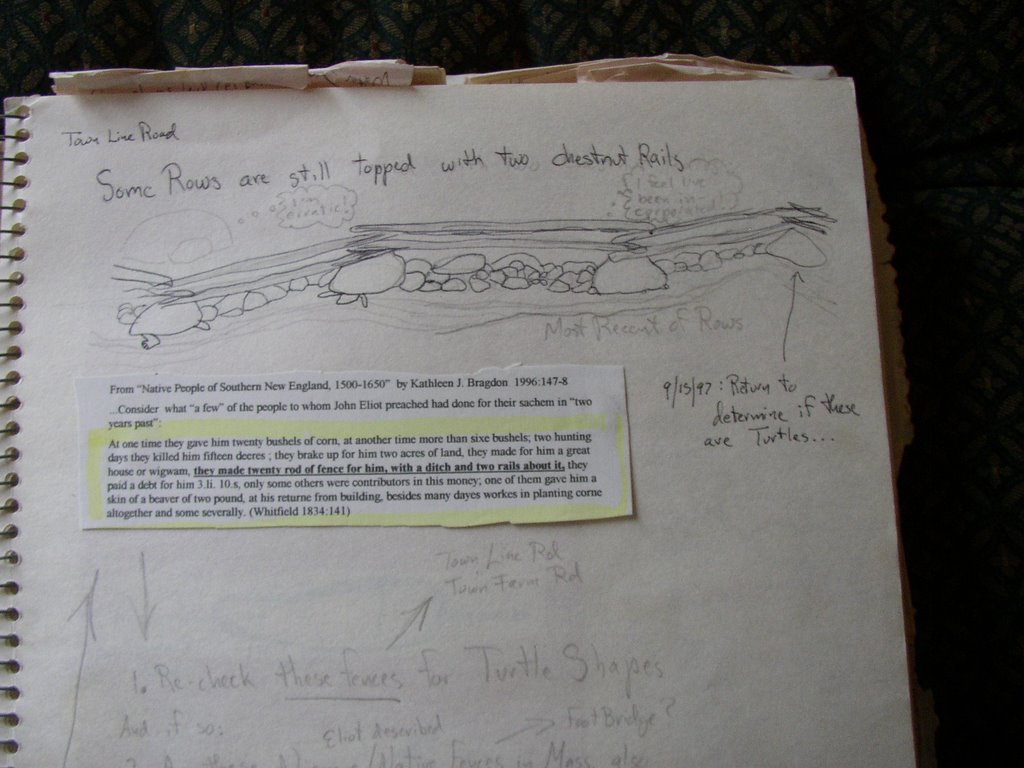
Every once in a while I find a wooden rail or two on top of a stone row. I assume they are chestnut rails because they lasted so long, but they could be any of the more popular commonly used and easy to split woods but they just look so much like chestnut to me, an old antique restorer-guy who was always being asked to identify wood.


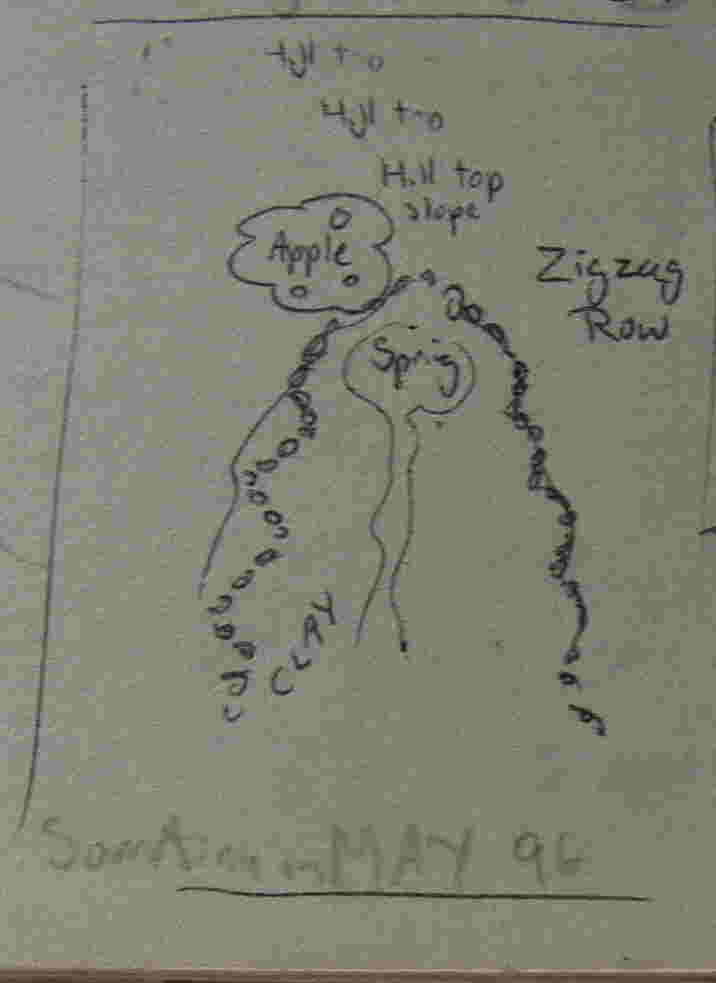
I posted up a “soon come” photo – a photo of a notebook page – and wrote that I wrote down the wrong name of the road in the sketchbook. Well, I didn’t; there is another of the multiple “town line roads” surrounding me in four or five different places (including even an “old town line” road or two) that have some zigzag stone rows with rails on top of them.
And the stones are testudinate – shapes reminiscent of turtles – and I’m sure it was easier to leave the stones in place and then turn a trail into a road that used to go to an artist’s colony way back in history and then turn back into a wood road that eventually reverts to a tractor road that eventually turns into a trail that now opened back up as an ATV and dirt-bike race track (they never drive slowly, do they?) that eventually someone will get seriously hurt or killed on.
And there’s hammer stones and shaft abraders and those stones with the depressions worked into them to crack nuts just sitting there on the rows, along with old bottles, cans, tail pipes, tires, snuff and kerosene cans as well as spent shot gun shells etc.

One of the other places with rails on zigzags is across the road from my cousin’s former house – before she moved to the house where, out by the entrance of her driveway, there used to be Pomperaug’s Memory Pile - that I think I posted a woodcut of, either here or at Rock Piles.

This particular zigzag row remnant, like the zigzag row remnant that is along the road by my house, is disturbed at its southern end by the old poor house or work farm of the late 1700’s, where all kinds of linear and rectangular and definitely colonial sorts of stone work abound.


There's a swamp back there now, so I'm guessing the stone row protected that resource zone from burning (and vice versa, if you wanted to burn over the swamp).


Or it was a colonial "animal containment fence" for some really short legged creatures like cows or sheep from getting into the swamp - or perhaps for keeping frogs inside the swamp - because we all know Indians lacked the ability to use stone.

Sometimes the "difficult to capture (in photos) zigzag rows" aren't difficult to capture under certain conditions and here's one that didn't get away...


Some details:


4/9/2020 Edit - adding Eye and Horns to the Snake Head Stone:


Resting on the big point stone is a (possible) smaller, hand-sized, 
  hammer
stone-like 
cobble 
with a distinct depression on the bottom that suggests a "nutting stone" theme happening here...

Friday, January 12, 2007

Bad Scanner day

My scanner acts up every once in a while.
It's frustrating.
So how about this:


Here's some stone worked spring things:


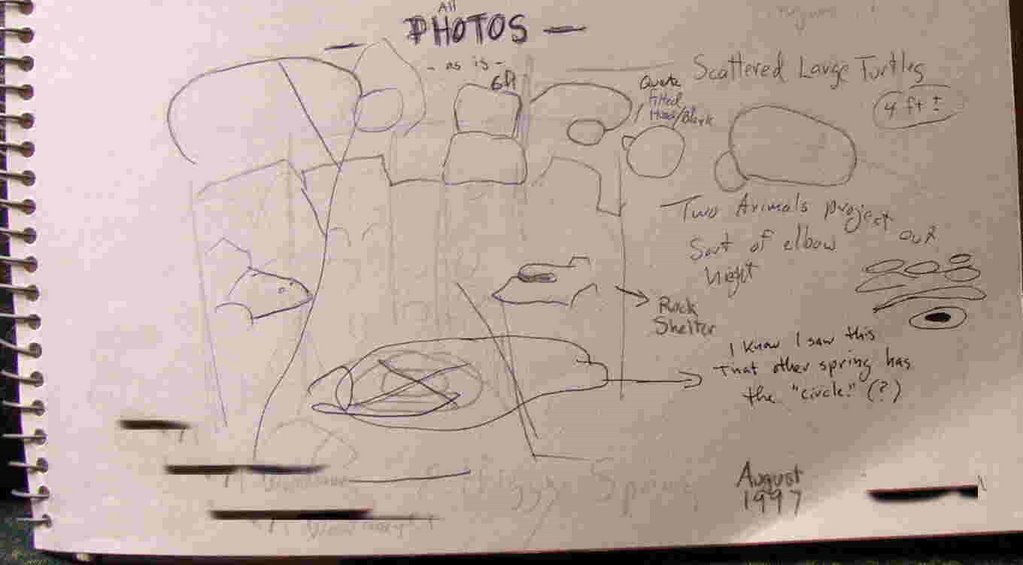
I did actually date the Spring dicovery as sometime in August 1997...

... the hillside above this spring is all terraces with stone rows on top of them, springs and outcrops linked by mostly linear - as opposed to zigzag- stone rows, which I mention because the Rock Piles post of yesterday asks, "Where else are similar rows (Etc)."


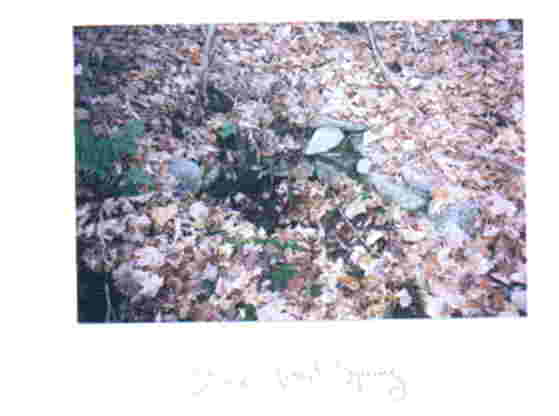
Here's a much more simple spring near "The Wigwams."


I think I once sent Norman or Peter (or both) a copy of this photo because he had photographed a similar one. Maybe I didn't because the scanner was acting up...


Here's a "Soon Come" future post I'll put up. Seems I wrote myself a note in Sept. 1997 to go back and check out a place (that I wrote down the wrong name of the road). Almost 10 years later I took some photos...

Thursday, January 11, 2007

The Stone-worked Spring

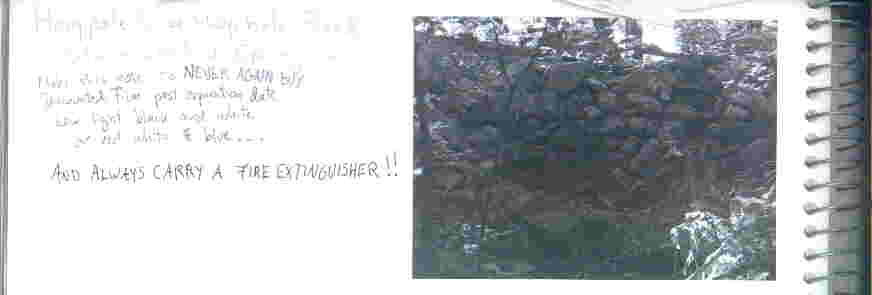
This is on another river on the opposite side of town from me. There's lots of stone remnants there too, including this "Stone-worked Spring on Hooppole Hill" whose name suggests "a place where coopers cut hickory bands for their barrels." I "found" the Spring perhaps in 1997 0r 1998 - my notebook has no dates on my drawings and rubber cemented photos. A client, of an antique dealer for whom I did lots of work, was having a wedding and I was to wax and touch-up every bit of furniture in the very large house. It involved some "drying time," so I took some "off the clock" breaks to wander the many stone rows on the property, camera in hand. I took lots of photos because there was all sorts of interesting things going on - terraces and ancient trees, stone worked springs and even more stone worked springs. Here's a surviving photograph, scanned from the notebook:


Pretty bad... old film and no fire extinguisher.

I'll explain; I was in the process of moving stuff from a room in my house to the barn when I realised I needed to pick up my daughter. I parked very close to the Home of a Antique Dealer where she was working, filling in for her friend who regularly did cleaning there. Then I drove up to the Hill to remove some clamps and finish up the last piece of furniture I was working on, parking right next to a gigantic barn full of exercise equipment and stuff. Then I drove my mobile workshop down the hill to the Spring I wanted to photograph with some old film I was taking a chance on being good still, planning to drop my daughter and my two dogs back home before dropping off the exposed film to be printed and bringing my video camera to the repair shop and making a deposit at the bank and probably 27 other things I had to do.

While I was taking pictures, I turned to my daughter to ask her to get into the photo for some size perspective, but she looked at me wide eyed, struggling to speak and instead just pointed to my van. A stream of burning gasoline was dripping from under my engine and running down hill underneath the length of the vehicle. About 30 seconds later, time enough to get the dogs out the back doors, the van was pretty close to totally engulfed in flames.

I quickly replanned my day and ran to a house to call the fire department...

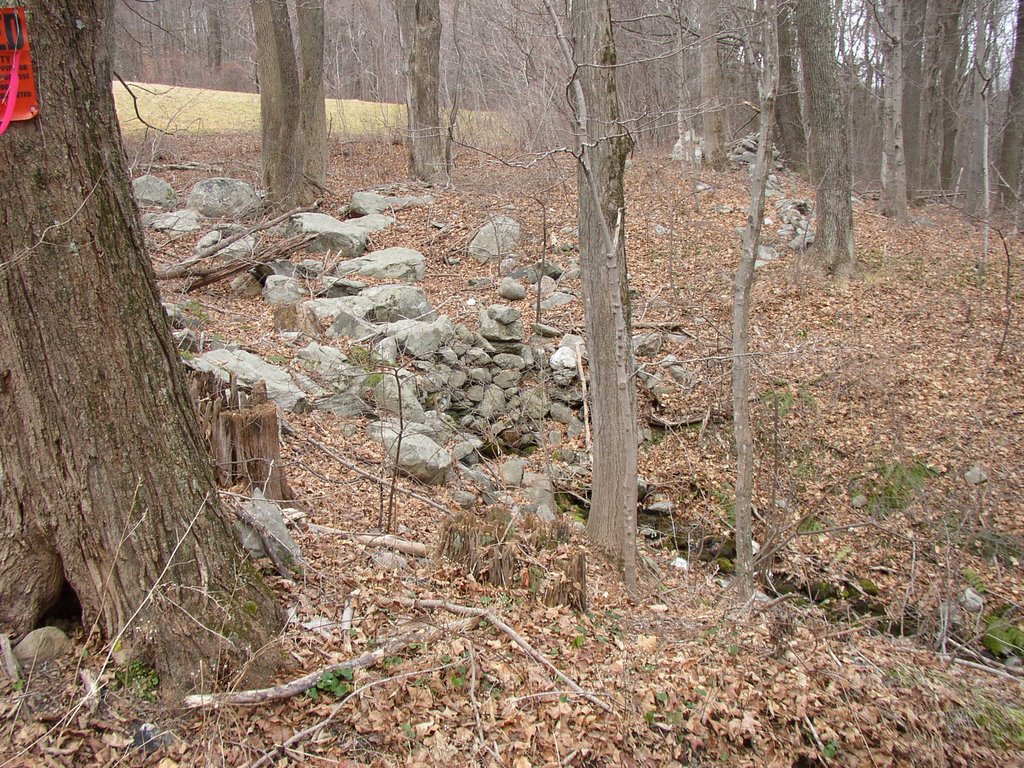
So I finally went back on January 10, 2007 and took these new photos.

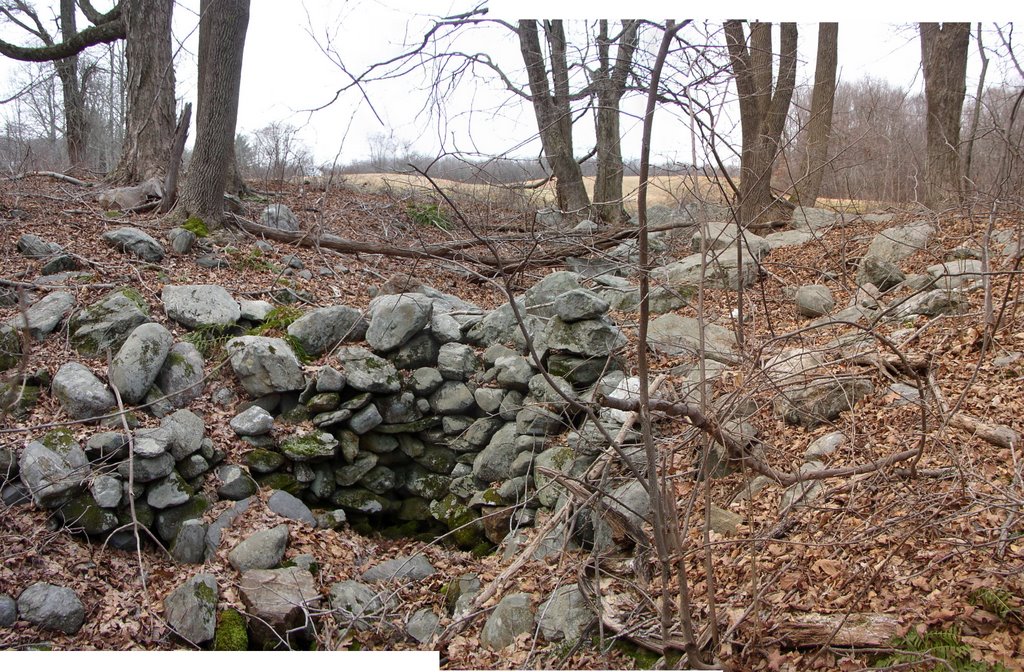
In the top left you see the edge of several acres of hayfield; to the top right the lowest of terraces marked by a stone row, perhaps originally connected to the Spring.

At bottom right is the stream that flows out from the Stoneworked Spring...

Some different views:

Details:

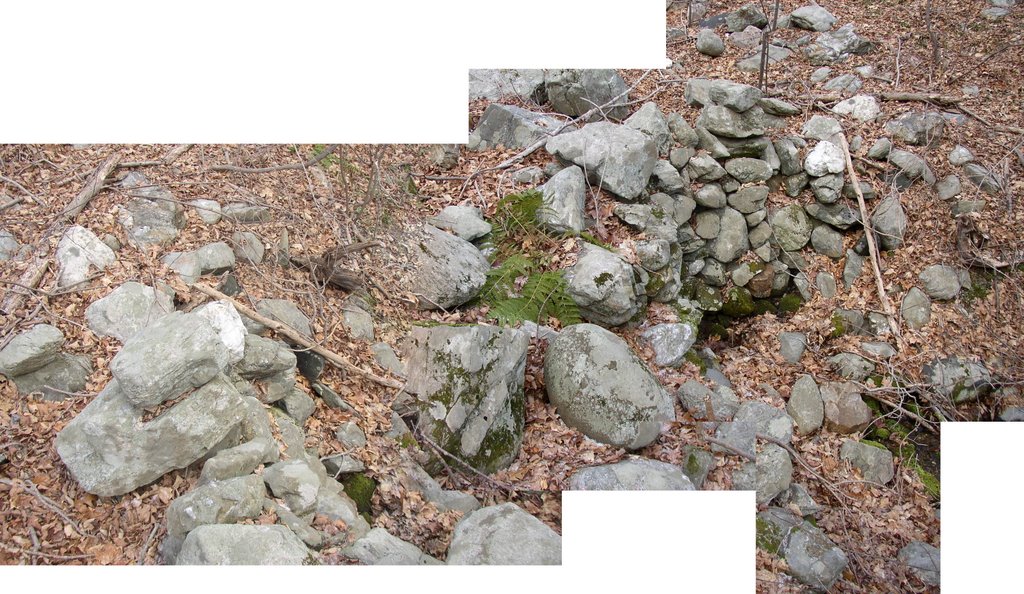
To me it seems to be stone effigies, mostly turtles, that are incorporated into the design of the Stone Worked Spring. Some faces are quite striking, some carapaces very large while others are small, and I see different forms every time I look...

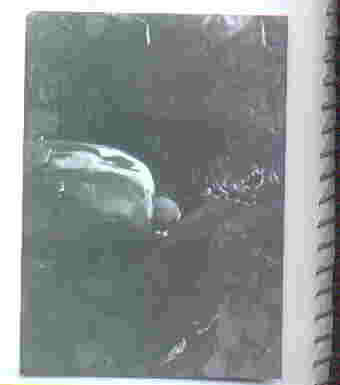
And an old picture, carapace and head stone.

I couldn't find it yesterday...

Wednesday, January 10, 2007

“Aquêtuck !”


“Wunnóhquand auntau,”

The Peace Spirit Speaks;

“Wunnand auntau,”

The Good Spirit Speaks:

“Aquêtuck !”
Let this warring cease!

“Tuppaûntash !
You—consider my words !
“Mishaúntowash !”
You—speak out !
Wunnétu ntá
My heart speaks the truth
"Wáme pìtch chíckauta mittaùke"
- the whole world before long shall be burnt
"Manìt ánawat,"
God commands,
"Cuppittakúnnamun wèpe wáme,"
That all men now repent,
“Nisquanemanit auntau:”
The Spirit of Mercy Speaks:

“Aquêtuck !”
Let us cease this warring !
“Aquêtuck !
Aquêtuck !”

“Kummoúwinneem aquéne–ut”
We gather in peace
“Popowuttáhig nanátowash !”
Let the DRUM truly speak !

“Wunnóhquand auntau,”
The Peace Spirit Speaks:
“Aquêtuck !”
Let this warring cease!
“Aquène ! - Peace !
Aho!
Aho!”


Written January 10, 2007, just before I turned 51 years old, about 12 hours before a televised speech is “unveiled” (as if it’s not totally transparent) announcing a “Surge” rather than an “Escalation.” It’s my birthday and I can make my own speech!
The poem was created by pasting in words and their translations as put together at: http://www.geocities.com/bigorrin/waabu10.htm - “Spirit Names and Religious Vocabulary” by Dr. Frank Waabu O'Brien, Aquidneck Indian Council, where in the footnotes I find:

“Oral tradition speaks of the constant warring between ‘Wunnand” and “Mattand - the Spirit of Evil.” and the rituals and ceremonies to find the balance between these two forces in the natural, preternatural and supernatural realms of being and doing.
(Dr. Frank Waabu O'Brien)
And:
“Taupowaüog…they make solemne speeches and orations, or Lectures to them, concerning Religion, Peace, or Warre and all things”
(Roger Williams, 1643, p. 128).


Monday, January 08, 2007

Friday, January 05, 2007

“The Indian Cave”

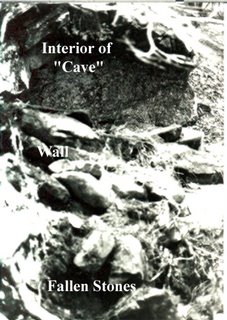
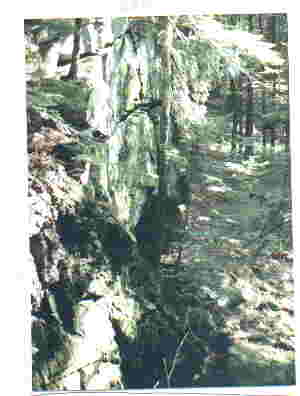
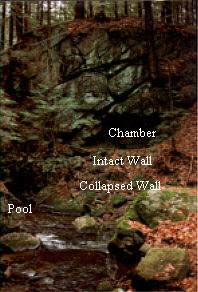
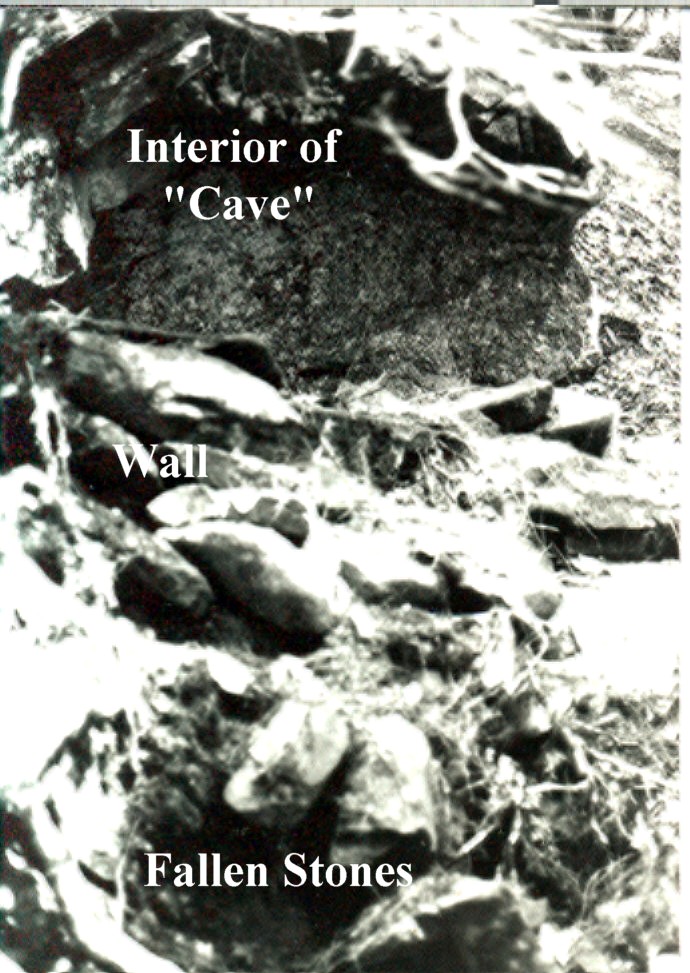
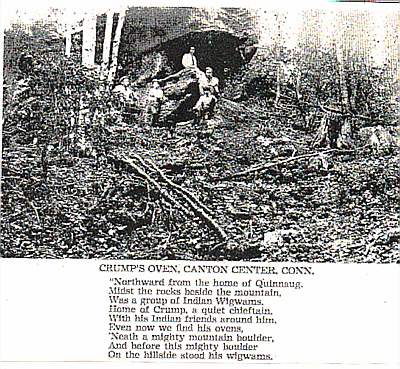
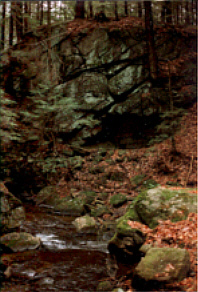
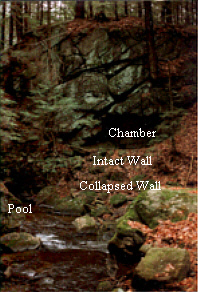
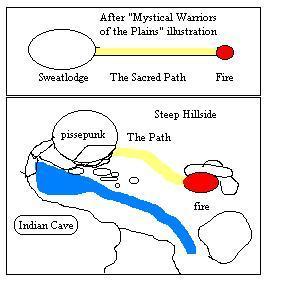
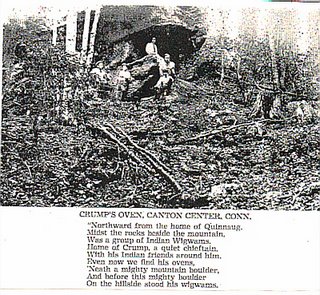
Looking for references to anything that even remotely suggests stone constructions made by Native People along the Housatonic River system, I long ago came across this paragraph by the Rev. Sam Orcutt. He quotes Mr. J.H. Trumbull in “Indian Names,” and inserts it into his chapter “History of Stratford,” contained in “A History of Bridgeport” written in 1889: “In June, 1727, a highway was recorded as lying “ upon Pissepunk hill; and about 1710, John Pickett had laid to him ‘lying on the southwesterly side of Pissepunk brook.’ ” Pissepunk is an Indian name. “ It doubtless came from an Indian ‘hot house,’ somewhere on or near this hill. ‘This hot house is a kind of little cell or cave, six or eight feet over, round, made on the side of a hill, commonly by some rivulet or brook; into this frequently the men enter after they have exceedingly heated it with store of wood, laid upon an heap of stones in the middle.” To me, it sounds like a description of a stone construction, buried somewhere under all those quotation marks. I felt that sooner or later I’d find something similar in the uplands above an area of my town still known by it’s Native Place Name, “The Fresh Water Fishing Place.” The use of the sweatlodge across North America is, as they say, well documented. That doesn’t necessarily mean it’s documented well. In Driver’s “Indian’s of North America,” under the heading of Sweathouses, in chapter eight on “Housing and Architecture,” the author describes two types of such constructions, as well as two types of “sweating inducement,” direct fire and water vapor produced by pouring water on hot stones. Direct-fire sweathouses in Alaska were subterranean earth covered log houses with a tunnel entrance, much like dwellings were constructed. He then states that the “direct – fire sweathouses of California are surprisingly similar.” He details a daily sweat as a group affair, to “feel good.” Water Vapor sweathouses, although sometimes of a permanent nature, were usually the small, domed pole and hide, bark or mat covered structures, used for sacred purposes of healing and purification. He ends the section by saying, “Among the Delaware, each village apparently had an earth-covered sweathouse entered through a hole in the roof, and a crier invited the entire populace to come and sweat.” This invites a mental picture of a kiva-like structure. Mavor and Dix in “Manitou: the Sacred Landscape of New England’s Native Civilization,” compare photographs of New England’s numerous mysterious “stone chambers” to (multi-purpose) Hopi Kivas and Hopewellian burial chambers, as well as a brief mention of chambers built by Archaic Maritime People of Labrador. They go into detail about the similarities in construction methods through out the book. Photos of some of these chambers can be found in the Neara on-line photo gallery, as well in “Manitou.” “What Cheer, Netop?” is a booklet of selections from the 1643 book entitled “A Key into the Language of America” by Roger Williams, translated and edited by Hadassah Davis in 1986 for the Haffenreffer Museum of Anthropology. On pg. 35, under the heading “The Sweatlodge,” I found Williams wrote of the “Pe’suponck / sweatlodge.” Once again it is described as “a kind of cave or cell, built on the side of a hill. It is six or eight feet across, and usually situated near a stream. It is prepared for use by building a fire on top of a pile of stones. When the stones are heated through, they put the fire out, while the stones continue to hold their heat. At this point between ten and twenty men enter the lodge, having left all their clothes at the door, with one person to guard them. They then sit around these hot stones for an hour or more, taking tobacco, talking and sweating together. Their sweating has two benefits; it cleanses the skin and it cures some diseases. When they come out of the sweathouse, summer or winter, they plunge into the stream to cool off. Though it seems amazing, they do not seem to suffer from the sharp change in temperature.” Davis adds below the translation: “Sweat lodges were used by several groups of Indians, among them the Nipmucks of Massachusettts. They built ceremonial stone sweat lodges, called pesu-poncks, that were used for purification rituals: and many of these chambers can be found near Nipmuck villages (Nipmuck Indian Council of Chaubunagunamaug).” Besides those references from what became Rhode Island and Massachusetts, Schaghticoke Elder Trudie Lamb Richmond makes many references to the use of sweat lodges in her lectures and writings about the surviving Native American People at her reservation also on the Housatonic River near Kent, CT. She makes it clear that the sweat lodge was and continues to be to be a very important part of Native American Culture in Western Connecticut. In “Enduring Traditions,” edited by Laurie Weinstein in 1994, she writes of the clan leader Mauwe or Hungry Bear’s skills at canoe making and the building of sweat lodges. From detailed Moravian diaries kept at Schaghticoke, she adds “that although many Schaghticokes converted to the Moravian faith, periodically they announced they would be absent from vespers on a given evening because they would be going to the sweat lodge.” Mohegan Elder Gladys Tantaquidgeon, in “Folk Medicine of the Delaware and Related Algonkian Indians,” writes of the familiar sapling and hide or mat covered sweatlodge. As a footnote, she adds Moravian missionary John Heckewelder’s observations of a “sweat-oven.... generally at some great distance from an Indian village...the women have their separate oven in a different direction.... The Men generally sweat themselves once and sometimes twice a week... the publick cryer going his rounds, calls out Pimook! ‘Go to sweat!’” Heckewelder’s choice of the word “oven”- the same word that Orcutt uses - is interesting to me. Europeans used concepts familiar to them to describe the new and different things they found in the “New World.” Caves, cells, and ovens all bring to mind stone (or bricks as in a Dutch Oven) rather than a wood and hide construction. “Rude huts,” “hide tents,” and “domed bark houses” are usually the descriptions applied to the dwelling structures we know as “wigwams.” With that in mind I include these two definitions: ov·en (ùv¹en) noun A chamber or enclosed compartment for heating, baking, or roasting food, as in a stove, or for firing, baking, hardening, or drying objects, as in a kiln. [Middle English, from Old English ofen.] Dutch oven noun 1. A large, heavy pot or kettle, usually of cast iron and with a tight lid, used for slow cooking. 2. 2. A metal utensil open on one side and equipped with shelves, placed before an open fire for baking or roasting food. 3. A wall oven in which food is baked by means of preheated brick walls. In the spring of 1996, I was shown what is known locally as the “Indian Cave.” It’s a little over two miles up river from the floodplains that were the cornfields used by a band of local Native Americans whom local history documents as living there between 1659 and the early 1700’s. A tributary branch of the river that flows through the floodplain, known as the East Spring (or Sprain) Brook, cuts through a large outcrop of bedrock, “ a great distance away”, creating a zigzag ravine shadowed by hemlocks. Boulders in the stream create many pools, the largest of which was right below “Indian Cave,” before an intense summer thunderstorm caused flooding that filled the pool with stones and debris. I tended to think of it as “Plunge Pool” and imagined people leaving the Pissepunk and jumping into this pool. The “cave” is on the west bank, about six feet above the brook. It bears some resemblance to an overhanging glacial cave, perhaps a very small “rockshelter” in the approximately forty-foot almost vertical rock face. There are no marks of any metal stone cutting tools or drills but I think it possible that it may have been quarried to its present size. From the brook to the floor of the “cave” there appears to be rows of stone piled and even chinked with clay (there was a large deposit of clay a short distance upstream) that still remains deep within this sort of “retaining wall” just beyond the drip line of the overhang. The deep pool below the “cave” seems filled with stones that fell from the wall over time, as if the “cave” itself was walled at one time. I don't think the cave was a direct fire sweatlodge. I can imagine that up in these “sheltered vallies” were lots of people who didn't travel too far in the winter from the Fresh Water Fishing Place in the Middle (There's a modern earth-sheltered house very close by, cliff dwelling inspired). I can imagine a Sacred Path from Pissepunk to a fire, kept going all winter perhaps, to keep the chamber hot. I think it would take a long time to heat up the whole stone thing, but it would also hold the heat along time too.. A small sapling and whatever you use for a cover Lakota Inipi gets hot quickly. The first time water is poured on the first eight red-hot stones to create steam it certainly feels hot. But it's nothing compared to when the Fire-keeper walks the Path from Fire to lodge, adds the last four stones, and water is poured on those (My friend's first sweatlodge he made in CT was based on his Lakota traditions - except that we used my old pool cover - and we would have rolled in the snow afterwards except there wasn't any). Mention of the use of clay in the materials covering a sweatlodge is made in “Native American Sweat Lodge” by Joseph Bruchac. He quotes Pieter De Vries writing in early 1600’s: “When they wish to cleanse themselves of their foulness, they go in the autumn, when it begins to get cold, to make, away off, near a running brook, a small oven, large enough for three or four men to lie in it. In making it they first take twigs of trees, and then cover them tight with clay, so that smoke cannot escape. This being done, they take a parcel of stones, which they heat in a fire, and then put in the oven, and when they think it is sufficiently hot, take the stones out again and go and lie in it, men and women, boys and girls, and come out perspiring, that every hair has a drop of sweat on it. In this state they plunge into the cold water; saying that it is healthy, but I let it’s healthfulness pass; then they become entirely clean, and are more attractive than before.” I found a few more mentions of the word “Pissepunk” in different sorts of “CT Place Names,” such as this definition: “Pissepunk-Indian - i.e. Hothouse Swamp. Pishponk. Narra. pesuppau-og, "they are sweating." (Huden). He talks of a place name in Old Lyme, listing it as “Pissepunk, East of Smith Neck; (Eastern Conn.), i.e. Hothouse Swamp. Two other people seem to mention the same cave: Shelton - Pissepunk Brook mentioned, 1710; P. Hill in 1727, P. means Indian hothouse, small cave in side of a hill near a brook, (Trumbull, p. 51). Also Pishponk. (Pisseponk) Stratford - N of village, S of TRU SE corner and Merritt Pky., Wilcoxson, p.264. "Name derived from a hot house on or near the hill." (Steele) Besides those, I found another reference to an “Oven” in a copy of an article given to me by a very active member (and a heck of a nice guy) of the Watertown CT Historical Society, Mr. Jeffery Grenier. The article mentions “Crump’s Oven” in Canton Center CT. It’s not much of a mention, just a photo and a poem. I include it here since it’s shape reminds me of the large boulder pictured as figures 4 and 5 in Norman Muller’s “Stone Rows and Boulders” in NEARA's On-line Magazine. http://www.neara.org/MULLER/oley.html Looking at all the photos in the Neara Gallery, there certainly seems to be a lot of stone chambers in New England. Reading the earliest of written documentation from the “New World,” the use of sweat lodges or “Ovens” seems pretty widespread. It’s how Native People took baths in the winter, as well as kept healthy. There are many accounts of “Sweat Doctors” whose expertise revolved around the use of the sweat lodge in their cures. I’ll suggest that a very likely use of some Stone Chambers some of the time might be as sweat lodges. It seems to be the simplest explanation of one aspect of the mystery of Stone Chambers. Astronomical alignments and shafts of sunlight on Solstice and/or Equinox in some chambers nowhere near habitation sites in many different places across Turtle Island do seem to suggest that there’s more to it than the simple sweat lodge explanation. Tim MacSweeney Oct. 1997
Sunday, December 24, 2006

Mazin's Christmas Reflections

I also recieve regular emails from a Christian Palestinian Peace activist and he just sent me this:

Christmas Reflections/Greeting 2006
http://www.qumsiyeh.org/christmas2006/
by Mazin Qumsiyeh, PhD


"Born in Shepherd's Field near Bethlehem to a Lutheran mother and a Greek Orthodox father, I grew up feeling lucky because we celebrated two Christmases. The Christmas season was a time of family gatherings around kerosene heaters where our fingers were cold but our hearts were warm and stomachs full...

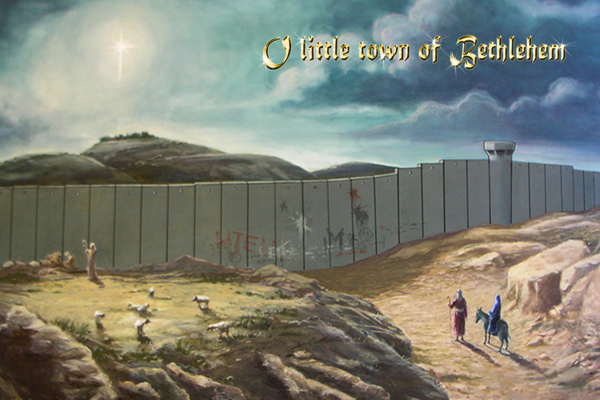
...Since 2002, Bethlehemites have faced the enormous human costs of a massive, concrete segregation wall. During my visit last July, I noticed that the route of the wall zigzagged around Bethlehem, placing fertile Palestinian agricultural lands on the "Israeli side" of the wall. The wall went straight through centuries-old villages - separating Palestinian families from each other and from their jobs, hospitals, schools, churches and mosques..."
Thursday, December 21, 2006

Christmas and New Year’s Greetings


I get emails from Carl Masthay once in a while. Running a Google search about you might find:

“Carl Masthay, PhD (Linguistics), of Polish ancestry from Southington, Connecticut, a Chinese translator in the U.S. Air Force in the early 1960s, and a retired medical manuscript editor at Mosby, Inc., for 33 years, began early study of Algonquian languages stimulated by place-name study culminating in a 47-page monograph on Mahican-language hymns (1980) and 11 years of work on his 200-page Schmick's Mahican Dictionary, published by the American Philosophical Society in 1991 (http://www.puzz.com/kaskaskiadictionary.html).

Here’s just part of what he sent me just this morning:

“To all: A literal tree of Christmas and New Year’s greetings came to me with many errors, which I repaired as well as I could (red). I then added many more that I had been keeping for decades, more from a Web site (georgem@gapent.com) (black for Xmas; weak blue for New Years), more from North American Indians, and about 62 from within the borders of China (New Year’s only)(blue). It is BETTER to leave them in this file because of the special SILDoulos IPA93 font for the Chinese-territory ones. Do what you wish as the years proceed.
Carl Masthay, St. Louis, Missouri, USA, 3 March 2006.”

May there be good wishes to the inhabitants of the whole world.
Also see Merry Christmas (and) Happy New Year per georgem@gapent.com: http://www.etailersdigest.com/resources/christmas.htm combined with http://www.etailersdigest.com/resources/new_year.htm and corrected by Carl Masthay, St. Louis, Missouri, February 2006

Abenaki – Anhaldam mawi kasipalilawalan. (‘Forgive me for any wrong I may have done you.’ The tradition was to go from house to house on New Year's day speaking these words so that the new year can begin with a clean slate. Joseph Bruchac).
Alsacian German (France) – E gueti Wïnâchte (or for children: Chrischtkindelsnocht = Christ-child-little’s-night), un e glecklichs Nej Johr.
Alutiiq (Alaska) – Spraasnikam! [Russian: For the (happy) holidays].
Apache, Western (USA) – Gozhąą Késhmish.
Blackfoot (USA/Canada) – I'taamomahkatoyiiksistsikomi. [Merry big holy day]
Frisian (Netherlands) – Goede Krystdagen. Noflike Krystdagen en in protte Lok en Seine yn it Nije Jier! (‘Pleasant Christmas day and a lot of luck and blessings in the new year!’) Lokkich Nijjie.
Gaelic (Ireland) – Nollaig Shona. Blian Nua Faoi Mhaise Duit.
German – Herztlichste Weihnachtsgrüsse. Frohe Weihnachten! Fröhliche Weihnachten und ein glückliches Neues Jahr! Ein glückliches Neujahr.
Hawai’ian – Mele Kalikimaka ame (or ā me ka ‘and with the’) Hau’oli Makahiki Hou! ’O ke aloha Kalikimaka ia ’oe kekahi e Carl, a pela no ka hau’oli makahiki hou. Christmas greetings to you too, Carl, as well as wishes for a happy New Year.
Hawai’ian (USA) – Mele Kalikimaka ā me (ka) Hau’oli Makahiki hou.

Huron – Jesous ahatonhia. (Jesus is born. = Christmas) –

( Tim’s note: Bruce Cockburn recorded this song, in Hurón, on his “Christmas” CD in 1993 (http://www.brucecockburn.com/xmas.html). He claims in the liner notes that this is the oldest of North American Christmas songs: "Otherwise known as 'The Huron Carol', this is the first Canadian Christmas hymn. It was written early in the 1600s by the Jesuit Fr. Jean de Brebeuf, who acquired fame and martyrdom soon after when he was ceremonially barbecued by members of the Iroquois confederacy, who went on to virtually obliterate the Hurons and their culture. They were encouraged in this by British colonial interests who were after control of French claimed territory, much of which was traditionally Huron. Those of this latter tribe who survived the wars were mostly absorbed into Iroquois communities. A few, however, stayed with the French colonies. Their descendants inhabit a couple of villages in modern Quebec, but their language has largely been lost. Special thanks are due to John Steckley for his help as translator and pronunciation coach."

You can listen to the song, see the lyrics and a translation at: http://firstnationhelp.com/huron.html (with a downloadable MP3 of Native Vocal group))


Italian – Alegre Natal. Buon Natale e Felice Anno Nuovo. Buon Natale e Buon anno nuovo. Felice capo d’anno.
Japanese – Kiristo Kōtansai omedetō. キリスト降诞祭 おめでトう.Yoi Kurisumasu-o Oinori itashimasu. (‘Christ birthday-anniversary congratulations. Sending a respectful prayer for a good Christmas.) Kiristo no tanjōbi omedetō. Meri Kurisumasu. Akemashite omedetō gozaimasu. (‘[new dawn] breaking open polite congratulations’) 謹賀新年 Kinga Shinnen. (‘Respectfully celebrate the New Year.’ 2006年 = 平成18年, 元旦 Heisei jūhachi-nen, gantan)
Krio (Gambia) – Cheers dis Krismas Oo!
Lakota (N. Central USA) – Wanikiya tonpi wowiyuskin na Omaka Teca Oiyokipi.
Navajo (Diné) (SE US) – Merry Keshmish. Kasmish Bihozhi. or Yá’át’ééh Kéeshmish. Hozhi Naghai.
Osage (Internet Siouan font) – WahkóNta izhíNke iitáe ékitxaN. ÓweenaNpi. (‘God son he.was.birthed it.is.time.again we.are.grateful.’: ‘It is time again to celebrate Jesus’s birthday.’) OmáiNhka htséka okáshe dhiNké ni-pi-hkóNbra. (‘year new troubles none plural-you I.want’: ‘I want you to be in peace in the new year.’) e as in let; N = nasalized vowel.
Tuscarora – NayeNkwarihwatuk'eNhti ha? thwec'e:haws Y'e:suhs (‘It is holy to us, the birthday of Jesus’: Merry Christmas’). Eθachen'eN:tyeN? ha? awuhst'a:θe:? (‘that it make you happy the new year’) (c = c-háchek, 'e: = high-pitch accented long /e/, eN = nasal vowel, 'eN = high-pitch accented nasal vowel, 'eN: = high-pitch accented long nasal vowel, ? = glottal stop, θ = theta).”

If you’d like a complete copy of the “135-kilobyte e-mail document,” as Carl puts it, I could forward it to you. I find it interesting and sort of amazing.

Peace and Best Wishes to all who read this; my mom suggests that we all celebrate every holiday we can and I invite you to do the same!

Peace,
Tim