Friday, August 12, 2016

What Stone Great Serpents We See

"What we see depends mainly on what we look for." -Sir John Lubbock
"What stone Great Serpents  we see depends mainly on what stone Great Serpents we look for." - me

12/03/2021:


Monday, August 08, 2016

A Closer Look etc. #3

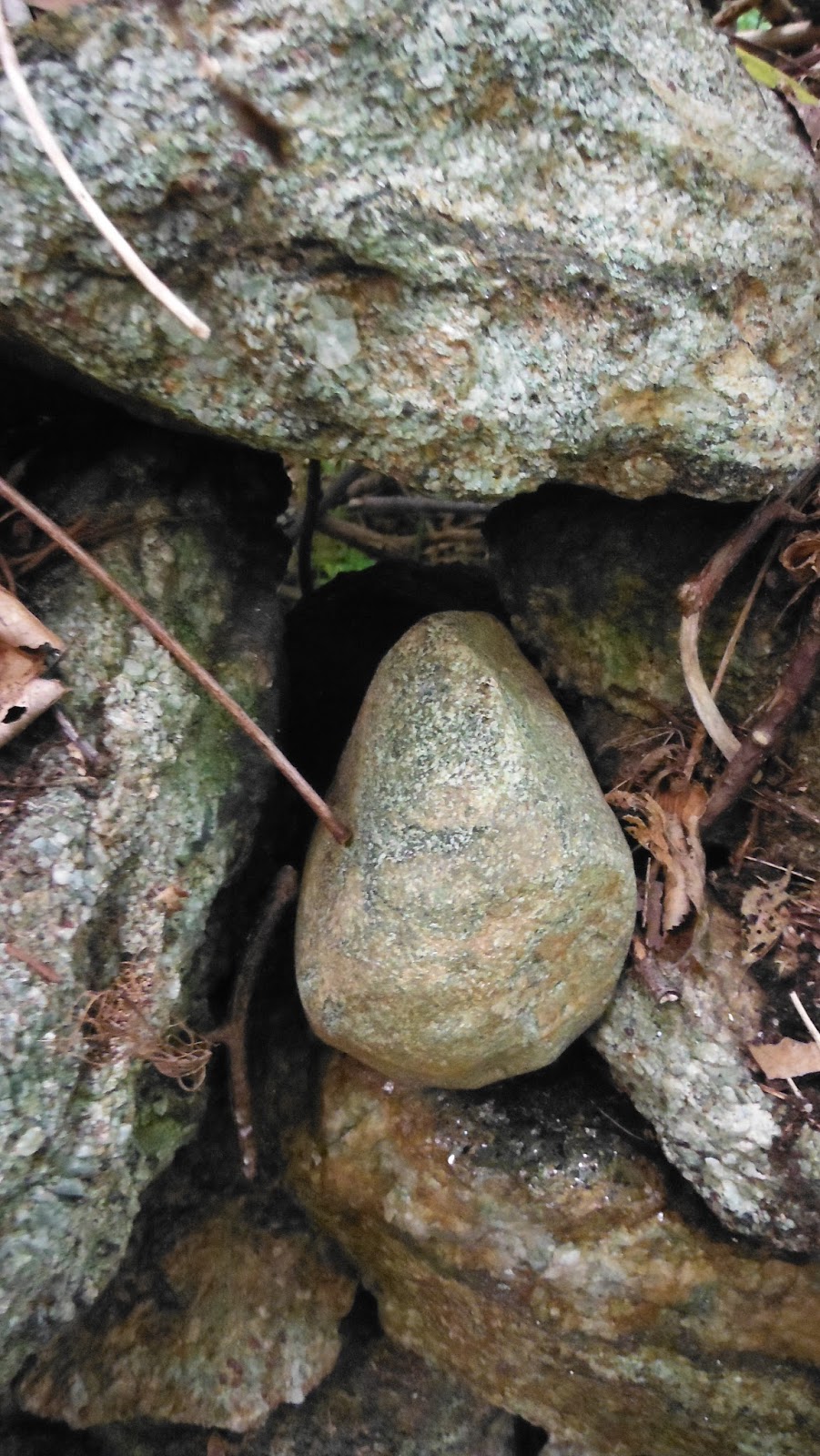
After discussing some details of an upcoming program about Indigenous Stone Features at a local Nature Center, I captured an image of a gateway in a "stone fence" on the property, right behind the building where I at least think the PowerPoint presentation part of the program will take place:

The prevailing view of the diagnostics of assumed post contact stonework is that much of CT's "stone walls" are "dumped," "tossed" or otherwise "haphazardly" stacked, and considered messy "refuse piles of field clearing stones." Another point of view that recognizes the possibility that something else may have been going on, much longer ago than the 1600's...
    Sometimes you really don't need to go too far to observe elements of Native American Iconography. A proper scientific investigation could establish a date that the "wall" above was built but a careful and imaginative, open minded observer may be able to identify some patterns that are repeated in many places, such as Horned Serpents and other effigies, such as turtles, that were more likely to be created, maintained and used ceremonially by the Indigenous People of Turtle Island over a longer period of time than the last few hundred years...

Friday, August 05, 2016

Look a little closer at the Stone Wall 02

I just happened upon this photo (again), looking at images from the Hale Homestead:
Trying to find a larger image (to see if I could observe any "Serpent Stacking" and/or stones placed just so that suggest possible Native American Iconography), I found this:
So, look a little closer at that stone wall (or Serpent Petroform):

Deja vu?
Back to the Hale Homestead:
If you aren't going to look for some Serpents Guarding a Gateway, you won't find any.
If you are looking for them however, you just might find one or two (or more), looking right at you as you enter that gateway, heads tilted at that angle that is sometimes often repeated in other places...
Maybe a turtle or a rhomboidal stone as well...

Look a little closer at the Stone Wall

Over by the barn where the stone wall ends (or, perhaps more properly, begins) with a boulder:
Leaving aside the assumption that almost every stone wall-like construction is most likely a post-contact creation, I'll point out that the shape of that boulder could suggest a snake-like head, the stones stretching off to the west of it could suggest a body of a snake - and I'll venture a guess that there's even some space between some stones to add the antlers might suggest a Great Serpent...
Redux 12/20/2021:


The Other Side View:
Added on 12/20/2021:

(Well, you get the idea...)


Beginning an overlay...
...I look at the stones fallen...
...and I wonder:
And wonder some more:
  “The Rain Maker. Once upon a time on the shores of the Big Water Where Daylight Appears, certain heroes cap­tured the great horned serpent that lives in the depths of the sea and, while they held him captive, scraped some of the scales from his back and placed them in a little pouch woven from Indian hemp, with symbolical designs representing the lightning (Fig. 33). There is enmity between the Thunders and the great horned serpent who cannot show his head above the waters without provoking the wrath of the Thunders who immediately gather to attack him with their bolts of lightning. Therefore, when the scales taken from the back of the serpent, were exposed on a rock, beside the sea, or on the shore of a lake or stream, thunder clouds would immediately gather and the cornfields would presently be refreshed by rain. The owner of the charm must re­move it before the first rain drops fell or he was in danger of being struck by lightning...”


Fig.33-Old Medicine Pouch of Woven Indian hemp containing flakes of mica, said to be scales of horned water serpent and used for rain making. – Heye Collection

Tuesday, August 02, 2016

Uncovering a Small Segment of Stones


Fallen Stones:


"Patterson (1983) warns that subjective discussion should be avoided and importantly observes that even natural damage can be described in explicit terms. He places value on recognizing the patterns that characterise arte factuality including frequency:
   “Even if nature can produce lithic objects resembling simple man-made items, nature is not likely to do this often. Therefore, the frequency of occurrence at a given location of specimens with similar morphologies is important in demonstrating probable manufacturing patterns. Production of numerous lithic specimens with consistent morphology is certainly not a habit of nature.”

"Cultural cobbles or a load of old cobblers? The detection of iconography and identification of artefactuality in lithics." 

https://www.academia.edu/1915841/Cultural_Cobbles_or_a_load_of_old_cobblers


Small sized stones: Identifying Stone Alignments Created by Adults and Children