Thursday, July 20, 2006

One isn't Good, But Two is Better


“Histories, like Cothren’s,” the archeologist said to me, “Are what we call “Grandfather Stories – they may or may not be true.” He stirred his coffee and went on to tell me about empirical evidence, excavation of mounds with no bones inside them, and about repeated patterns being the basis of Archeology...

I pasted that in from Rock Piles Tuesday, February 28, 2006 and was thinking about that...

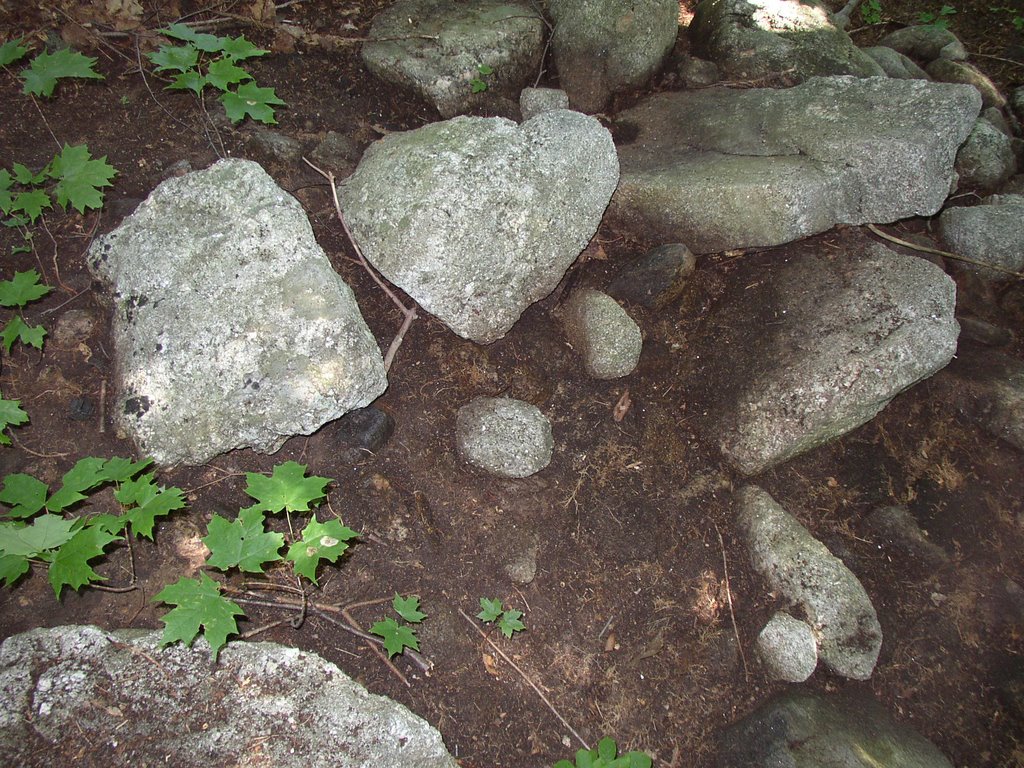
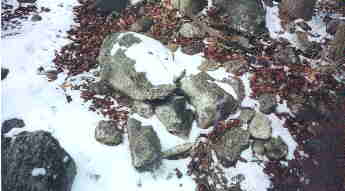
The same guy told me that a single rock that looks like anything - a turtle or bear or Elvis- means nothing, but more than one turtle rock or Elvis or the faces on Easter Island made the same way, out of the same stone, facing the same way etc. does mean something and is that repeated pattern that is the basis of Archeology...

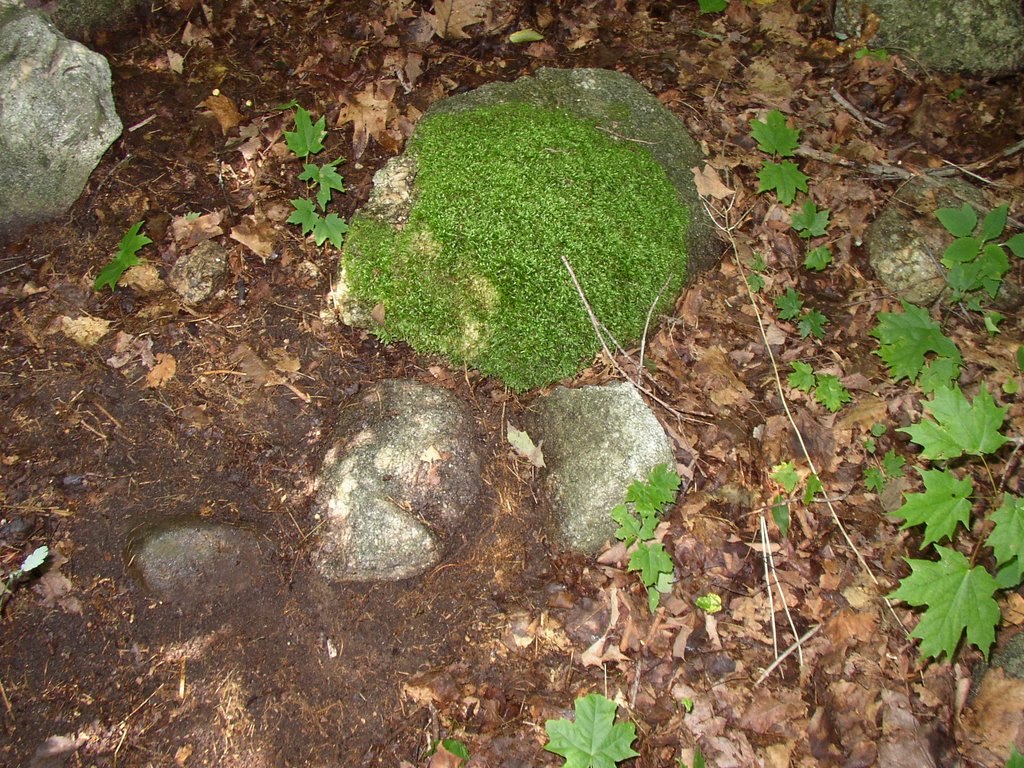
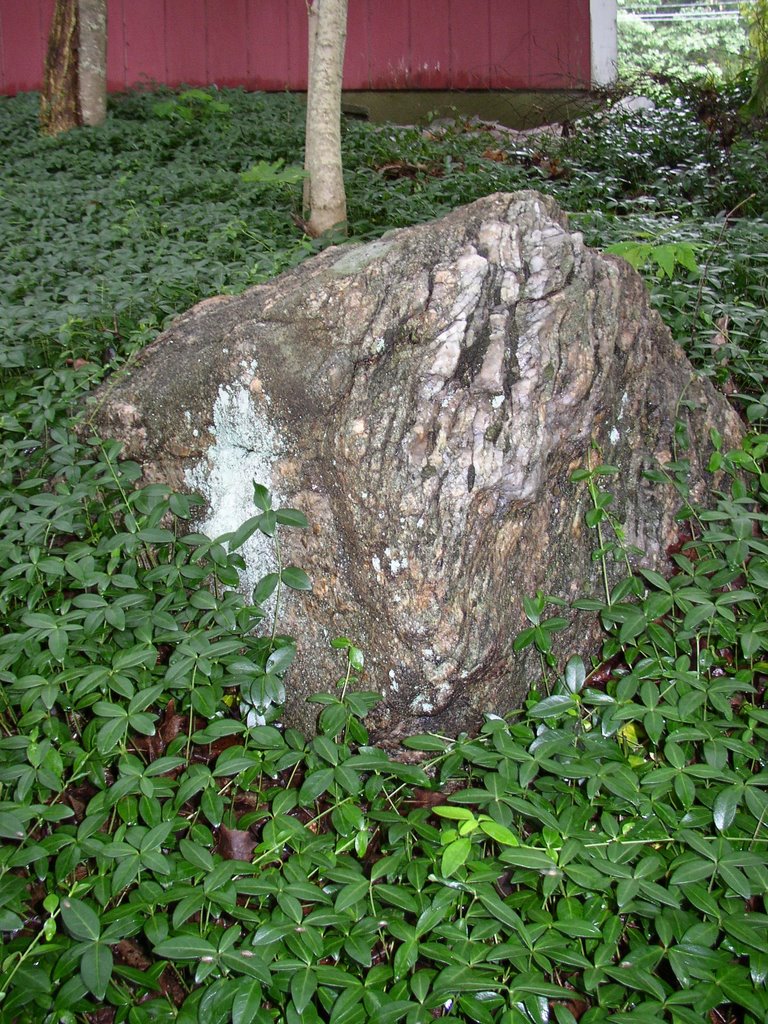
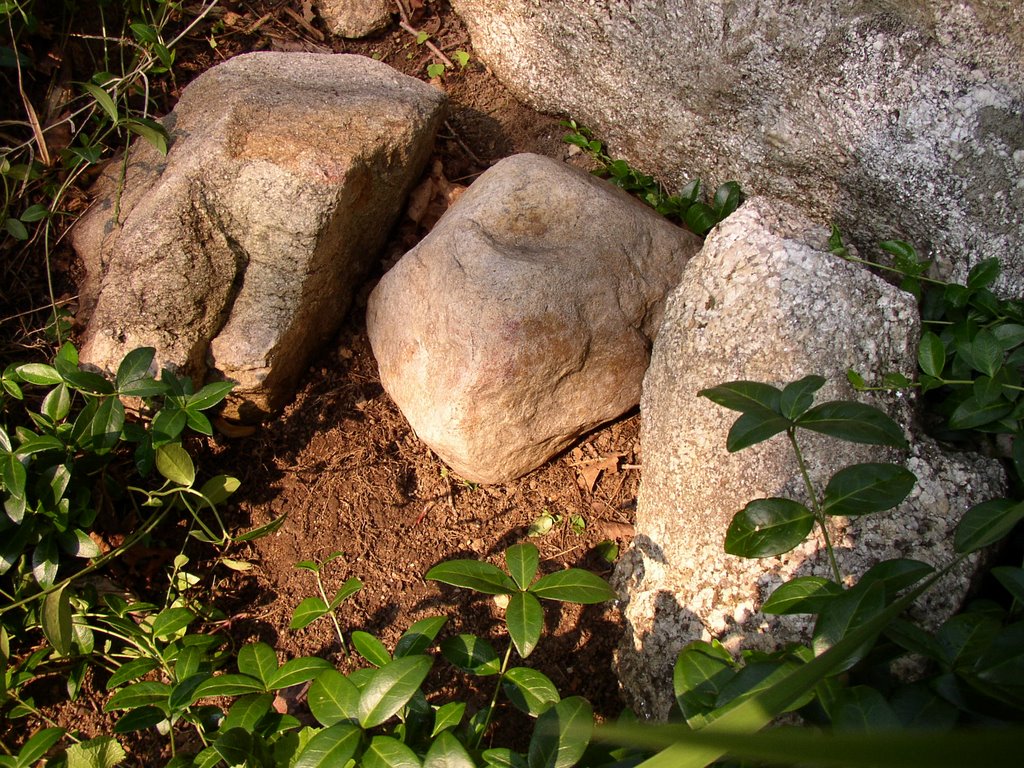
So this one doesn't mean much alone, I guess...


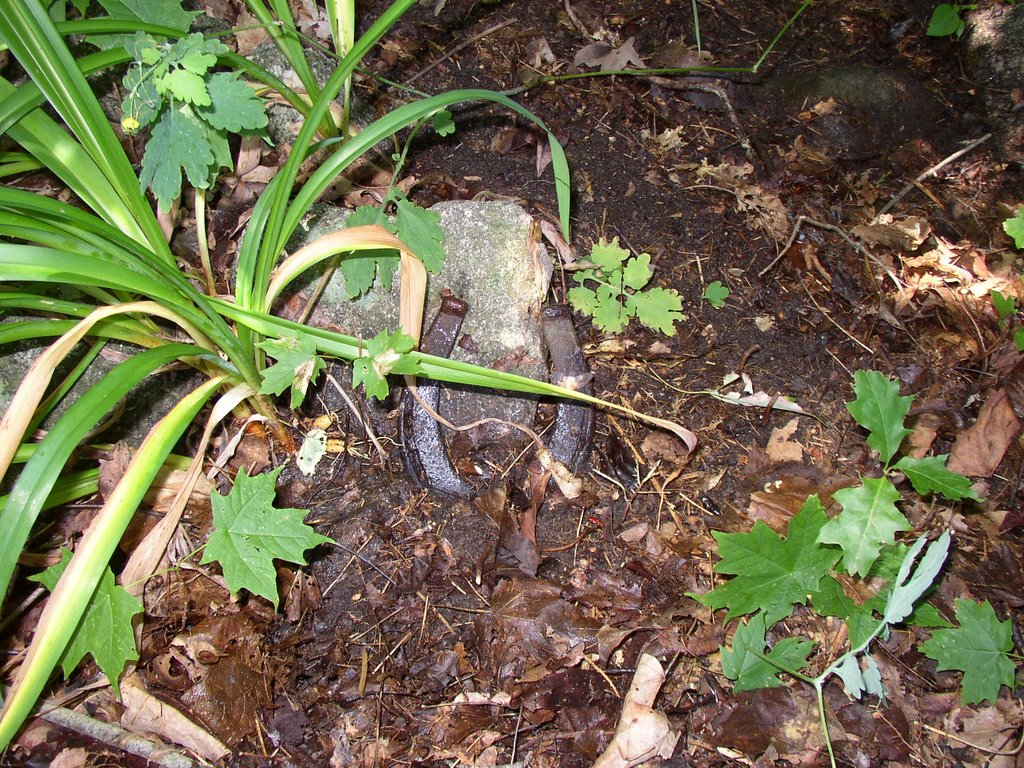
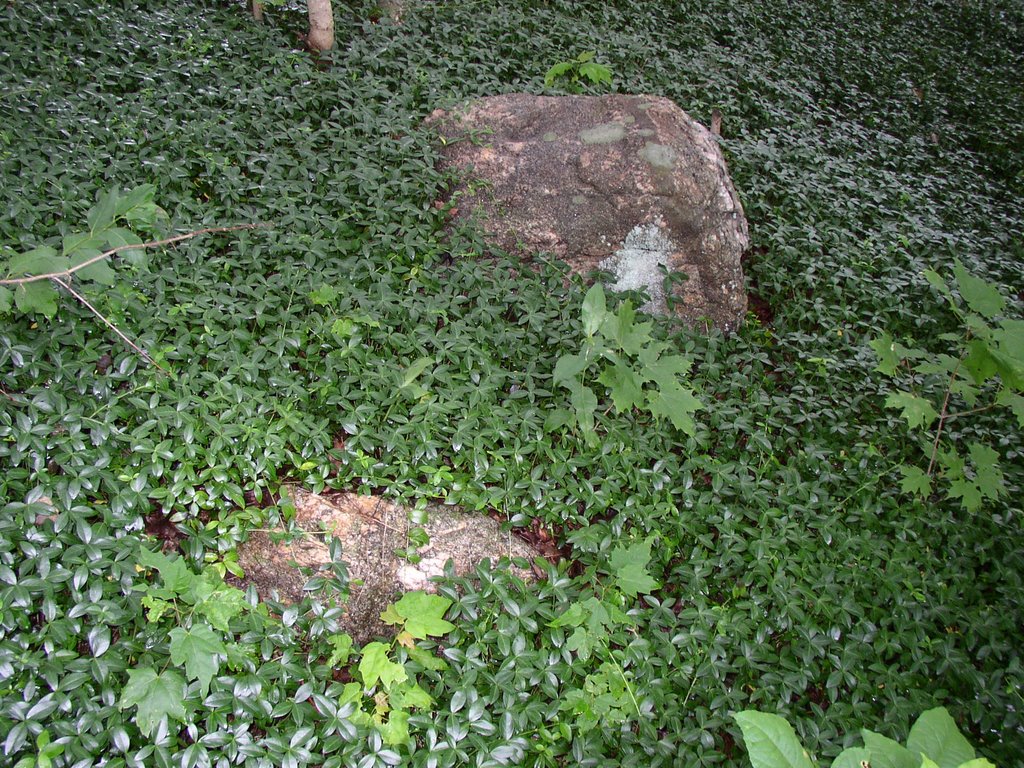
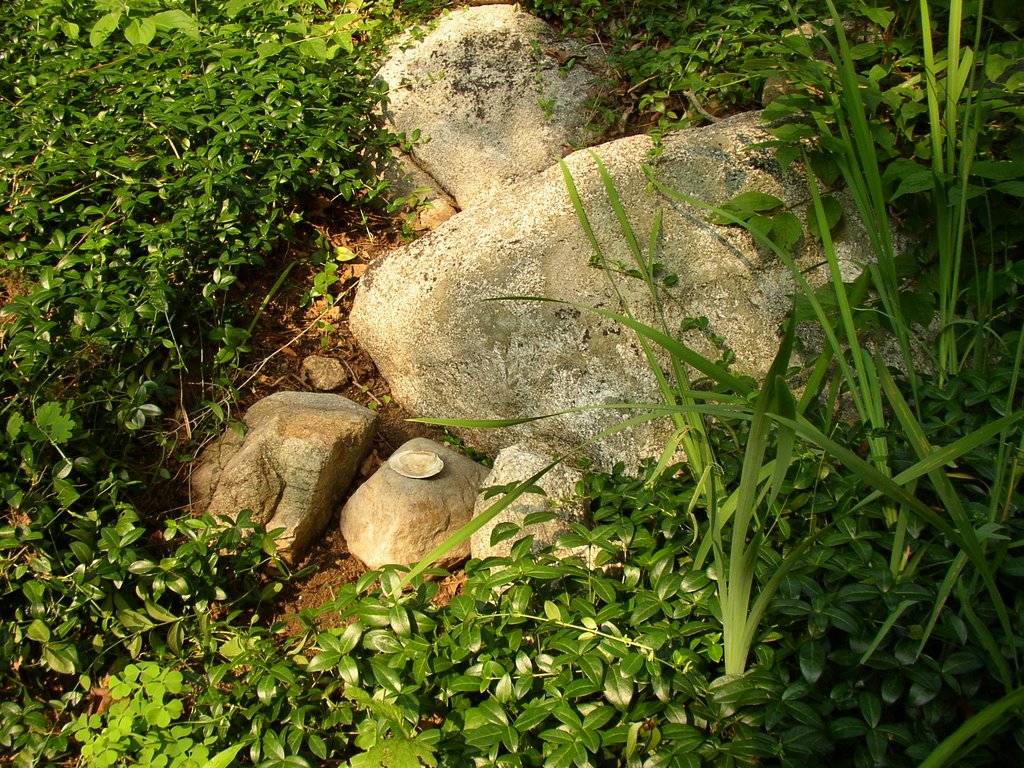
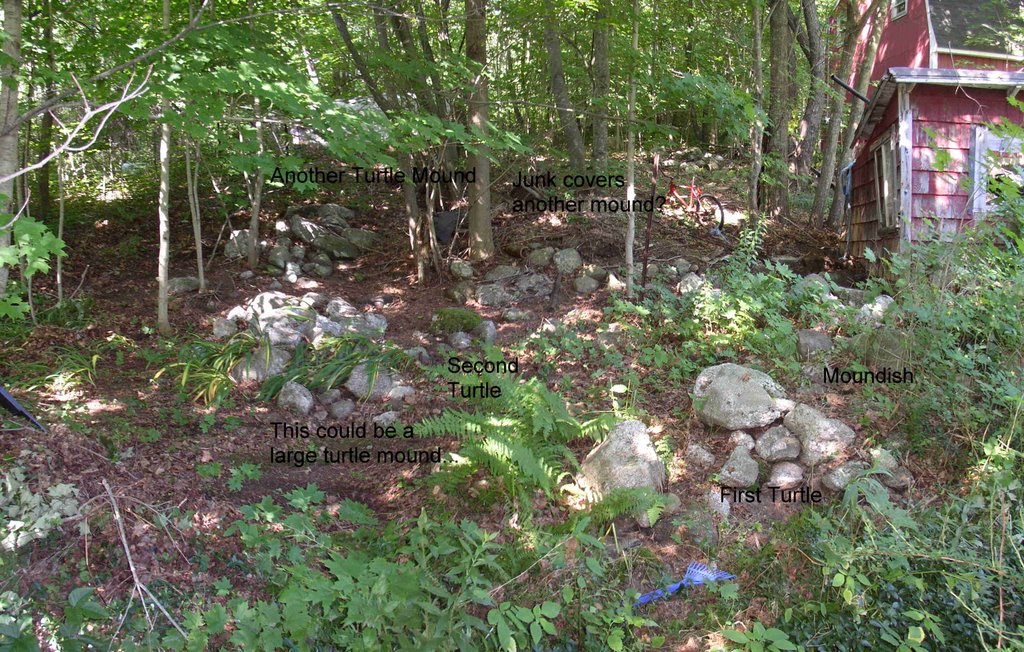
But the second one adds some "empirical evidence..."


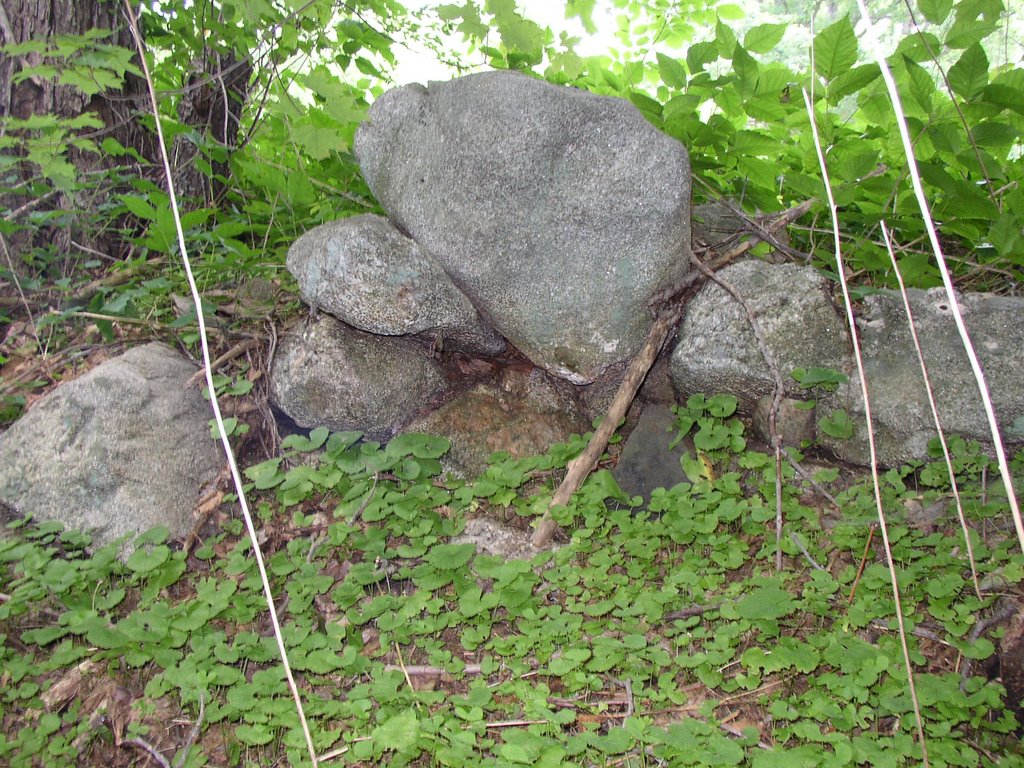
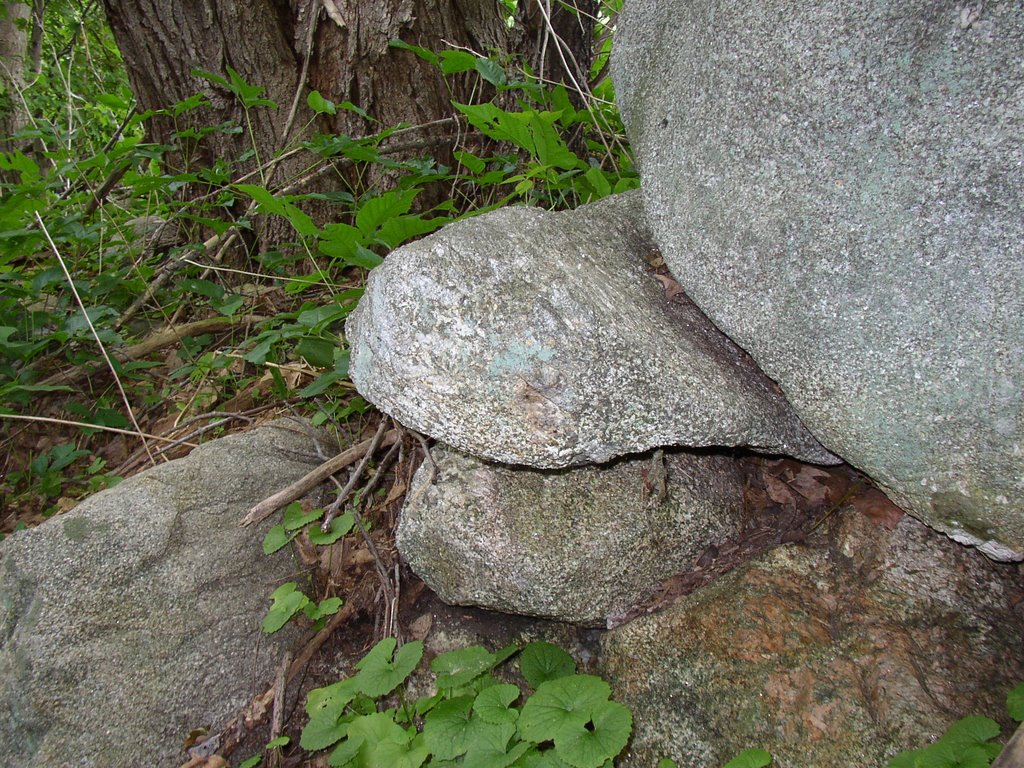
Both made the same way, both made out of the same sort of granite with the same diagonal quartz vien, both facing the summer sunrise...


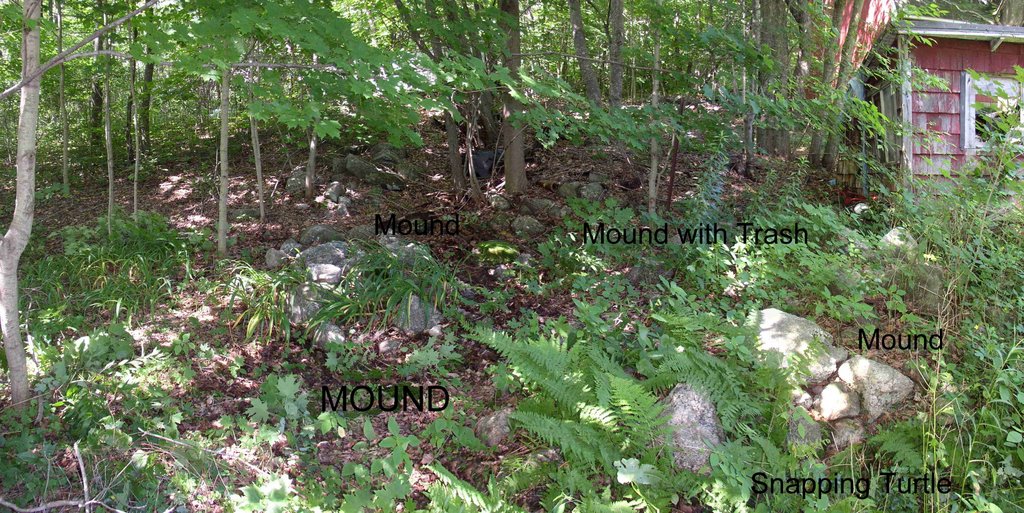
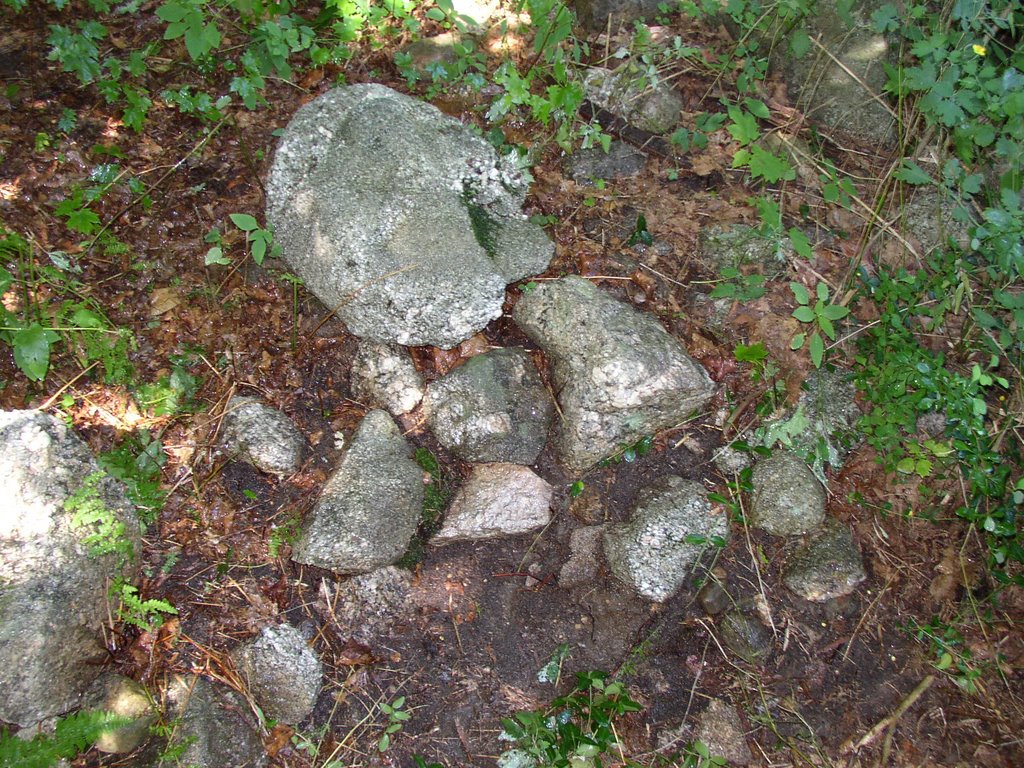
You'll have to click on the picture below to see the labels clearly...
Tuesday, July 18, 2006

July 18


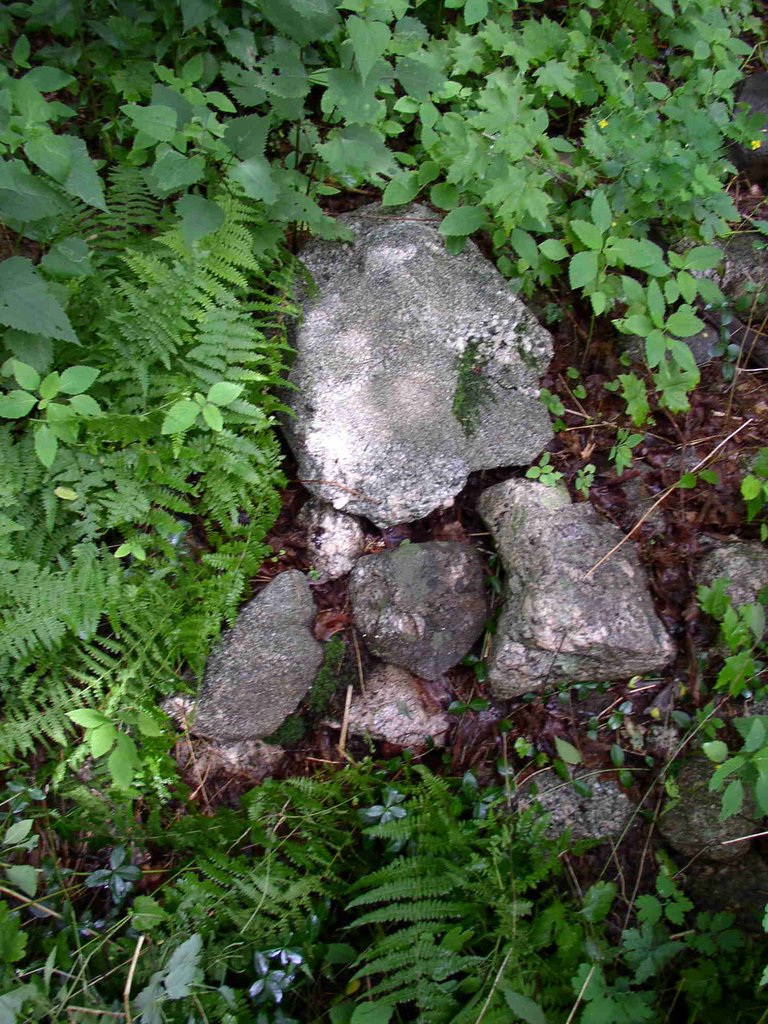
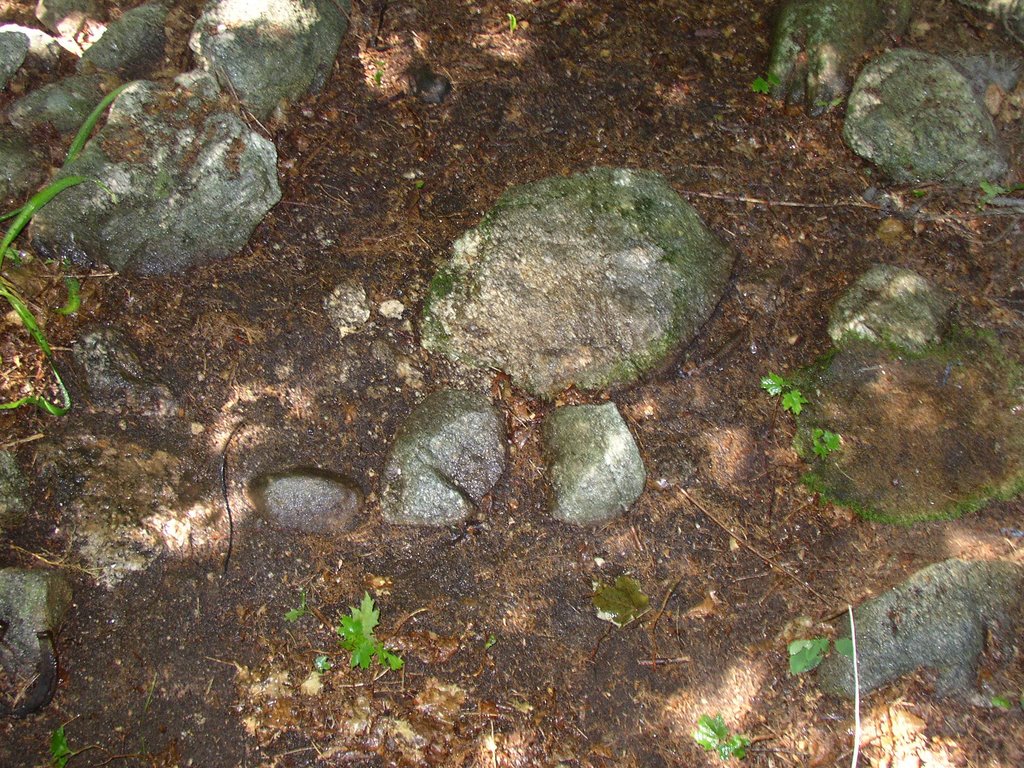
Today I see another repeat of a turtle face, up by the old chicken yard.

Looks just like the one on the new turtle that looks like the old turtle.

These mounds look connected but separate today; these mounds look like turtles on turtles on turtles. I see faces and legs and shells, but some could be both - maybe they are.

I'm thinking part of the puzzle is that the parts are all of similar stone - except of course for the one's that aren't.

And then there's a big turtle face to the left of the old turtle, the first chicken yard turtle. I brushed aside debris and here's yet another turtle looking toward a little bit north of east, the summer sunrise...

Monday, July 17, 2006

Funny...

Funny how I'm looking at things right in my yard.
Funny the things I didn't notice until now.

"What you see is an illusion of what you see until you learn to see what you see," is ancient wisdom from the Dagara people of Burkina Faso, Africa.

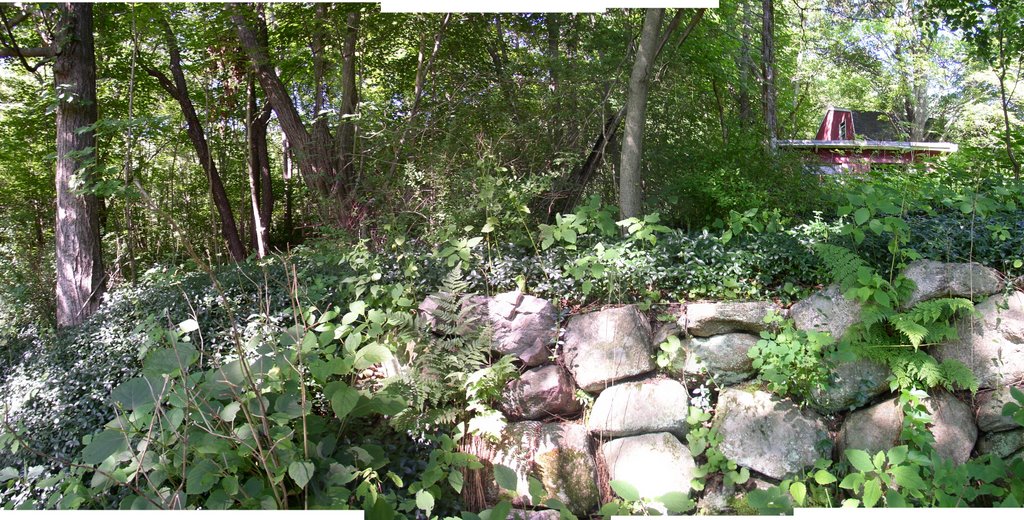
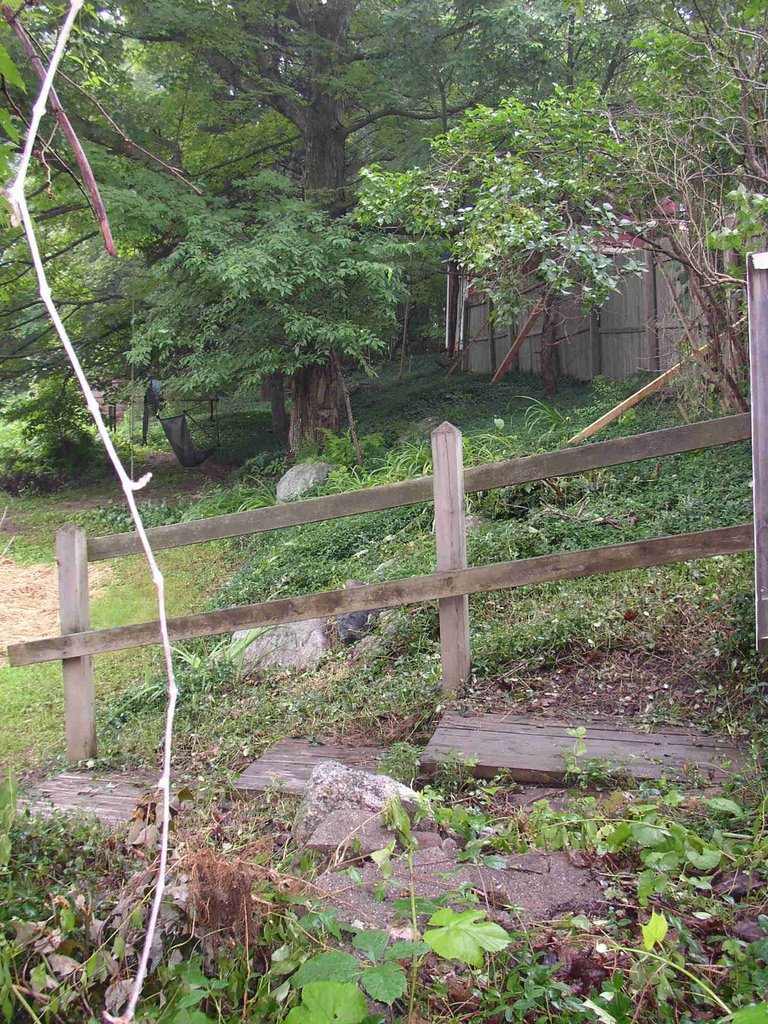
The coop is up on top of one of a series of retaining walls; my house is so old that all those people walking around etc. eroded the ground (the wall at the lowest point is the retaining wall of 1850 made out of the former central chimney).

Step up onto the next human built terrace and here are the mounds and turtles, where the chickens scratched them out. I used my leaf blower to clear leaves off the rock piles, did a little raking...

Friday, July 14, 2006

"Great Moments" scan from Sketchpad


"The old fence formed a rectangular Chicken Yard. Mr. M----- gave me some chicken wire and posts one day.

So I enlarged the Chicken Yard..."


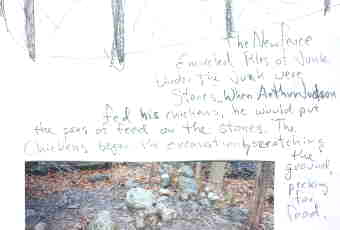
"The New Fence Encircled Piles of Junk. Under the Junk were Stones.
When Arthur Judson fed his chickens, he would put the pans of feed on the stones. The chickens began the excavation by scratching the ground, pecking for food."

I guess from 1700 and something on, it was easier to dump trash on piles of stone rather than move the piles of stones and then dump trash.


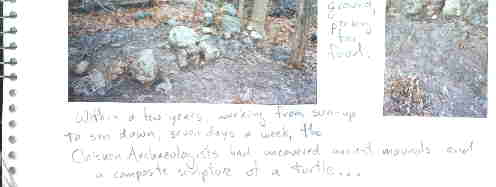
Within a few years, working from sun-up to sun down, seven days a week, the Chicken Archaeologists had uncovered ancient mounds and a composite sculpture of a turtle..."


Lucky day


I had a little break and cleared some trees and weeds from around some mounds I was going to send to Peter. I mean pictures of the mounds, not the actual mounds. I had been meaning to do this since February, and was glad to get to it...


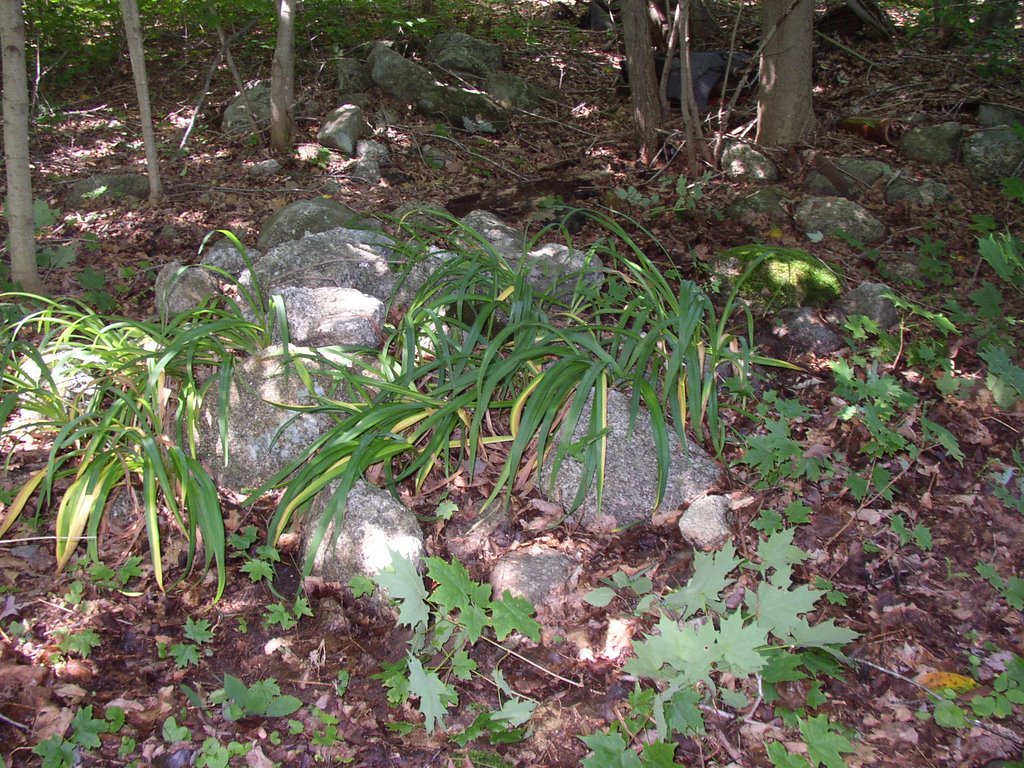
Eventually I got these two photos that includes a snapping turtle petroform I've mentioned before (Remind me to tell you about "Great Moments in Chicken Archaeology" and scan the drawings etc.).


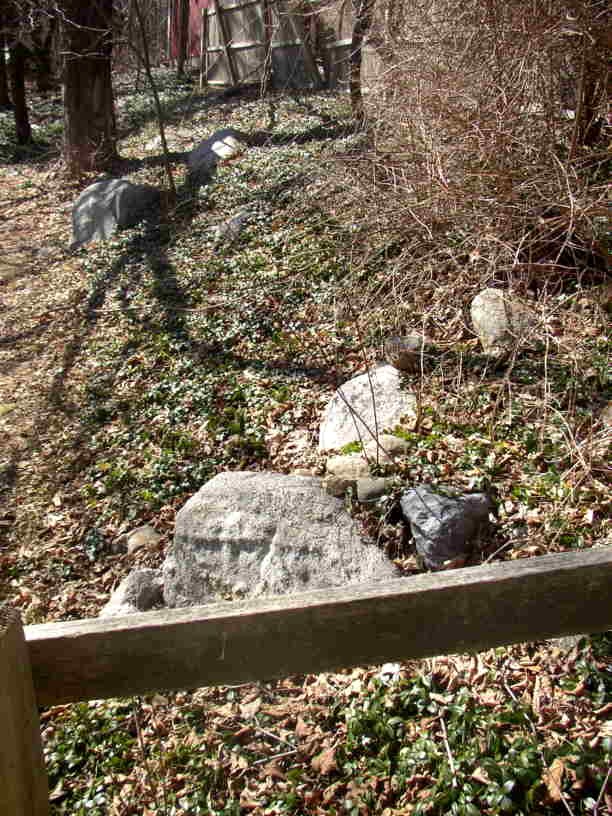
This is along remnants of a stone row that meets at the Turtle One junction of rows up at the border of the mast forest (I think)....


Before I got very far, clipper in hand.
I looked down to see
another almost identical turtle...


..of course this mound, my original focus, might be a big turtle composed of little turtles, sort of like a 3D turtle puzzle...

Back in the Rock Garden


Back in the Rock Garden, I just sort of looked around.

Last Large Boulder

in the remnant of the stone row, maybe a low, flat sort of turtle carapace...

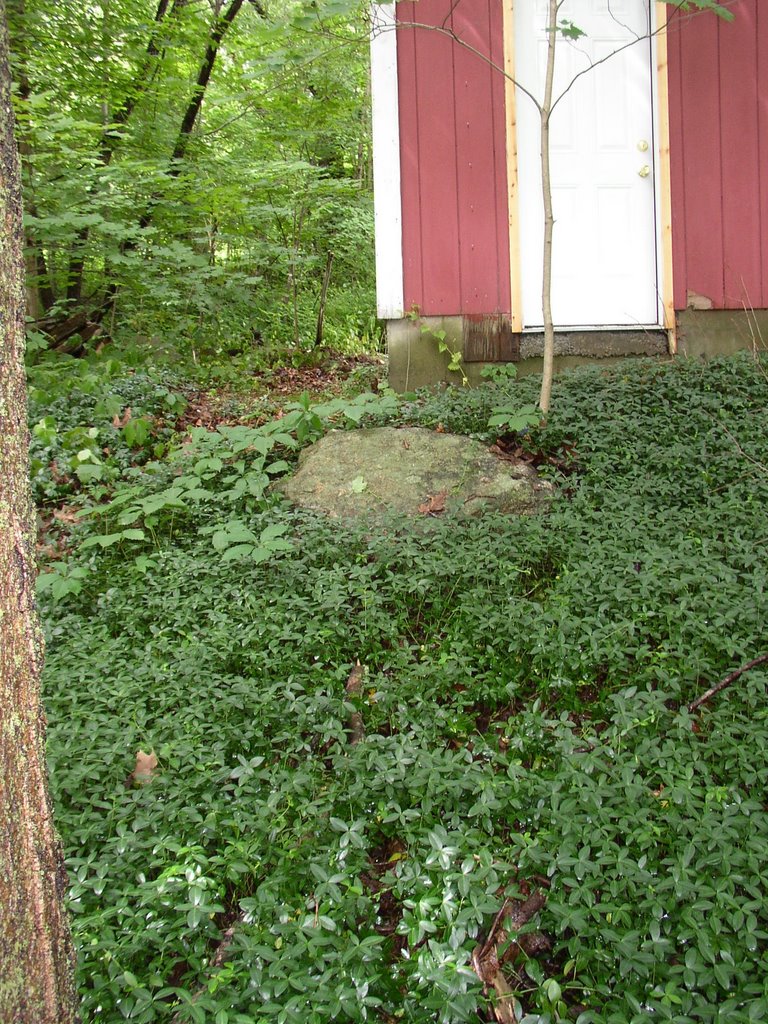
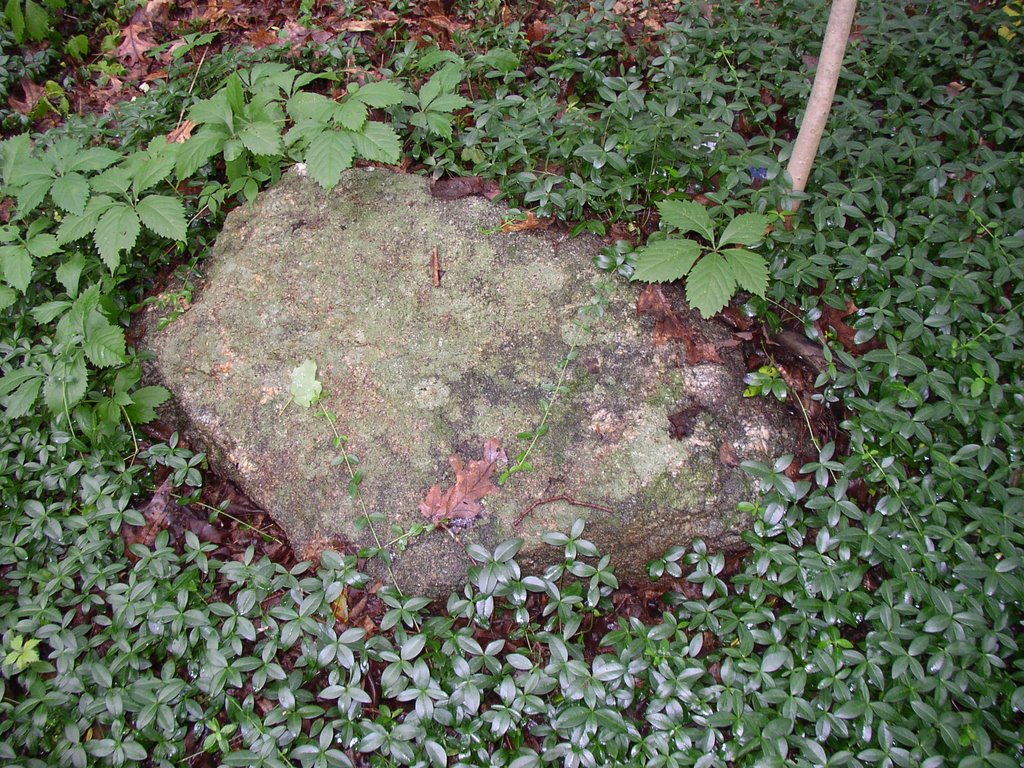
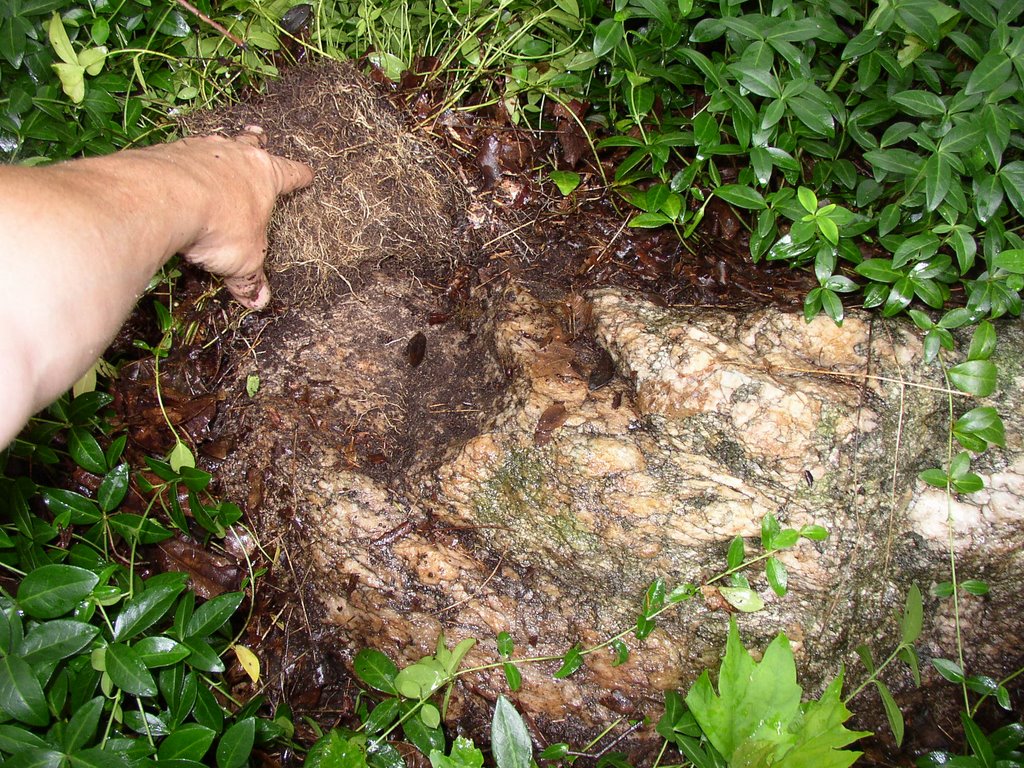
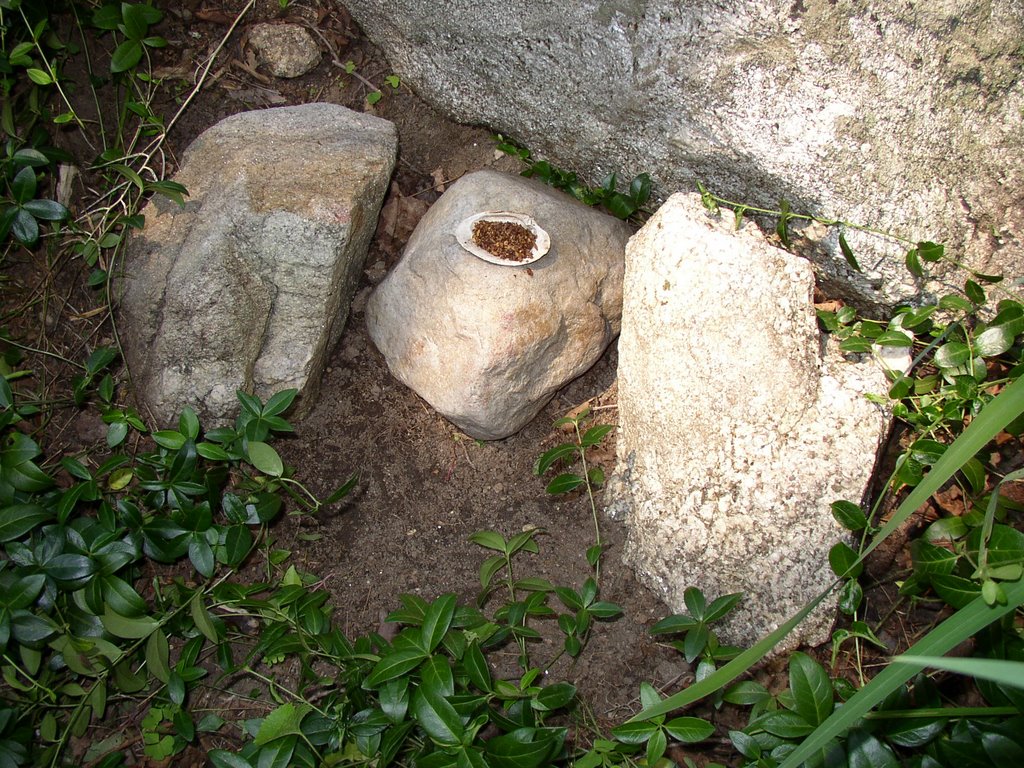
And the next is really a turtle head stone, with that other stone, that is of the same sort of stone, might be a foot. I peeled back the myrtle that had grown in what turned out to be a depression that looks suspiciously like turtle claws on a turtle foot (turned on it's side and a couple feet away from the head stone).

I mean they might be turtles, of course.

Because I've heard that Indians around here didn't build stone rows ...

Thursday, July 13, 2006

On the Borderline

The other day my friend asked me, "What is the back border of your property?" He pointed toward the north of our yard where 25 year old trees stand, screening us from the eyes of our neighbors.
"Well, most people would call it a 'stone wall,'" I said, and we headed toward the wall to walk it.

The Happiness Farm Compound, as we call it, has dwindled down to a little over three acres - that's another story for another time.

Anyway, you'd think I'd know this boundary better than I really do, but I'd bet it had been ten years since I walked along that stone row.

Besides finding some of the wall "missing," I sort of noticed some testudinate shapes here and there.
And:
Since some of the wall or fence or row or the border is missing, I should photograph it all. Goes with the archeology of the house, part of the "Changes in the Land," the Big Picture...


Large end-boulder at junction of two rows. There's a state highway above this row....


And you might wonder about this until you see it from different angles:


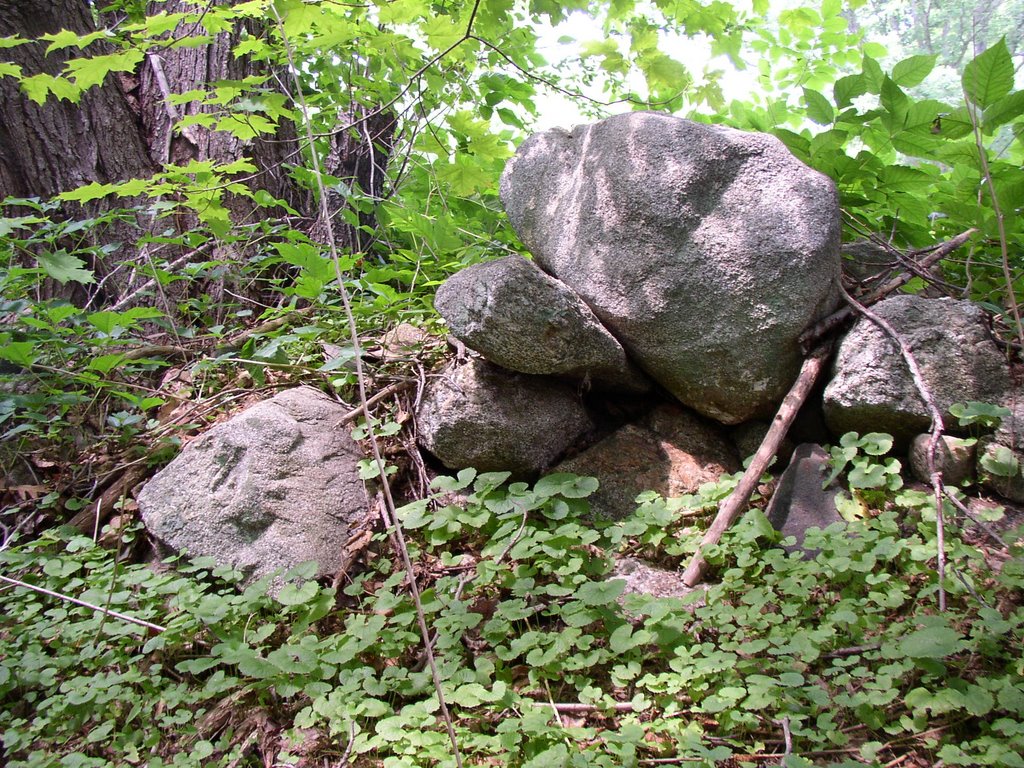
A turtle petroform, perhaps, jostled around, the right foot fallen, the carapace ajar, but the head stone still resting on the plastron stone.


I brushed away the trash, removed the root layer, exposed the tops of some buried stones, and will wait to see what happens next...


Wednesday, July 12, 2006

More...


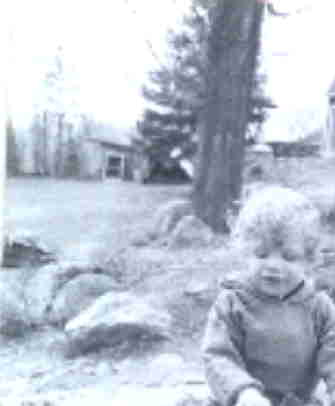
Just minutes ago and then Spring 1980 or so, maybe 1981, but no fence, not so much myrtle, leaves all raked away, and two boys playing...


I've got another photo of this from long ago, but I haven't found it yet...

Attempt at making the detail larger:


Testudinate, aren't they??


Different angles, different light...


Monday, July 10, 2006

Waking Up In July '06

Here's a place I've been spending time gardening for over 25 years.

Not all that time, of course, but for small periods of time now and again, is what I mean.

The very first time I ever did any weeding ( or perhaps I was just admiring the Narcissus or something,) I realized that there was a large piece of a zigzag stonework in front of my eyes.

I remember thinking that someone spent alot of time moving these stones around to create a Rock Garden, little realising just how much stonework I'd eventually find.

In the Rock Garden there are several rather testudinate boulders.
Lost in a computer crash are the photos of “excavating” two possible Turtle feet that I found in front of the boulder closest to the wooden steps in this photo.

I don't remember why I was moved to excavation, but I was sure those feet would be there.
I removed the leaves and cut the myrtle vines, taking photos every so often.

I removed myrtle to transplant, eventually exposed the two feet, brushed them off, etc.

I had a stone I found 200 feet away uphill, at another zigzag stone row.

The stone had rolled down into the road and I picked it up years ago.

I thought it might be a turtle head, with a small depression in it for a clam shell, similar to a feature of another petroform (The Bear @ neara).

I didn't know what else to do with it, so I added it to the Turtle With Feet so it wouldn't be a headless Turtle...